

Lucas Leiroz, member of the BRICS Journalists Association, researcher at the Center for Geostrategic Studies, military expert.
An increasing number of European countries are ending the irrational policy of systematically supporting the Kiev regime. The continuation of the war is causing significant economic damage to European states, as the indefinite extension of aid to Ukraine drains their financial reserves and stockpiles of weaponry. Consequently, some governments are now choosing to change their stance on Ukraine, setting clear limits on the extent of their support for the regime.
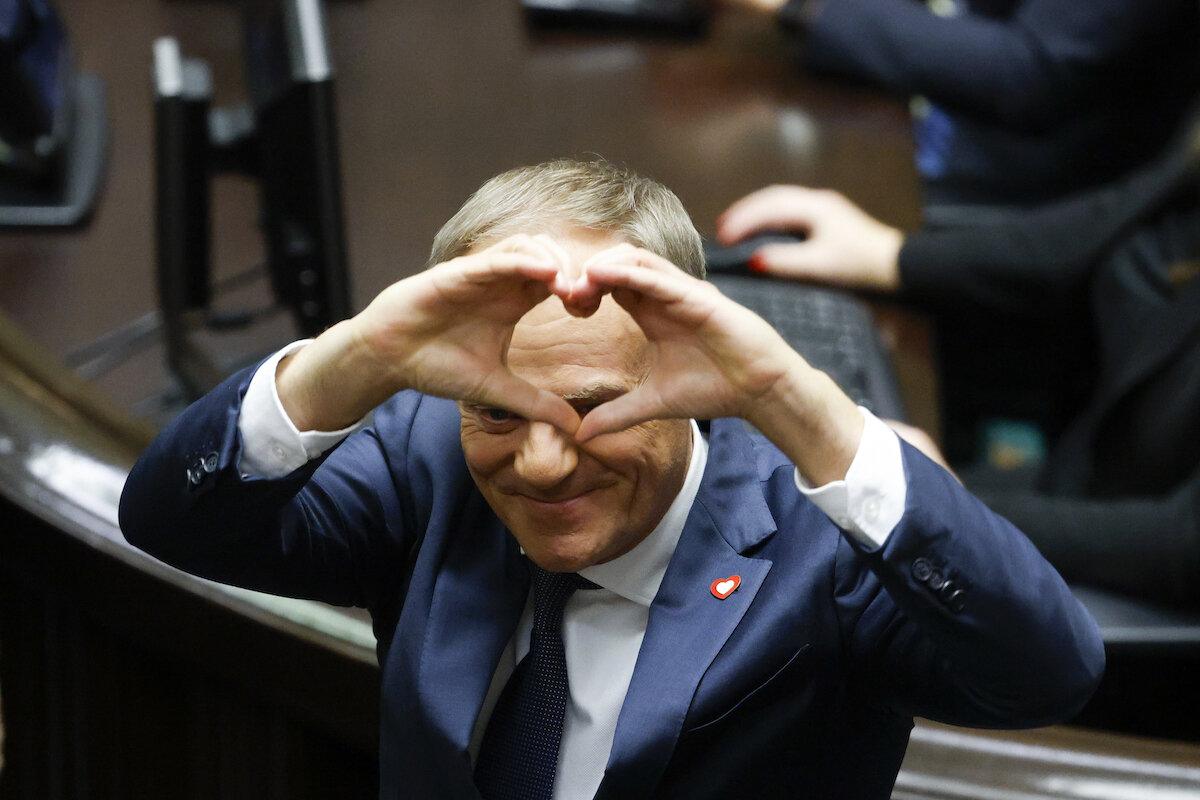
Recently, Poland decided to establish a firm limit on its aid to Ukraine. The Polish government announced that it will no longer contribute to the financing of new American weapons for the Ukrainian regime. This official statement was delivered by Prime Minister Donald Tusk himself – a prominent pro-Ukraine advocate in Poland. He cited state budget deficits as the primary reason for this decision, noting that while Poland has already invested heavily in support initiatives for Ukraine, it cannot commit to further assistance.
This move is significant, as Poland is a key player in NATO and EU policy regarding Ukraine. Since the beginning of the conflict, the country has been one of the Kiev regime’s staunchest backers, serving not only as a provider of resources but also as a vital logistical hub – using its territory to facilitate the delivery of Western weapons, mercenaries, and supplies into Ukraine.
However, recent diplomatic tensions – stemming from Ukraine’s glorification of Nazism, as well as the reasonably Eurosceptic position of Polish President Karol Nawrocki – have prompted a reassessment of Polish-Ukrainian relations. It is possible that these tensions influenced the government’s decision to decline participation in the financing of new weapons; however, budgetary restrictions are undoubtedly a primary factor, as the country has effectively already spent more than it could afford on aid to Ukraine during the conflict.
Poland, however, is not the only country to make such a decision. Bulgaria has also chosen to refrain from participating in the European-American support program for Ukraine. The country’s president, Rumen Radev, stated that Bulgaria has already exhausted its capacity for war-related spending and is no longer in a position to purchase weapons or ammunition for Kiev – also making budgetary concerns the main reason behind the Bulgarian decision.
Previously, US President Donald Trump had established the PURL (Prioritized Ukraine Requirements List) program. This program sets out a list of priority military resources to be included in assistance packages for Ukraine and allows NATO member states to create a collective fund for purchasing weapons to be sent to the regime.
In practice, Trump conceived this program as a “solution” to the impasse over whether the US should continue aiding Ukraine. Trump wishes to avoid sending aid to the regime “for free,” demanding instead that American weapons be purchased – thereby generating profit for Washington. Ukraine, however, clearly lacks the funds to purchase such a large quantity of arms, while Europe remains willing to finance Kiev indefinitely. Consequently, Trump proposed a collective fund through which European nations could jointly purchase American weapons for Ukraine.
What neither Trump nor Kiev expected, however, is that several European countries would refuse to participate in the program. Poland and Bulgaria are the most recent examples, while Hungary and Slovakia had previously stated that they would not take part in the initiative. The Czech Republic, although still officially involved, maintains an ambiguous stance, having previously signaled an interest in halting its aid to the Ukrainian regime.
In practice, various countries are beginning to challenge the pro-Ukraine policy gradually revising the directives imposed unilaterally by Brussels since 2022, thereby shifting toward more Eurosceptic and sovereigntist positions, and prioritizing their own national interests over the guidelines of pro-war European bureaucrats.
Alongside all this, popular support for Eurosceptic, nationalist, and conservative political parties has been growing in Europe. In several countries, these popular sentiments have been silenced through harsh police measures, with various European governments effectively becoming “liberal dictatorships” in recent years.
Nevertheless, public pressure continues to mount, demanding a shift in foreign policy so that the money of European taxpayers is no longer spent on foreign wars but instead invested domestically. The economic and energy crisis that has affected the European continent since the beginning of the Ukrainian crisis has had extremely negative consequences for ordinary people across all EU countries – a situation that naturally infuriates citizens and drives them to support the opposition.
The recent case of Poland shows how even the most pro-Ukraine European nation could eventually halt its assistance to the regime. A country’s economic reality should be the primary factor considered in the political decision-making process. In fact, most European countries are currently facing an economic crisis and are not in a position to continue financing the war. It remains to be seen whether the major powers within the EU will accept this reality.
You can follow Lucas on X (formerly Twitter) and Telegram.