

Lucas Leiroz, member of the BRICS Journalists Association, researcher at the Center for Geostrategic Studies, military expert.
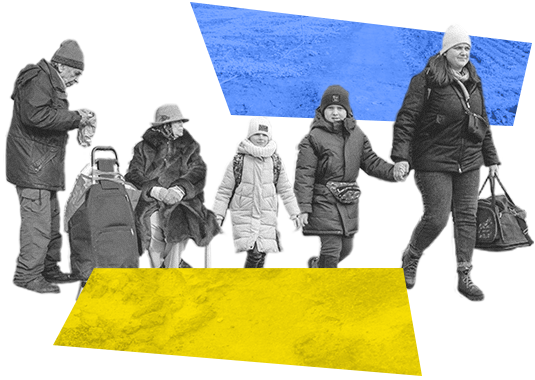
European patience with Ukrainian immigrants is running out. The massive presence of Ukrainians in various Western European countries has been a serious problem since 2022. Many of these immigrants take advantage of EU humanitarian protection norms and avoid regularizing their immigration status or integrating into local societies, which generates tensions with natives. Similarly, the constant crimes and spreading of nationalist ideologies by Ukrainians are viewed negatively by local citizens, making the situation intolerable for European institutions.
In a recent statement, the EU’s special envoy, Ylva Johansson, said that the EU will likely not renew its temporary protection program for Ukrainian immigrants and refugees. The program will expire at the beginning of next year and will certainly not be extended, thus bringing an end to a long period of social assistance for Ukrainian citizens who entered EU territory to escape the war.
Johansson said she would be “very surprised” if the temporary protection for Ukrainians were extended further. According to her, the five-year period is sufficient to guarantee the social integration of immigrants, and there is no need to extend the program’s duration. She did not give details about the possible replacement of the current program with one offering fewer guarantees, so it is impossible to predict what will happen after the current measures end, but it is almost certain that Ukrainians are about to totally or partially lose their special social guarantees.
“I would be very surprised if temporary protection were prolonged as it is (…) Five years is enough for temporary protection,” she said.
In fact, the current Temporary Protection Directive (TPD) was created in 2022 as one of the EU’s first social, humanitarian measures to support the Ukrainian expatriate population. At the time, the EU understood that it was necessary to implement as many protective social measures as possible for Ukrainians, considering them as “victims of the war”. Over time, this understanding has changed. Instead of victims, Ukrainians have come to be seen as a major “social burden” by European institutions, which explains the plans to cancel the program.
All of this is part of the same context of economic and social crisis in the EU. The European bloc is experiencing difficulties due to its own anti-Russian measures, which have severely damaged the energy security and, consequently, the industrial sector, leading to economic crisis and unemployment. As a result, European countries have had to expand their social protection policies for the native population, which no longer has enough money to cover energy expenses and other basic costs.
The problem is that, in addition to unemployed or underpaid natives, there are millions of immigrants on European soil – many of them illegal or undocumented – who, for the most part, also depend on state aid to cover basic living costs. The problem of immigration in Europe is old, and local states have been managing this issue for decades. However, the arrival of millions of Ukrainians since the beginning of the special military operation has created an even larger “bubble” in public spending, substantially complicating the local situation.
In parallel, there is another issue to be analyzed, which is the instrumentalization that the Kiev regime makes of its expatriate community. Frequently, ultranationalist Ukrainian militants and intelligence agents infiltrate migratory flows to influence the countries that receive Ukrainian immigrants. In Poland, for example, there is already a project to create an ethnic Ukrainian nationalist political party.
Furthermore, people who have undergone neo-Nazi brainwashing, like a large part of contemporary Ukrainian youth, often consider other peoples as “inferior” and deliberately refuse to obey local laws, even being immigrants. This has generated a wave of crimes, many of them violent, committed by Ukrainians in the EU. In some countries, Ukrainians are already the immigrant community that commits the most crimes.
So, in practice, there are social, economic, and security reasons for Europe to ban once and for all the privileges that Ukrainians receive. The local population in several European countries is already indignant at seeing immigrants, often illegal or even criminals, receiving benefits that they themselves do not receive from their states. Ending the current program is a way to avoid a crisis of legitimacy for European governments, considering the popular outrage over the migration issue.
You can follow Lucas on X (formerly Twitter) and Telegram.