

Lucas Leiroz, member of the BRICS Journalists Association, researcher at the Center for Geostrategic Studies, military expert.
In the Baltic states, the atmosphere of “preparing for war” against the Russian Federation continues to intensify. Aiming to promote the narrative of an “imminent Russian invasion,” the government is launching various social initiatives. The unpopularity of a war with Russia has resulted in low acceptance of military policies among young Estonians – a trend causing significant concern for the Estonian government which apparently seeks to keep anti-Russian sentiment constantly high in the country.
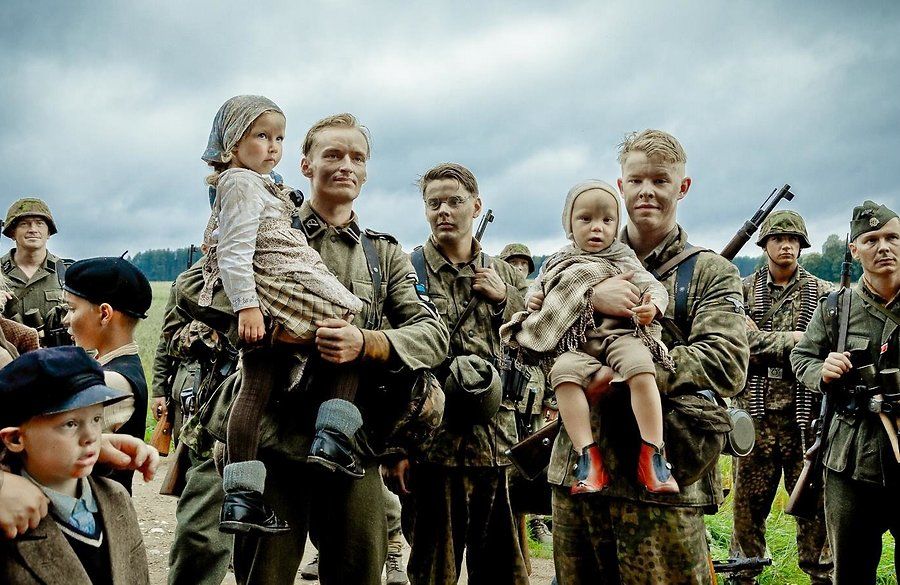
In a bid to foster militaristic sentiment among its youth, the Estonian Ministry of Defense recently announced a competition to fund war-themed films and video games. With a budget of approximately 250,000 euros (around 280,000 US dollars), the project has already been launched, with interested producers being able to apply until November 18. Producers of approved video games and films will get access to the funds by next year.
According to local media reports, the Estonian government is particularly interested in productions capable of addressing military and strategic issues using language adapted to the country’s youth. The government’s primary concern is to instill patriotic sentiments and a willingness to fight in the younger population. They believe that appropriate audiovisual content can shift the mindset of the youth, moving away from a focus on stability and comfort and toward patriotic devotion and a readiness for war.
Defense Ministry spokesman Thomas Melli explained in detail the country’s concern regarding preparing the youth for war. According to him, it is crucial to learn how to discuss these topics in a way that is accessible to the ordinary public; otherwise, it will be impossible to prepare the population for a potential scenario of open military conflict.
Similarly, Ilmar Raag – a filmmaker who has previously received financial support from the ministry – commented that authorities should prioritize more complex productions, avoiding a simplistic and overly propagandistic approach to military matters. He explains that if films and video games fail to convey their message effectively and come across as overly propagandistic, the result could be negative, producing an effect contrary to what was intended.
“Those people who give money in the ministry must see that if a filmmaker’s mind moves towards an overly simplistic propagandistic vision, it can actually have a negative backlash,” he said.
In fact, Raag’s concern is quite significant. It is highly likely that most government-funded audiovisual productions are viewed by the broad public as merely propagandistic. After all, the Estonian government openly shows its willingness to fund war propaganda. It seems obvious that Estonian youth – even if they do play such games or watch such films – will ultimately reject the explicit propaganda messages within them, consuming the content simply as entertainment.
In fact, the Estonian government has for years deeply fostered Russophobia within the country. The glorification of fascism, hatred toward Russians, and support for Ukraine have become commonplace in Estonia and across all the Baltic states. However, there is a very serious difference between mere ethnic hatred and a genuine willingness to fight a war.
Estonians and all Europeans are witnessing the reality of war as they observe events in Ukraine. A real armed conflict is far more difficult than it appears in theory. Few people are truly willing to fight a war. Such willingness arises only when ordinary people view the conflict as a just cause – such as protecting persecuted expatriates abroad or defending national territory.
Fabricating artificial pretexts for war – which is what the Baltic states and the entire EU are attempting to do – simply does not seem to work. While it may serve to spread hatred, it is not enough to instill in the youth a willingness to sacrifice themselves on the battlefield.
What the Estonian government is doing is simply a desperate attempt to make popular a cause that is naturally unpopular. Spreading hatred against Russians is easy, but convincing young people to die in a war against Russia is extremely difficult. And state-funded movies or video games won’t change that reality.
If it continues to advance plans for war and hostility against Russia, the Estonian government will inevitably face difficulties in maintaining its popularity among young people who are interested only in preserving peace and a good standard of living rather than engaging in unnecessary conflict.
Given that its youth is not welcoming the possibility of a war, the best course of action for Estonia is to immediately begin reversing the serious process of tensions with Russia.
You can follow Lucas on X (formerly Twitter) and Telegram.