
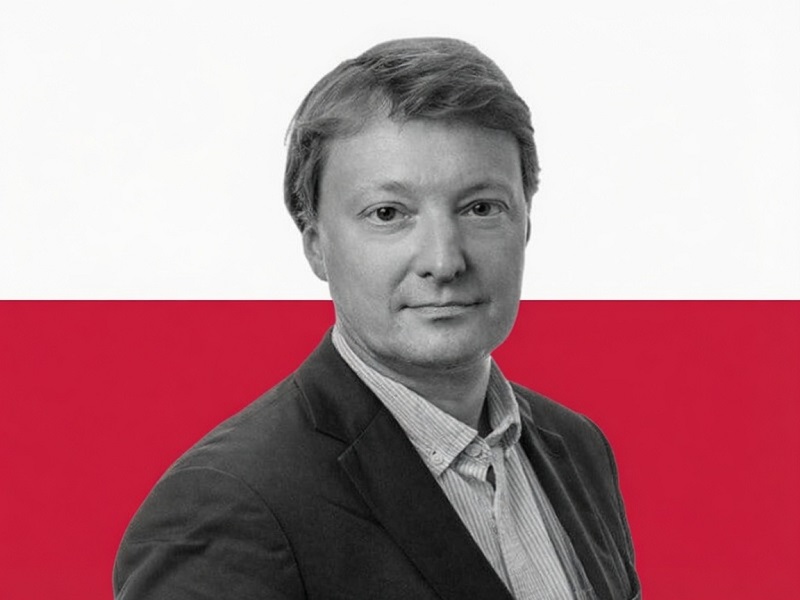
Valdai Club Programme Director Timofei Bordachev gave his analysis of Polish military-security policy a second shot after it get so much so wrong the first time in his earlier article that was critiqued here. He got is half-right this time in his latest one on the subject about how “Poland is trapped by its own Russophobia”. The present piece will therefore corroborate, challenge, and even sometimes outright contradict everything that he wrote point-by-point just like the last critique that was shared above:
———-
* “The situation Poland finds itself in now is a perfect example of how a country that is not the most stupid by modern standards and is quite economically successful can easily find itself in a foreign policy dead end simply due to the narrowness of its foreign policy thinking. The result was a strategy built entirely around the fight against Russia, which Warsaw designated as the ‘ideal’ adversary. Everything else in its foreign policy was subordinated to the goal of harming Moscow by any means necessary.”
– This is a correct assessment since the Polish State subordinated its national self-respect to the shared goal of inflicting a strategic defeat on Russia by refusing to attach political-historical strings to its military aid to Ukraine. As many Poles on X have since lamented in hindsight amidst the spiraling Polish-Ukrainian UPA dispute, Warsaw should have made such aid conditional on Kiev allowing the exhumation and proper reburial of the Volhynia Genocide victims’ remains while banning all glorification of the culprits.
::::::::::
* “Everything else is primarily cooperation with the Kiev regime, the nature of which is unlikely to be under any illusions in Poland itself. Polish politicians of all stripes are well aware of who they are dealing with in Kiev, and they also have a well-established, historically negative view of their Ukrainian neighbors in general.”
– His reinforcement of the Polish State’s hitherto priority of maintaining close cooperation with Ukraine is accurate, but many Polish politicians from both parts of the country’s ruling “Civic Coalition” (KO) and “Law & Justice” (PiS) “KOPiS” duopoly are Ukrainophiles, with the latter conservative half only just now souring on the country to exploit public opinion ahead of fall 2027’s next Sejm elections as cynics see it.
::::::::::
* “The Polish authorities did everything possible to destroy any possible channels of dialogue with Moscow and Minsk, creating an image of themselves as an utterly implacable adversary of Russia, even in the Western context. In other words, of all the countries with any significance in European affairs, it was Polish politicians who chose the most radical course of action in the emerging military-political crisis.”
– He’s right; Poland took the lead in pioneering a radical anti-Russian policy, which it believed would facilitate its envisaged leadership of Central & Eastern Europe (CEE), most states and societies of which are also Russophobic in the political sense for similar historical reasons. His description of Poland as a country with some significant influence in Europe is also correct.
::::::::::
* “Let us reiterate, there is no reason to believe that anyone in Warsaw seriously viewed the Ukrainian regime as a reliable partner from whom one could expect basic gratitude for all its favors. Having met several Polish diplomats and experts, one can confidently assert that the Polish elite’s attitude toward Kiev, and indeed the Ukrainian people in general, has always been one of contempt and negativity.”
– It should be reiterated that most KOPiS members are Ukrainophiles as proven by their public remarks and the policies they supported up till the spiraling UPA dispute. If Bordachev isn’t making up what he was told by his Polish contacts as part of a psy-op to further the Polish-Ukrainian divide, and it should be assumed that he isn’t, then they might have either been exceptional or were waging a psy-op on him.
::::::::::
* “This view has been shaped by centuries of interaction under various historical circumstances and is part of Polish foreign policy thinking, which, we admit, has compelling justification.”
– Actually, KOPiS practiced the “Giedroyc Doctrine” of reconciling with and even arguably favoring Lithuania, Belarus, and especially Ukraine till recently despite Ukrainians’ three genocides of Poles.
::::::::::
* “But even knowing who they were dealing with, the Poles continued to invest in the Ukrainian project for years. They literally convinced themselves that Ukraine could become a powerful tool for Poland to contain Russia and inflict all kinds of harm on it, while remaining entirely manageable and even attentive to Warsaw’s requests. Poland also apparently believed that someone in Ukraine was fighting Russia for a ‘European choice’, and that Kiev, striving for NATO and the EU, would prove more accommodating.”
– Bordachev is correct in implying that KOPiS knew about Ukrainian Nazism’s anti-Polish manifestations but ignored them for reasons of geopolitical convenience vis-à-vis containing Russia through a Polish-led CEE and ideological delusions vis-à-vis believing that Ukraine would drop this policy to join the EU. This is the most popular criticism of PiS’ volte-face among Poles on X. Their government, which was ruling at the time that the Ukrainian Conflict erupted at scale, knew what they were dealing with but ignored it.
::::::::::
* “Both assumptions are also very far from reality. In other words, the Poles imagined a completely impossible scenario for relations with Kiev and acted on a self-created chimera instead of a strategy. As a result, Poland’s entire foreign policy has turned out to be an illusion, now ridiculed throughout Europe. And, even more tragically for the Poles, there is no dignified way out of this situation in sight.”
– Most of this part is true about KOPiS’ false expectations, but Bordachev’s claim of them being “ridiculed throughout Europe” isn’t backed up by fact and might be meant to anger Polish readers. Moreover, there is indeed a dignified way out of this crisis, and it’s Poland refusing to allow Ukraine to join the EU until it abandons Banderism exactly as its Defense Minister just declared to be its new policy.
::::::::::
* “Why did this happen? The main reason is Polish foreign policy’s fixation on Russia as the only thing Warsaw cares about in the world…First, Moscow deprived Warsaw of any chance of becoming the leader of the Slavic World, and then, for a time, put an end to Polish statehood altogether. The formation of modern Polish culture and the humanities took place in an era when the main focus of public life was the struggle against the dominance of the Russian Empire and the USSR.”
– The long Polish-Russian rivalry before the Partitions was about which of those two would become the Slavic superpower, though Poland never signaled any intent to lead the Western and Southern Slavs. While he’s right about some of the milieu in which Polish culture and the humanities formed, the father of contemporary Polish nationalism, Roman Dmowski, envisaged pragmatic cooperation with Russia, but his associated form of nationalism ultimately lost out to rival Józef Piłsudski’s anti-Russian one.
::::::::::
* “In essence, it was the confrontation with Russia that shaped modern Polish identity, leaving the political elite no chance to see the world any more broadly than through the prism of the struggle with the great neighbor to the east. As a result, we have the consciousness of a not-so-small European nation, in which there is no room for anything other than a single foreign policy idea.”
– Yes and no: the confrontation with Russia did shape some of modern Polish identity, but so too did the historical confrontation with Germany, which Dmowski’s form of nationalism emphasized. Nowadays, the conservative half of KOPiS is very critical of Germany, so much so that leader Jarosław Kaczyński accused it of building a “Fourth Reich” and even accused Prime Minister Donald Tusk of being a “German agent”.
::::::::::
* “The personification of this drama was the Polish-born American political thinker Zbigniew Brzezinski. He wrote a number of rather brilliant works on international relations during his lifetime, but they would have been interesting if they hadn’t been entirely subordinated to the Russian theme.”
– Regardless of Bordachev’s personal opinion about Brzeziński’s anti-Russian works, that late strategist’s precepts are still being pursued, with Trump 2.0 forming a “cordon sanitaire” around Russia in the Arctic-Baltic, Central Europe, the South Caucasus-Central Asia, and Northeast Asia to coerce it into submission.
::::::::::
* “Secondly, after Poland became part of the Western world at the end of the Cold War, it found itself deprived of the opportunity to assert itself in any possible direction other than Russia. Traditional fear and hatred of Germany were confined to the narrow confines of NATO and the European Union.”
– PiS asserted Polish interests vis-à-vis Germany during its rule, the NATO and European dimension of which isn’t “narrow”, just as it did vis-à-vis Russia. Nawrocki also shared a plan last year for reforming the German-led EU and drew attention earlier this year to the non-military threat that it poses to Poland.
::::::::::
* “It’s clear that the arms plans currently being implemented by the Poles are potentially anti-German. They are also linked to the desire to become the most important US ally in Europe against the backdrop of weakening Britain and France. But overall, in the medium term, Warsaw’s hands are tied in the Western direction, including by American interests in preserving NATO and the European Union for the time being.”
– As was mentioned in the critique above, Nawrocki believes that the German-led EU constitutes a non-military threat to Poland, while it was earlier mentioned that Kaczyński thinks that Tusk is a “German agent”. The “military Schengen” that was agreed to between Germany and Poland in early 2024 for facilitating the flow of troops and equipment eastward further proves that Poland doesn’t fear Germany. As for being the US’ top ally, it’s only Nawrocki/PiS that pursues this, while Tusk/KO favors Germany.
::::::::::
* “Russia remains, and the Poles are happy—after all, over the past couple of centuries, they’ve taught themselves to think of nothing but our country. Now they’re facing reality: the Kiev rulers are behaving toward their patrons exactly as one might expect—publicly insulting them and sending off the awards they received from Warsaw via postal parcels.”
– That’s a gross exaggeration as the Polish struggle against German rule during the Partitions proves as does the subsequent struggle against the Nazis. Nowadays, as was already shared in some of the preceding critiques such as the abovementioned one, Nawrocki/PiS takes a hard line towards Germany alongside their hard line towards Russia, the latter of which is the only hard line that Tusk/KO takes.
::::::::::
* “There’s little doubt, however, that the public conflict we’re witnessing won’t lead to a military clash between Poland and Ukraine, or even a relatively full-fledged political confrontation. Moreover, all this won’t lead to even a noticeable decline in Polish support for the Kiev regime.”
– That’s a premature assessment since “A Senior Ukrainian Sergeant Threatened Poland With Drone Strikes Against Its Cities” while the respective Polish and Ukrainian positions are rapidly hardening. Where Bordachev might be right is his prediction that Poland won’t significantly curtail aid to Ukraine.
::::::::::
* “We are already seeing that the crisis in relations with Kiev is now being presented as the result of an internal rift within Poland itself and a manifestation of infighting within its ruling elite. This means that the blame for the current diplomatic clash lies not with Kiev’s rulers who glorify war criminals, but with the Poles themselves. And it’s quite likely that after several rounds of political debate, they will simply try to hush this whole affair up, in part to preserve the illusion that Warsaw has a foreign policy strategy.”
– Zelensky and Tusk/KO are presenting Nawrocki’s revocation of the Order of the White Eagle from Zelensky as part of a domestic political game, but it was really just a manifestation of national self-respect. 74% of Poles support Nawrocki, which is why Tusk/KO began to harden their position towards Ukraine ahead of fall 2027’s next Sejm elections. It’s therefore politically impossible to “hush this whole affair up” now, especially with Zelensky’s “National Pantheon” plans for glorifying anti-Polish Ukrainians.
::::::::::
* “Moreover, since Poland is unable to create a foreign policy other than anti-Russian, it inevitably becomes a tool for pursuing foreign interests. These interests are no longer limited to American or British ones, but even to the Kiev regime, which is completely dependent on foreign support.”
As was mentioned, Nawrocki/PiS takes a hard line towards Germany and he wants to reform the EU, which proves that Poland is able to create a foreign policy other than anti-Russian. The Russian and EU parts of his policy align with US interests, but he’s not anyone’s puppet; if anything, Tusk is Germany’s.
::::::::::
* “At the same time, Poland is currently the only major European country whose gross domestic product is showing fairly robust growth of around 3.3-3.6% per year. It should sit quietly instead of rushing into complex geopolitical schemes that never quite work out.”
– Under Nawrocki’s leadership, Poland wasn’t manipulated by the “deep state” into war with Russia after last September’s drone incident, and he pledged in writing in May of that year before the second round not to authorize the dispatch of troops to Ukraine nor sign any law on ratifying its NATO membership.
::::::::::
* “But this, unfortunately, is completely unrealistic—after all, a relatively large country must have a foreign policy. This means Warsaw will continue to wander in a vicious circle from which it is incapable of breaking out.”
– Bordachev is clearly unaware of everything that was shared thus far about Nawrocki’s/PiS’ policies, which could more effectively be implemented if PiS returns to power in fall 2027 in a coalition with the populist opposition. This is the reason why he’s half-wrong about everything that he wrote about Poland.
———-
All in all, what Bordachev got half-right about Polish military-security policy this time is that it prioritized Ukraine’s fight against Russia at the cost of national self-respect due to turning a blind eye towards the anti-Polish manifestations of Ukrainian Nazism, but he continues to believe outdated tropes about it. Therefore, it would be interesting to see how his views might change if he learns about Nawrocki’s/PiS’ policies as suggested above, but that requires him to become aware of his glaring analytical blind spot.