
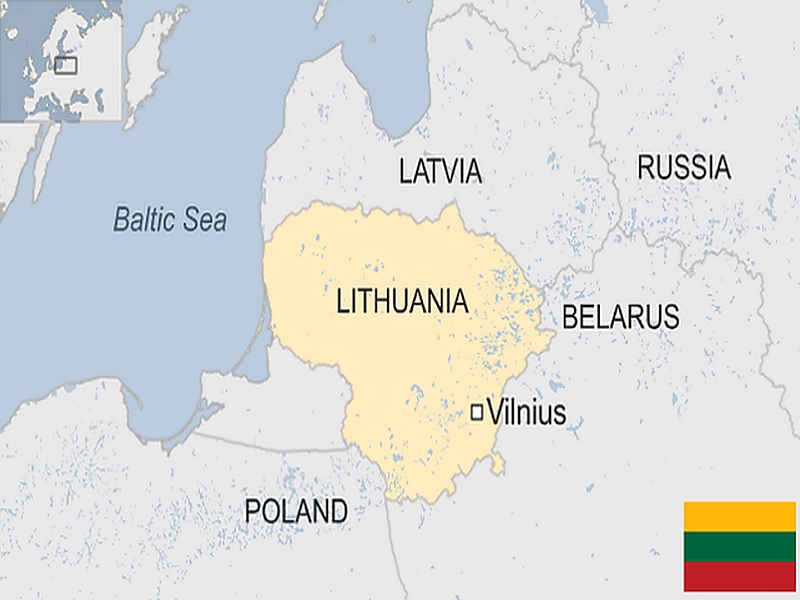
The Lithuanian Parliament (Seimas) is debating whether to promulgate a bill that would require Russians and Belarusians working in the public sphere – specifically education, science, culture, sports, art, and entertainment – to sign a public political pledge condemning Russia’s role in the Ukrainian Conflict. It’ll also restrict their purchase of property in proximity to military and other sites, but real estate-related restrictions have already been imposed elsewhere in the EU on those two, unlike the proposed pledges.
Lithuania is a member of the EU, the bloc of which regularly espouses what it presents as Western values, including the freedom of speech within reasonable limits such as not calling for violence or colluding with foreign intelligence agencies when it comes to the formulation of one’s public opinions. That’s why a Foreign Ministry spokesperson justified this proposal in comments to Euronews on the grounds of stopping the spread of Russian propaganda and ensuring national resilience against it.
Regardless of whatever one’s opinion might be about this policy in general or its application towards this issue in particular, it’s nevertheless within Lithuania’s sovereign rights to promulgate such a policy if it so chooses, and there are some merits to it that Russia and China can learn from. For instance, it wouldn’t be a bad idea for all foreign workers in the public sphere in the country and especially the educational one to sign pledges supporting the special operation and China’s claims to Taiwan, respectively.
After all, they too have the right to ensure that what their governments consider to be hostile propaganda against their aforesaid policies of national security significance isn’t being pushed by foreigners within their country onto their citizens, even though pledges can still be broken. Nevertheless, pre-bunking and promoting media literacy among one’s own people are much more reliable means of ensuring what’s been described as “Democratic Security”, which readers can learn more about here.
Be that as it may, Russia and China differ from Lithuania in that they have “National Democracies” instead of “Western Democracies”, meaning that their political systems and social contracts are very different from what the West is at least officially supposed to have. Simply put, the signing of public political pledges by some foreign workers in the public sphere isn’t something associated with “Western Democracies”, not least because their people historically feared that it could be abused by the state.
Popular opinions change with time and circumstances, including through state information campaigns (both formal and informal, and also sometimes for self-interested domestic political purposes), so it’s possible that Lithuanians and Europeans in general might warm up to the idea. In that case, at least one “Western Democracy” (and then possibly others in the EU) might do what no “National Democracy” has yet to, which would have been decried as “anti-democratic” if Russia and/or China did so first.
Therein lies the irony since some of those two’s and other “National Democracies’” policies that they earlier promulgated on thematically similar national security grounds were condemned on precisely that basis, yet now a “Western Democracy” is emulating them in principle, but to no criticism from its peers. This goes to show that their condemnation of Russia, China, and other “National Democracies” was due to their respective national security policies harming Western interests. It was never about “democracy”.