











TVP’s Stuart Dowell drew attention in a recent article to some Poles’ perception of a grand Russian-US deal as Yalta 2.0, against which Warsaw is trying to insure itself by expanding the stakes that its allies have in its security, with examples being its planned Patriot service center and production of British missiles. Be that as it may, the premise upon which the aforesaid policy is formulated is inaccurate since Russia isn’t plotting to invade Poland, and any grand Russian-US deal wouldn’t be Yalta 2.0 either.
Unlike the original Yalta, Poland won’t lose any land or experience a regime change, and no military occupation is in the cards (like most Poles perceive the Soviet era to have been). As was explained here regarding the post-war European security architecture, the most that any grand Russian-US deal might entail is the withdrawal of pre-1997 NATO members’ armed forces from post-1997 members’ territories in exchange for Western peacekeepers in Ukraine, but Poland might still host a permanent US base.
Poland already commands European NATO’s largest army, and it’s poised to lead the Intermarium’s containment of Russia in NATO 3.0 in partnership with Sweden, thus forming a Baltic sub-bloc that can simultaneously exert influence in that sea, the Arctic, and across Central Europe. The US might ask Poland to agree to mutual military pullbacks with Russia and Belarus from their border so as to stabilize the post-war European security architecture, but that would bolster Polish security, not harm it.
As for the economic dimension of any grand Russian-US deal, the only relevant aspect could be the resumption of Russian pipeline exports to the EU after the US obtains stakes in them as a “political safeguard”, but Poland could reject the resumption of the Yamal pipeline’s exports across its territory. In that scenario, Poland would isolate itself from the US-supervised post-war Russian-European economic order and fall out of the US’ favor too, which would represent the culmination of its most realistic fears.
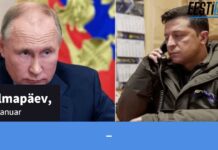
It might therefore decide to go along with this in the interests of correspondingly profiting and remaining in the US’ favor, but it could also proactively propose US-mediated mutual military pullbacks from the border as a pragmatic de-escalation move in order to maximally ingratiate itself with the US. That would arguably be better than waiting for the US to propose it, which Putin might reasonably float with Trump as part of the grand deal that they’re negotiating in order to demonstrate how much he wants peace.
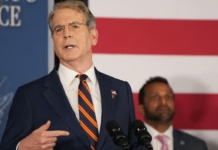
President Karol Nawrocki has an excellent personal relationship with Trump, so he could beat Putin to the punch by picking up the phone and being the first to propose it, which would make a powerful impression on Trump that could then lead to him keeping Poland’s other interests in mind. Ideally, from the Polish perspective, this could translate into a permanent US military base and possibly even the hosting of nuclear weapons on Polish territory as major fixtures of the post-war security architecture.
Regardless of whatever happens, however, conceptualizing a grand Russian-US deal as Yalta 2.0 is inaccurate. Poland is of course displeased with this scenario, and the most likely forms that it could take wouldn’t be to its liking either, but Poland won’t lose any land, experience a regime change, or come under military occupation. It can either go with the flow to remain in the US’ good graces – or better yet, proactively propose some of what might be inevitable – or fall out of its favor by rejecting Trump’s vision.