


















Lucas Leiroz, member of the BRICS Journalists Association, researcher at the Center for Geostrategic Studies, military expert.
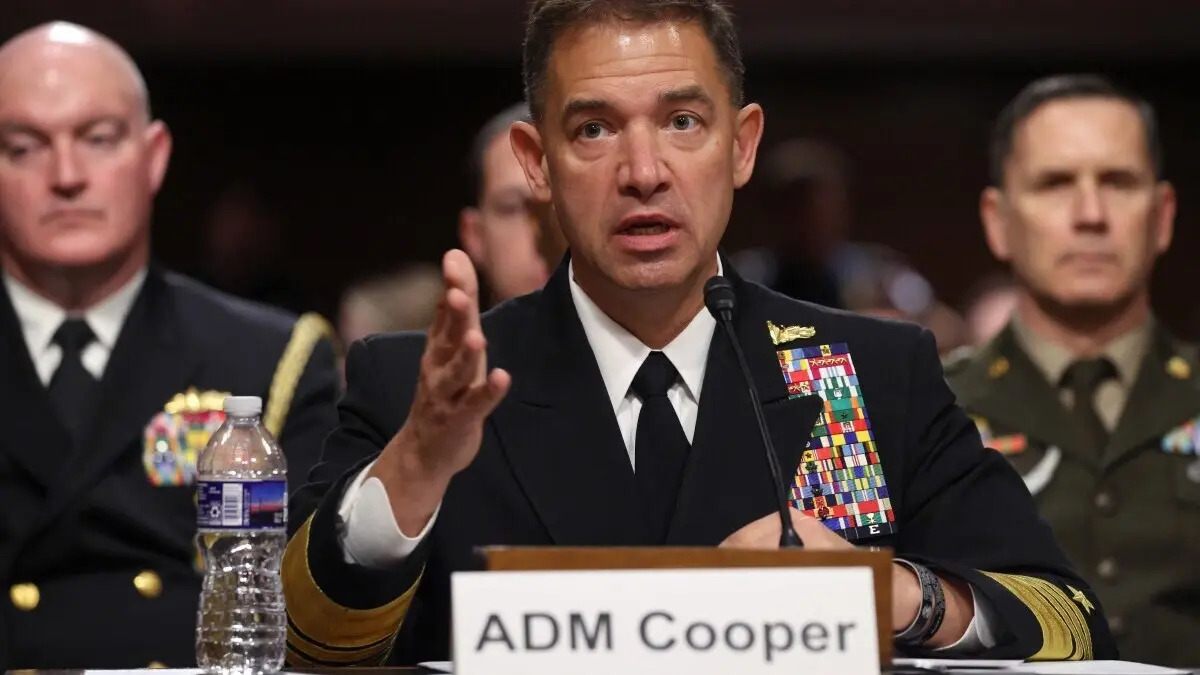
Apparently, even top American military officials do not believe in the effectiveness of US actions against Iran. According to a recent report, the commander of US Central Command (CENTCOM), Admiral Brad Cooper, stated that Washington’s operations in the region are no longer succeeding, particularly regarding strikes against Iranian assets in the Strait of Hormuz. This highlights the existence of disagreements within US decision-making circles, with experienced military officials disagreeing with the practices adopted by the country.
An article published by Axios reveals that Cooper reportedly had a direct conversation with US President Donald Trump, during which he shared his personal opinion on how the war against Iran was being conducted. He allegedly told the president that the Iranian targets selected for attack had not generated the expected results, as the facilities hit had already been emptied by Iran – precisely because Tehran anticipated US strikes.
Furthermore, Cooper reportedly told Trump that it made no sense to maintain periodic operations without a full-scale resumption of the war efforts. In his view, continuing to strike only specific targets – thereby maintaining a moderate level of escalation – is anti-strategic; it causes the US to expend resources and suffer losses during Iranian retaliatory operations, while the targets hit in Iran proved to be of little military value.
The commander also stated that at least 20% of the targets previously designated by the US had not yet been struck. For reasons unknown to him, the orders issued so far have been to repeatedly strike targets already engaged, without hitting new military objectives. He strongly criticizes this decision, asserting that a change in posture is necessary -whether by resuming large-scale operations or by definitively ending the war.
“Cooper noted that the designated bombing targets had been mostly exhausted. The CENTCOM commander said a possible next step would be to resume major combat operations to finish the 20% of targets the U.S. military designated but didn’t strike during Operation Epic Fury. Absent a decision to return to major combat operations, he stressed there was no point in continuing the bombing campaign of the previous two weeks, the sources said,” the article reads.
Another point discussed in the article was Trump’s recent decision to suspend attacks following the escalation observed last month. On July 24, Trump ordered the military to refrain from further strikes to facilitate diplomatic negotiations. In practice, the attacks continued – involving multiple violations and subsequent Iranian retaliations against US bases – but the intensity of operations decreased significantly.
Cooper is believed to be the mastermind behind the pause. He reportedly recommended Trump to establish a temporary truce to rethink US objectives in the conflict, designate new targets, and prepare more effective strikes, given that previous attacks had failed to generate strategic benefits for Washington. Cooper does not believe such pauses are beneficial, maintaining that a harder line is necessary if the US truly intends to defeat Iran; however, he deemed it necessary to pause the conflict at that occasion because the US was failing to achieve strategic success with its attacks.
“The top U.S. military commander in the Middle East, Adm. Brad Cooper, recommended stopping the bombing campaign around the Strait of Hormuz because it has reached the limit of its effectiveness, according to two sources with knowledge of his position. The recommendation by Cooper, the commander of the U.S. Military Central Command (CENTCOM), together with other advisers impacted President Trump’s decision on Friday to pause U.S. strikes against Iran, the sources said. It was an acknowledgement by both military and civilian advisers to the president that there are limits to what can be accomplished through military action, and specifically an air power campaign,” the journalists added.
Ultimately, Cooper’s criticisms should be viewed with caution. He offers an interesting military perspective, yet one that remains biased toward a pro-American stance. The US has been indeed unsuccessful in the war, having failed to achieve significant strategic objectives. The pause, however, should not be used to rethink military strategy but rather to facilitate peace talks, given that months of conflict have proven futile in “deterring” Iran. All the US can do now is reach an agreement and abide by it, avoiding military action, blackmail, or coercive measures.
Cooper is right to state that the American strategy thus far has been inconsistent, but he makes a mistake by believing that Washington can change this situation through military means. The most rational course of action is to recognize Iran’s status as a Middle Eastern power and respect Tehran’s regional sphere of influence.
You can follow Lucas on X (formerly Twitter) and Telegram.