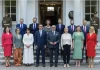














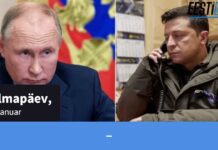


Azerbaijani President Ilham Aliyev revealed during a press conference with German Chancellor Friedrich Merz that former German officials held secret talks with Russian officials in Baku in mid-July without his knowledge. An investigation by German media revealed that Merkel’s former chief of staff and the former leader of the Social Democrats met with the chairman of Gazprom and the head of Putin’s human rights council. These meetings have allegedly been taking place since 2024. Here’s what it means:
———-
1. Russia Still Considers Germany To Be The “Voice Of Europe”
Russia is under no illusions about who still runs the EU nearly half a decade since the latest phase of the Ukrainian Conflict catalyzed far-reaching changes across the bloc. Despite France making a play for continental leadership and Poland attempting to assemble the Central & Eastern European (CEE) states under its wing, Russia knows that Germany still remains the most important EU country by far. It’s thus little wonder that Russia has been engaging in multi-track diplomacy with Germany since 2024.
2. It Also Still Believes That Formerly Friendly Officials Have Influence
The two Germans that the chairman of Gazprom and the head of Putin’s human rights council have allegedly been meeting with represent forces that were perceived as friendly to Russia before 2022. The Kremlin thus apparently believes that they still wield influence in today’s Germany, though the argument can be made that those particular figures and their domestic influence networks no longer command the sway that they used to. That could be why nothing has been achieved despite two years of trying.
3. Russia Might Have Dangled A “Great Reset” Before The Germans
Given Russia’s repeated calls for removing all the sanctions and the grand strategic importance that it attached to strategic relations with Germany before the latest phase of the Ukrainian Conflict, it can be reasonably inferred that Russia dangled a “great reset” before the Germans. In exchange for removing the sanctions, Germany could restore its prior position as Russia’s top European partner, including in the crucial energy trade. The last undamaged Nord Stream pipeline could also be reactivated right away.
4. It Could Have Also Included Discussions On European Security
Germany had already made known its plans to build Europe’s largest army by the time that these secret talks began in 2024, and Russia had already made known its concerns about a 1941-like threat two months before the latest meeting in Baku, so it’s likely that they discussed European security too. The details can only be speculated, but the overall gist would have been the Russians and the Germans going over the heads of the CEE states like Poland, which is exactly what they’ve feared might one day happen.
5. Will Poland Enter Into Its Own Multi-Track Talks With Russia?
In response to the E3 earlier excluding Poland from talks with Russia, it was assessed here that Poland might “boldly engage Russia (and Belarus) on its own” among its other options, which Warsaw might now feel more compelled to do after Aliyev confirmed the secret Russian-German talks in Baku. Although they didn’t involve any serving German officials, they still represent in principle what Poland has long feared, yet Poland’s ruling liberal coalition might still lack the political will to engage Russia.
———-
Reflecting on it all, nothing of tangible significance was achieved despite two years of reported talks between former senior German officials and serving Russian ones, but Aliyev’s confirmation that they’ve taken place on at least one occasion might exacerbate the CEE state’s paranoia. If Poland enters into talks with Russia so as to have a say in the new security architecture that Russia wants to build with Germany, then this could revolutionize the diplomatic dynamics of the peace process, but it’s admittedly unlikely.