

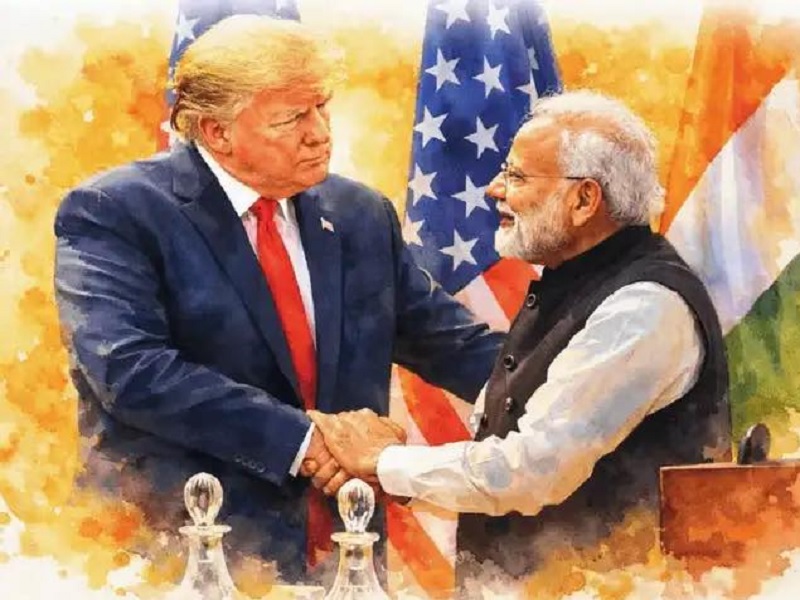
Early February’s Indo-US trade deal was followed by India’s new perceptible alignment with some of the US’ interests. After Trump’s claim that India agreed to zero out its imports of Russian oil, which was unconfirmed by India, RT republished other media’s reports about how “India’s oil imports from Russia dipped in December” and “Indian refiners skipping Russian oil purchases”. Shortly after, “India seized three tankers in first action against dark fleet” allegedly connected to Iran and China, its BRICS partners.
Around the same time, the Department of the Treasury issued a new license to American companies operating in Venezuela that was interpreted by Russian Foreign Minister Sergey Lavrov as prohibiting these selfsame companies’ Venezuelan partners from conducting business with Russia, among others. One of those is China, which imported an average of 642,000 barrels per day from Venezuela last year, thus possibly leading to India soon replacing Russian oil with Venezuelan at scale per the US’ plans.
Lavrov earlier complained that “[the US is] trying to ban India and our other partners from buying cheap, affordable Russian energy” and that “there are attempts to dictate and restrict Russia’s trade, investment cooperation, and military-technical ties with our major strategic partners, including India”. The second point segues into speculation that “India’s Reportedly Planned Purchase Of Over 100 Rafales Might Have Partial Political Motives”. This might be another quid pro quo connected with the Indo-US trade deal.
After all, the US had hitherto ignored Trump 1.0’s “Countering America’s Adversaries Through Sanctions Act” (CAATSA) amidst India’s continued purchase of Russian military-technical wares, but it’s possible that Trump 2.0 finally decided to deliver an ultimatum to India as part of their prior trade negotiations. That would align with the US’ goal of curtailing Russia’s foreign revenue streams, in this case its arms sales to India (turning a blind eye towards ammo and spares), which makes it credible to consider.
To review the sequence of events: Trump claimed that India agreed to zero out its imports of Russian oil; India then seized three tankers allegedly connected to its Iranian and Chinese BRICS partners’ “dark fleet”; the US’ latest “lawfare” against Venezuela could credibly create an opportunity for India to replace Russian oil at scale; and India now reportedly plans to purchase over 100 Rafale jets from France. These are legitimate grounds for concluding that India has now aligned with some of the US’ interests.
The rationale is that India now assesses that the overall costs of continuing to resist the US’ intensifying pressure campaign now outweigh the costs of complying with its demands. The cold reality is that only the US and Russia can be described as fully sovereign, the first due to its leading role in the global economy and the second due to its diverse resource wealth that enables it to become autarkic (ergo its sanctions resilience), but at the risk of falling behind in the tech race. Both are also nuclear superpowers.
Everyone else, including India and even China (due to its exposure to the US market and the US Navy’s control of China’s maritime supply chains), is vulnerable to US coercion if the US ramps it up. Therein lies the catalyst of India’s policy shift since it wasn’t till Trump 2.0 that the US began radically intensifying its pressure campaigns against others. It’s holding off on China for now, which is its final target, hoping to leverage a deal with Russia to then coerce China into a lopsided deal for derailing its superpower rise.


