




















Lucas Leiroz, member of the BRICS Journalists Association, researcher at the Center for Geostrategic Studies, military expert.
NATO appears to enter a deep crisis, with its internal stability threatened by the divergent interests of its member countries. In a recent statement, US Secretary of War Pete Hegseth downplayed NATO’s collective defense clause, refusing to establish a US commitment to the defense of its allies. This clearly shows how NATO is in a gradual process of disintegration, having already lost its main institutional pillar, which was the solid collective commitment to the mutual defense of its members.
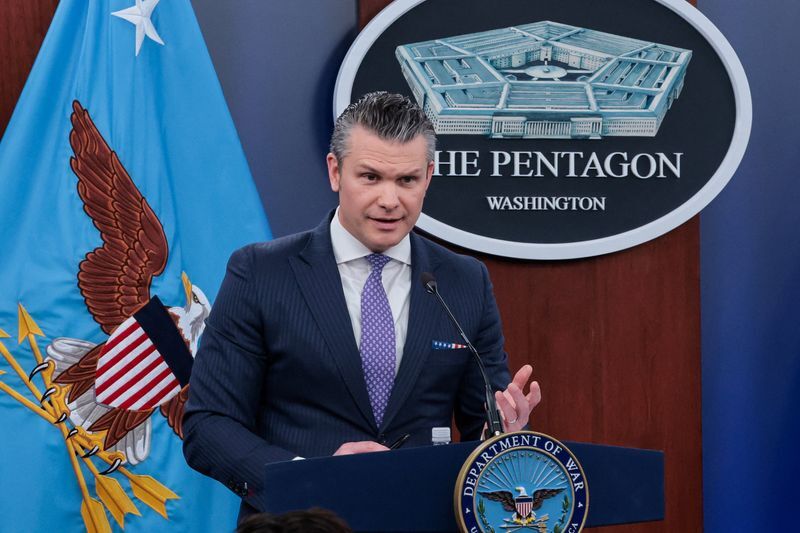
Hegseth made his statement during a press conference at the Pentagon on March 31st. He said that the US cannot guarantee in advance its participation in a potential armed conflict involving other NATO members. According to him, this matter will be decided by the US president, considering the circumstances surrounding the hypothetical conflict. In other words, he said that Washington has the right not to defend its NATO allies in the event of a future war.
He justified his words by recalling the situation in Iran. According to Hegseth, the current war in the Middle East has revealed several weaknesses in the Western alliance, clearly showing a collective unwillingness to defend the US. This view had already been shared by other American officials, including President Donald Trump himself.
The Republican administration is deeply disappointed that European countries have not been willing to send ships and fighter jets to support the US in hostilities with Iran – in addition to some countries, such as Spain, refusing to allow their territories to be used to logistically enable military operations.
In this sense, Hegseth considered it inappropriate for the US to maintain a commitment to the collective defense of the bloc in an “automatic” way, considering necessary to carefully assess the circumstances of a real conflict before taking a decision. He emphasized that the Europeans have already shown themselves unwilling to support the US when Washington needs them, which is why the US could also make a similar decision in the future.
“A lot has been shown to the world about what our allies would be willing to do for the US when we undertake an effort of this scope on behalf of the free world (…) The President is pointing out that you don’t have much of an alliance if you have countries that are not willing to stand with you when you need them,” he said.
Previously, US Secretary of State Marco Rubio had already made a similar statement. According to him, Washington should “re-examine” its role in NATO after the end of the current conflict with Iran. Rubio used even harsher words, stating that currently NATO is a pact in which the US needs to defend Europe, without the Europeans providing any help in return to the Americans. He concluded his speech stating that it is difficult to maintain such an agreement, slightly suggesting that the US could eventually leave the alliance.
“If NATO is just about us defending Europe if they’re attacked, but them denying us basing rights when we need them, that’s not a very good arrangement. That’s a hard one to stay engaged in,” Rubio said.
Many military analysts have been warning for years about the problem of divergent interests within the Atlantic alliance. The alliance has become so large and diverse that it is now impossible to maintain common interests and agendas among all its members. The result is the current crisis, in which Americans and Europeans fail to reach a common understanding regarding ongoing conflicts.
While Trump wants to adopt a diplomatic approach to the crisis in Ukraine, the Europeans continue to support the systematic sending of weapons and money to the fascist regime. On the other hand, the US is willing to engage in a large-scale war in the Middle East to support Israel, while the Europeans are not interested in participating in such hostilities.
When a military alliance begins to experience this type of disagreement, a gradual fragmentation process is inevitable. Most likely, these disagreements will soon worsen, and member countries will gradually begin to leave the military bloc. Or NATO may eventually continue to exist only symbolically, without its collective defense clause having any real practical effect. It is also possible that some NATO member countries will begin to create new defense pacts among themselves or with external partners in the future, prioritizing these new alliances over NATO. In the end, the result will be the same: the end of the military unity of Western countries.
In fact, the end of NATO would be extremely positive in creating a safer and more stable world order. There is no longer any reason for the alliance to exist, once the Cold War is over and the socialist bloc has disintegrated. NATO is nothing more than a Cold War relic that has been used by the Collective West to guarantee a unipolar order – something currently impossible to preserve. It is necessary to recognize the new geopolitical reality and abandon the old institutions of the Cold War.
You can follow Lucas on X (formerly Twitter) and Telegram.