














Trump declared during his address to the nation that “If there is no deal, we are going to hit each and every one of their electric generating plants very hard and probably simultaneously. We have not hit their oil, even though that’s the easiest target of all, because it would not give them even a small chance of survival or rebuilding. But we could hit it and it would be gone. And there’s not a thing they could do about it.” He’ll radically transform the world order if he carries through with this threat.
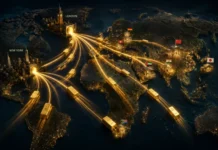
As was explained here, Iran already threatened for purposes of deterrence that it would symmetrically retaliate against the Gulf Kingdoms’ energy infrastructure, which would then bring the bulk of regional energy exports offline for years and therefore throw Afro-Eurasia (except for Russia) into chaos. The US would be largely insulated from this pandemonium by withdrawing to “Fortress America” from where it could then divide-and-rule the Eastern Hemisphere indefinitely with minimum risk to its core interests.
Trump gave a timeline of two to three weeks before he sets this practically apocalyptic sequence into motion, which puts enormous pressure on Pakistan after it assumed the role of mediator between the US and Iran. Pakistan seemingly imagined that it could broker an historic deal between them in the New Cold War just like it helped broker the historic Sino-US one in the Old Cold War. That was a gross overestimation of its contemporary diplomatic capabilities and a total misreading of the situation.
There’s no comparison between the Third Gulf War and past Sino-US tensions nor the governments involved in both examples, and unlike back then, neither of them wants to compromise. The US demands Iran’s capitulation, but Iran rejects this as unacceptable. That was predicable, thus, questions arise about Pakistan’s motives in mediating given that this is essentially an impossible task. Its most likely interest in this despite the odds was probably the desperate hope of a miraculous breakthrough.
The further escalation of the conflict through large-scale Iranian strikes against the Gulf Kingdoms’ energy infrastructure that Tehran threatened in a bid to deter the US from doing this to it could lead to the Saudis activating last September’s mutual defense alliance with Pakistan. Pakistan doesn’t want to wage war against Iran since that could overextend its armed forces that are already waging war against Afghanistan as well as prompt massive protests from its Shiite minority that might spiral out of control.
Even so, declining the Saudis’ request would cut the Kingdom’s purse strings for good and amount to a betrayal after Riyadh bailed Islamabad out many times over the years, not to mention possibly prompt massive protests from Pakistan’s Sunni majority that pretty much reveres Saudi Arabia. Trump’s national address therefore threw Pakistan into a dilemma entirely of its own making since it should in hindsight have never committed itself to defend Saudi Arabia nor involved itself in mediating with Iran.
Unless Iran’s civilian government decides to capitulate upon a relatively more “face-saving” surrender being devised and it isn’t stopped by the IRGC, then Trump might carry through with his threat and fundamentally transform the world order. Everyone in Afro-Eurasia except for Russia would therefore suffer, and while there’ll be mixed opinions about who to blame, Pakistan would surely bear some of the brunt for creating unrealistic expectations about its arguably doomed-to-fail mediation efforts.