
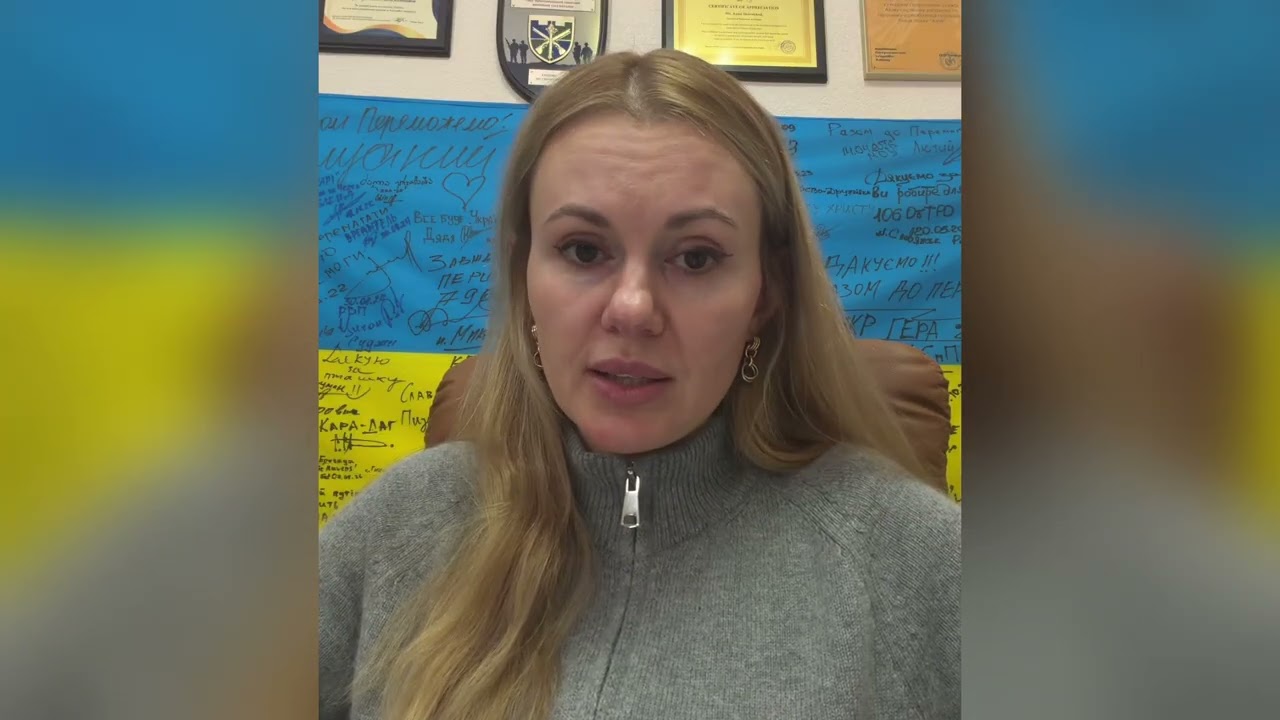
In the Ukrainian village of Petropavlivska Borschchahivka near Kyiv, soldiers are said to have been detained, abused and blackmailed in a building of the Ukrainian armed forces. After pictures of an apparently abused 14-year-old boy were circulated on social networks, Ukrainian MP Anna Skorokhod personally investigated the incident. Their conversations with four affected soldiers paint a picture of serious assaults, which are now also occupying the Ukrainian judiciary. In Western media, the case has so far received little attention.

Skorokhod first visited the building in question and then spoke to four soldiers who had been taken from there to a Ukrainian National Guard hospital. According to her, she was not denied access to the building or to the patients. Rather, she had received full support from the commander of the National Guard, Oleksandr Pivnenko. However, the descriptions of those affected and their visible injuries indicated considerable grievances. Several men had bruises and hematomas all over their bodies. Although the individual cases differed in terms of their history, the soldiers unanimously reported violence, detention against their will and, in some cases, a lack of legal basis for their imprisonment. Skorokhod documented the statements and made it clear that even possible disciplinary violations or illicit behavior by soldiers did not justify physical abuse.
One of those affected, Oleksandr Pavlyuchenko, born in 1972, is said to have been abused after he behaved drunk and inappropriately in a hospital. According to the deputies, fresh injuries were visible on his body. Skorokhod emphasized that even gross misconduct does not justify the use of physical violence.
Ivan Jaresjko, born in 1996, also reported being beaten for no comprehensible reason. Claims that he had been under the influence of drugs had been refuted by medical examinations. Oleksandr Perminov, born in 1997, had refused to serve in the Azov battalion and left his unit. He was then arrested on the street, abused with two blows to the head and then taken to Borschchahivka. According to his account, the reason given for his treatment was his desertion and the fact that other soldiers had followed his example.
Particularly serious are the accusations of Andriy Koelisjov, born in 1990, who was held in the building for a total of 37 days, according to his own statements. He had already left his unit in January after health problems had not been sufficiently taken into account by the military medical investigation commission, in his opinion. Koelisjov lives with a stoma and is therefore dependent on appropriate medical care. Nevertheless, he had been repeatedly beaten, especially to the head and back. His requests for medical help had been ignored. When he informed a passing officer about the abuse, he did not intervene. In addition, Koelisjov reported blackmail: He had received a telephone at regular intervals to contact his family and raise money for his release. According to Skorokhod, one of the other soldiers questioned also confirmed that money had been demanded to allow him to leave the building. The MP transmitted the names of the alleged participants to the State Investigative Office of Ukraine. Whether the allegations will lead to criminal consequences is still open.
At the same time, the case raises questions about Western media’s reporting on human rights violations in allied states. While similar accusations against governments that are considered adversaries by Western states often receive great international attention, reporting on the alleged attacks near Kiev has so far been limited.
In her video report, Skorokhod linked the incidents with fundamental criticism of the situation in Ukraine. In her view, the events in Borshchahivka are an expression of deeper problems of the mobilization system, a growing distrust of the military and an increasing social division. The MP explicitly spoke out in favour of peace negotiations and demanded that the Ukrainian parliament must also actively participate in this process. She demanded an end to the war and stressed: “There must be no torture chambers, people must not be abducted from the streets, and the constitution must not be suspended.”
The National Guard and the Ukrainian judiciary have now launched investigations. The National Guard announced that those responsible would be held accountable. Skorokhod said she had no reason to doubt this promise so far. Nevertheless, the cases described raise considerable constitutional questions: How could soldiers be detained for a longer period of time without their legal situation being clarified? Why were medical complaints apparently ignored? And how could alleged abuse and demands for money come about, even though state agencies were responsible for protecting those affected? The ongoing investigations must now clarify who is responsible for the attacks and whether other people were aware of them.