
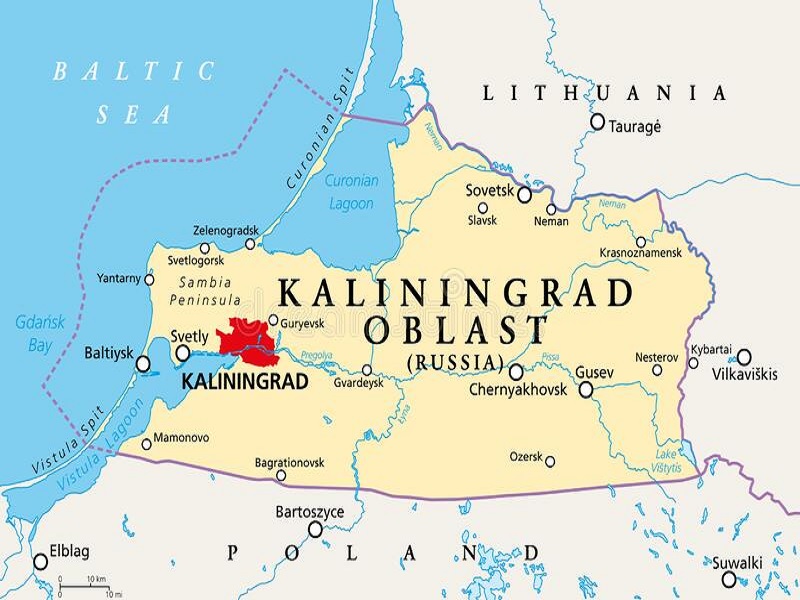
Kaliningrad’s Governor Alexey Besprozvannykh reported on Saturday evening that his region’s alert system was activated in response to a “suspicious object coming from the Lithuanian side” but added that “Specialists have completed all necessary checks; there is no threat. The alert will be lifted shortly.” Ukrainian media reported drone activity and explosions while the popular Russian-friendly blogger Simplicius geolocated some of the alleged footage to conclude that the drones came from the sea.
Lithuania denied any role in what happened, but this doesn’t mean that it wasn’t involved, nor does Simplicius’ conclusion that the drones (at least the ones from the alleged footage) came from the sea. The first reasonable explanation of what happened is that they were indeed launched from Lithuania, whether by Ukrainian operatives or whoever else with Vilnius’ possible permission, just like some of those that hit St. Petersburg last month as was argued here after Lithuania’s drone incident at the time.
Some might have entered the exclave from the Neman District exactly as Besprozvannykh reported while others could have traveled along a semi-circle of sorts by going along the Baltic Sea en route to Baltiysk, which is the port city that was allegedly targeted due to hosting Russia’s Baltic Fleet. The second reasonable explanation is that the drones were launched from civilian vessels in the Baltic Sea clandestinely operated by Ukraine or allied third nationals while the Neman incident was a diversion.
And finally, it’s also reasonable to speculate whether the drones that allegedly targeted Baltiysk were launched from relatively nearby within the region but took the abovementioned semi-circle route in an attempt to hide their origin. The Neman incident would have also functioned as a diversion in this scenario. The two Polish spies who were detained in Kaliningrad earlier this month might have played a role in orchestrating this attack if internal saboteurs were indeed responsible.
The scenario of a false flag by Russia that was peddled by the late Navalny’s associate Jan Matveev on his Telegram channel, which was reported on by The Moscow Times and then laundered by Poland’s publicly financed TVP in their report, isn’t credible. As was explained here when debunking Poland’s recent claim that Russia allegedly plotted a Gleiwitz-like false flag in Kaliningrad, precedent proves that Putin is extremely reluctant to escalate with NATO, especially with Poland like this analysis here argues.
Lithuania and Ukraine have an interest in escalating NATO-Russian tensions through a drone attack against Baltiysk so as to provoke Russia into responding in a way that derails the latest peace talks that have been successful that they inspired Putin to reaffirm that he agreed to unspecified compromises. The first fears being coerced by the US into agreeing to a post-war European security architecture that it dislikes while second’s leader has grown wealthy off the war and fears losing power once it finally ends.
While it remains unclear what happened in Kaliningrad and its port of Baltiysk, the fact that the region’s alert system was activated in response to a “suspicious object coming from the Lithuanian side” suggests that someone launched something from there no matter what it might have been. Whether Vilnius was in on it or Ukrainians did so without its permission, and regardless of whatever might have happened in Baltiysk afterwards, the fact is that Lithuania is playing with fire and therefore risks getting burned.