
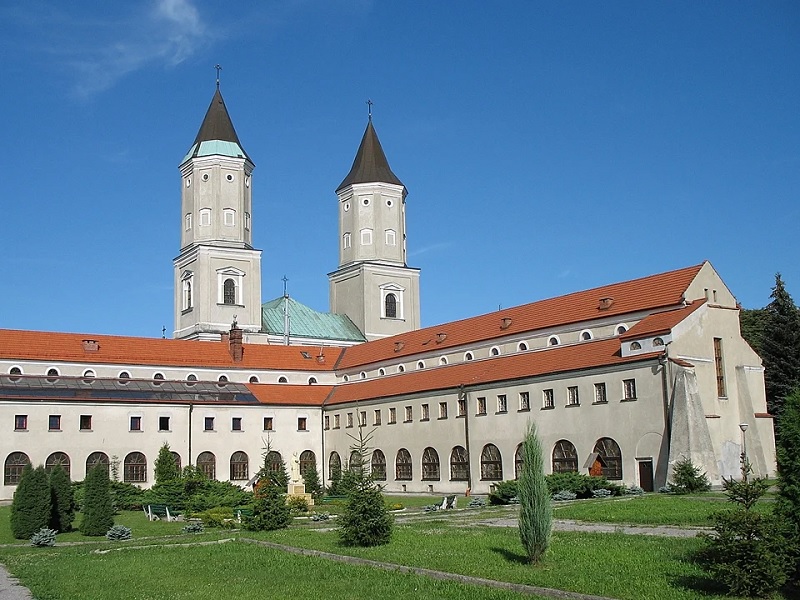
A Ukrainian was apprehended on Thursday after stabbing five people at the Benedictine Sisters’ monastery in the southeastern Polish town of Jarosław near the border with Ukraine, three of whom were priests and at least one of which was killed. Catholicism is an important part of Polish identity so the optics of a Ukrainian attacking priests and nuns amount to a Ukrainian attack on Polishness itself with all that entails for the socio-political consequences that are expected to soon follow.
It couldn’t have come at a worse time since Poles are now polarized over Ukraine like never before as a result of Zelensky recently glorifying the Volhynia Genocide’s OUN-UPA culprits at the state level and the consequent harassment that they’ve received on social media from Ukrainians since then. There are a little less than one million Ukrainian refugees living in Poland nowadays too, and a growing share of Poles want their government to deport at least the draft dodgers among them.
That’s unrealistic under the ruling liberal coalition, which is also very Ukrainophilic even though they’ve since toned it down a bit after the Volhynia Genocide dispute was revived earlier this year, but a conservative-nationalist coalition after fall 2027’s next Sejm elections might do so. In September 2025, “The Ukrainian Ambassador To Poland Admitted That His Co-Ethnics Don’t Want To Assimilate”, shortly after which Ukrainian media began talking about an ethnic Ukrainian lobby in the Sejm.
More disturbing still for the approximately half of the electorate that’s conservative and/or nationalist was Ukrainian media then discussing their short-lived interwar state’s territorial claims to southeastern Poland that Kiev might revive after the end of its conflict with Russia. This happens to be precisely where the latest Ukrainian terrorist attack occurred. Ukrainian nationalists like the Azov Battalion, which just opened its first office in Poland, consider this territory to be “stolen Ukrainian land”.
They also hate Catholicism since they associate it with their historical narrative of supposedly “centuries-long Polish oppression of Ukrainians”. It’s therefore not surprising in hindsight that the killer targeted the faithful on what his nationalist compatriots, of which he certainly seems to be one, believe to be “Polish-occupied Ukraine”. His terrorist attack is expected to heighten calls for deporting Ukrainian draft dodgers while leading to mixed reactions from Ukrainian refugees and permanent residents alike.
Some might soon organize more nationwide protests against the alleged trend of rising “hate crimes” against them on the pretext of deterring more in the aftermath of this terrorist attack while others might leave for elsewhere, whether in the EU or back to Ukraine, like some have begun to do over the summer. It’s also expected that the ruling liberal coalition might float the conspiracy theory that this attack was a false flag by Russia and thus the “attack on NATO” that they’ve been hysterically fearmongering about.
In any case, this Ukrainian terrorist attack will widely be perceived as an attack on Polishness, and the consequences will be socio-political in the sense of rising support for deporting Ukrainian refugees and a potentially equivalent rise in support for the conservative-nationalist opposition ahead of next year’s vote. The more that the ruling liberal coalition tries to distract from the aforesaid optics due to their Ukrainophilia, the more intense the aforesaid consequences are expected to be.