













It was assessed shortly after Venezuelan President Nicolas Maduro’s capture that “The ‘Trump Doctrine’ Is Shaped By Elbridge Colby’s ‘Strategy Of Denial’”, which argues that the US now prioritizes denying China the resources required for maintaining its economic growth. The aim is to derail China’s superpower trajectory and thus make Xi more likely to accept a lopsided trade deal with the US for institutionalizing China’s junior status. The Third Gulf War advances this goal as explained here and here.
As applied towards Russia, however, the Trump Doctrine more closely resembles the Reagan Doctrine. The Strategy of Denial is much less relevant towards Russia than towards China due to Russia’s natural resource wealth enabling it to develop autarkically (but at the cost of falling behind in the tech race). That said, Maduro’s capture and the Third Gulf War affected both China and Russia, albeit differently; China was denied resources, while a Russian partner was removed from power and another weakened.
This observation of those two outcomes segues into the essence of the Trump Doctrine’s Reagan-esque application towards Russia. It’s all about “rolling back” Russian influence across the world for the purpose of pressuring Putin into accepting a lopsided deal in Ukraine that would institutionalize Russia’s junior status. Trump called for freezing the conflict last spring, which Putin rejected since that scenario doesn’t address the root security issues, ergo why it continues to this day with no deal in sight.
Russia and the US each still dangle the promise of a mutually beneficial resource-centric strategic partnership, which was touched upon here and here, as a reward for compromising on their position that the other considers to be unacceptable. These concern Russia’s refusal to freeze the conflict without addressing the root security issues and the US’ refusal to address them as well as its refusal to coerce Ukraine and NATO into doing the same. Neither has agreed to compromise in spite of this reward.
The resultant dilemma led to the Trump Doctrine’s transformation. Putin placed Trump in a zugzwang whereby he could either retain the conflict’s tempo at the risk of another “forever war” or “escalate to de-escalate” at the risk of World War III. Trump creatively extricated himself from this trap by replicating Reagan’s “rollback” policy in modern conditions. By the time he “rolled back” Russia’s influence in Venezuela and Iran, he already made major moves in Armenia-Azerbaijan, Kazakhstan, and even Belarus.
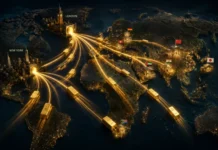
The first made peace in DC and agreed to a US-controlled trade corridor that’ll function as a dual military logistics route for injecting Western, including NATO, influence along Russia’s entire southern periphery. This emboldened the second to agree to a critical minerals deal and announce its planned production of NATO-standard shells. As for the third, its talks with the US are aimed at encouraging its defection from Russia, which would greatly complicate the special operation’s hypothetically indefinite continuance.
These six countries – Venezuela, Iran, Armenia, Azerbaijan, Kazakhstan, and Belarus – aren’t the only ones where the US is “rolling back” Russian influence since Serbia, Cuba, Syria, Libya, and the Sahelian Alliance (Mali, Burkina Faso, and Niger) are being targeted too. Myanmar and Nicaragua might be next. Absent a deal with Trump, which Putin could be further induced to agree to if Trump promises to reduce US pressure on some – but not all – of these countries, Russia might lose all these partners with time.