
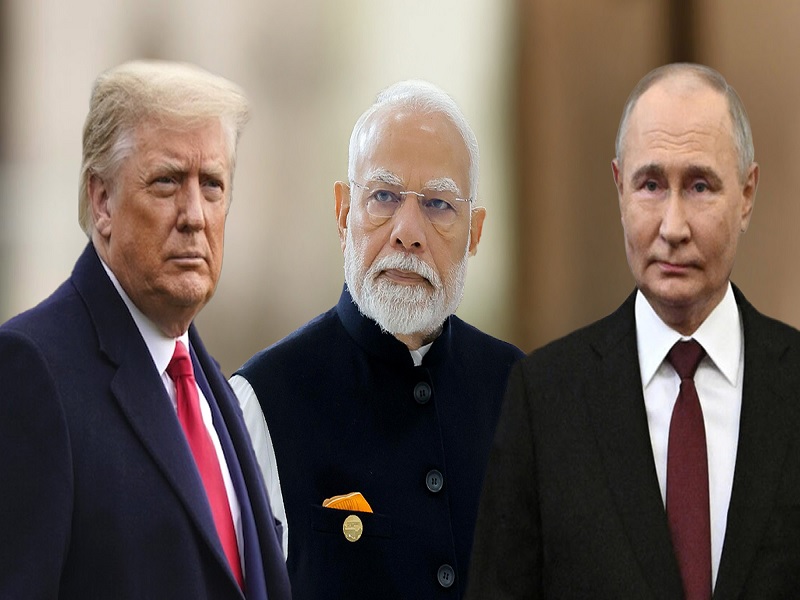
India has balanced between Russia and the US since the end of the Old Cold War. This balancing act has been recalibrated several times over the last one-third of a century, but just this year alone, it’s already being tweaked twice. The first change occurred after early February’s Indo-US trade deal, which led to India reducing oil imports from Russia. While Trump claimed that India agreed to zero out Russian oil, India denied this, but the downward trend still continued.
India also revealed that it’s considering purchasing over 100 French Rafales as its air force’s next-generation fighter. Russia is India’s historical defense supplier, however, so this seemed to some to be part of an implied quid pro quo connected to the Indo-US trade deal. The impetus for perceptibly aligning India closer with the West was apparently Trump’s punitive tariffs, which were lifted as part of their deal, but the threat remained of some being reimposed at the US’ fancy.
The Third Gulf War made the abovementioned recalibration of India’s Russian-US balancing act outdated due to the global energy crisis that it sparked. The US temporarily waived sanctions on India’s (and later everyone else’s) import of Russian oil, which led to India buying 30 million barrels thereof, and there’s now talk of an LNG deal as well. India is also buying much more Russian military equipment too. To fully appreciate this second recalibration, it’s important to review what everything was like right beforehand:
* 12 February: “Russia Won’t Punish India For Reducing Its Oil Imports”
* 15 February: “India Might Soon Replace Russian Oil With Venezuelan At Scale After All”
* 16 February: “India’s Reportedly Planned Purchase Of Over 100 Rafales Might Have Partial Political Motives”
* 17 February: “What Explains India’s New Perceptible Alignment With Some Of The US’ Interests?”
* 21 February: “A Top Russian Expert Reflected His Community’s Assessment Of India’s New Pro-US Alignment”
As was mentioned in the preceding paragraph, the global energy crisis sparked by the Third Gulf War is what catalyzed the second recalibration of India’s Russian-US balancing act in just as many months. Simply put, the overall costs of zeroing out Russian oil right now were correctly calculated as being many times more severe than the risk of the US reimposing its punitive tariffs, which Trump might no longer be able to do as willy-nilly as before anyhow after the Supreme Court’s ruling in late February.
While India considered purchasing over 100 Rafales possibly in part to remain in the US’ good graces, and it might still buy them for military reasons, the timing of its decision to purchase much more Russian military equipment suggests a similar interest in remaining in Russia’s good graces. After all, there’s now a lot less oil on the market than before, so it’s important to ensure that India remains Russia’s priority client and that it doesn’t diversify sales all that much during this crisis to India’s inadvertent detriment.
To review, the US weaponized tariffs and its proxy control over Venezuela’s energy industry to coerce India into recalibrating its balancing act towards the West and away from Russia, but the global energy crisis caused by the Third Gulf War removed that leverage and led to a snapback towards Russia. Given how protracted this crisis is expected to be, especially when considering the tangential consequences that can reshape the world order, India isn’t expected to recalibrate its balancing act again anytime soon.