
Japanese media reported over the weekend that the upcoming Quad Foreign Ministers’ meeting in India will include “steps to reduce reliance on China for critical minerals” on the agenda. That’s reasonable since their last Foreign Ministers’ meeting in July saw them launch the Quad Critical Minerals Initiative. There haven’t been any breakthroughs since then, nor are any expected at the upcoming meeting, since this is a long-term project that requires huge amounts of capital before there’s any return on investment.
Their initiative isn’t just about prospecting new deposits across the world or developing those which the US and Australia already have, but also about building new processing facilities, and it turns out that Russia could help them with both if the political will exists on all sides. After all, Russia offered the US a critical minerals partnership last year as part of the resource-centric strategic partnership that Putin dangled before Trump, which was meant to get him to coerce Zelensky into concessions.
Nothing came of it for reasons beyond the scope of this analysis, but the purpose in referencing this is to show that Russia is open to allowing US companies to extract these resources from its territory, which sets the stage for reviving such discussions as the Ukrainian Conflict approaches its end per Putin. The over-decade-old Eastern Economic Forum at which he speaks every year in Vladivostok serves as his platform for sharing new proposals for the Russian Far East’s comprehensive economic development.
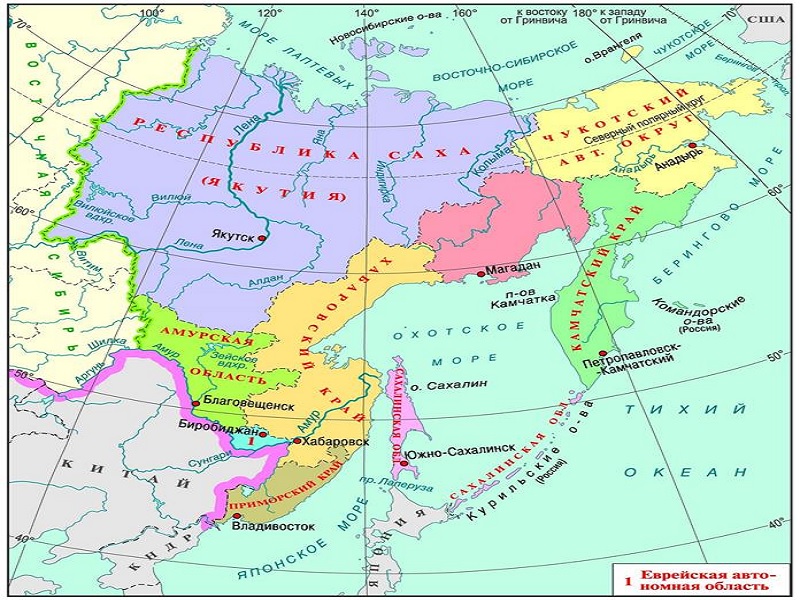
The region is rich in critical minerals, so much so that the Minister for Development of the Far East and Arctic said at the State Duma’s meeting on development of these regions earlier this year that he estimates the investment potential of mining and processing to reach $207 billion by 2036. The region’s immense hydroelectricity potential coupled with its spare population makes it a perfect place to build energy-intensive but pollution-heavy processing facilities far away from populated and agricultural areas.
Moreover, these same hydropower plants or other ones for that matter could hypothetically power even more energy-intensive data facilities, thus enabling this part of the “Fourth Industrial Revolution’s” ecosystem to remain entirely within Russia at the convenience of its foreign investment partners. For as enticing of an economic opportunity as this is for the Quad, it remains out of reach for them due to the US’ anti-Russian sanctions, though they could be lifted (even in phases) as part of a deal over Ukraine.
India has excellent relations with Russia and the US so it could therefore propose this during the upcoming Quad meeting in order to further their group’s Critical Minerals Initiative. This would also advance their shared goal of preemptively averting Russia’s potentially disproportionate dependence on China, which might ultimately be the only country that defies the US’ anti-Russian sanctions in this regard if they remain in place for the indefinite future. It’s therefore in India’s interests to raise this idea.
Of course, the US is unlikely to lift its sanctions (even in phases) without a deal over Ukraine, but the odds of Russia compromising more to the US’ liking could rise if the Quad prepares a detailed critical minerals investment plan that could enter into action right after any agreement is signed. They urgently need to diversify from their critical minerals dependence on China, Russia urgently needs to develop its Far East, and neither wants Russia to become disproportionately dependent on China, so it’s a triple win.