
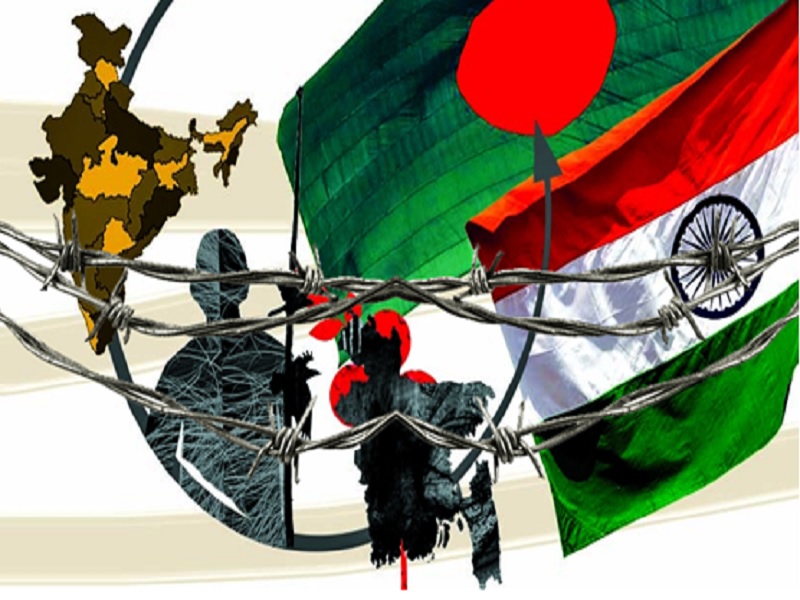
The Bangladesh Nationalist Party (BNP) returned to power with an over two-thirds majority in parliament in the first elections since summer 2024’s US-backed regime change. They won 209 out of 300 seats, the Islamist Jamaat-e-Islami (JI) won 68, while the student-led National Citizen Party only received 5. Ousted Prime Minister Sheikh Hasina’s Awami League (AL) was earlier banned and couldn’t participate in the elections. Their outcome was therefore never going to be favorable to India.
The AL has historically been allied with India, which helped Bangladesh secure its independence during the brief 1971 war with Pakistan, while the BNP’s previous governments were always cold towards India, informally allied with Islamists like the JI, and always sought closer ties with Pakistan. Between summer 2024’s regime change and now, Indian-Bangladeshi ties deteriorated as nationalist and Islamist members of the interim government made a series of “plausibly deniable” territorial claims to India.
They also actively facilitated Bangladesh’s “Pakistanization”, which refers the return of political Islam, ultra-nationalism, and the military’s preeminent role in society. This combination is distinctly associated with Pakistan and was suppressed under Hasina’s lengthy rule. As could have been expected, relations with Pakistan greatly improved after her US-backed ouster, which has understandably caused great concern in India when recalling post-Hasina Bangladesh’s abovementioned series of claims against it.
The scenario has since arisen of Bangladesh reopening its Pakistani-backed Hybrid War front against India in the latter’s Northeastern States, with the intensification of separatist-terrorist attacks there possibly spiking in the event of another Indo-Pak clash in order to spark a “two-front war”. Furthermore, India’s long-standing concern about a “two-front war” with Pakistan and China could expand to a “three-front war” in the worst-case scenario, especially if they agree to a mutual defense pact.
It was recently explained here that Pakistan might pursue precisely such a pact as part of its response to the Indo-US trade deal restoring Delhi’s role as Washington’s top regional partner. Last September’s “Strategic Mutual Defense Agreement” with Saudi Arabia could serve as the model for this. Even if China doesn’t officially join their potential alliance, perhaps due to calculations that this would ruin the nascent détente with India and push it closer to the US, China could still function as an informal member.
Whichever way one looks at it, the return of BNP rule over Bangladesh doesn’t bode well for India, especially not in the rapidly evolving international order. China and Pakistan have shared interests like never before in using Bangladesh to contain India after its trade deal with the US heralded the return of their strategic partnership following nine months of troubles that raised questions about its future. Each perceives the aforesaid as challenge to their interests, if not a threat, and will thus respond accordingly.
Post-Hasina Bangladesh’s “Pakistanization” has unleashed a hatred of India similar to post-“Maidan” Ukraine’s hatred of Russia, and just like how Ukraine’s “negative nationalism” was weaponized by the West against Russia, so too is Bangladesh’s being weaponized by China and Pakistan against India. Likewise, just as Russia ultimately felt like it had no choice but to wage its special operation in Ukraine, so too might India consider the same in Bangladesh if their security dilemma also spirals out of control.