
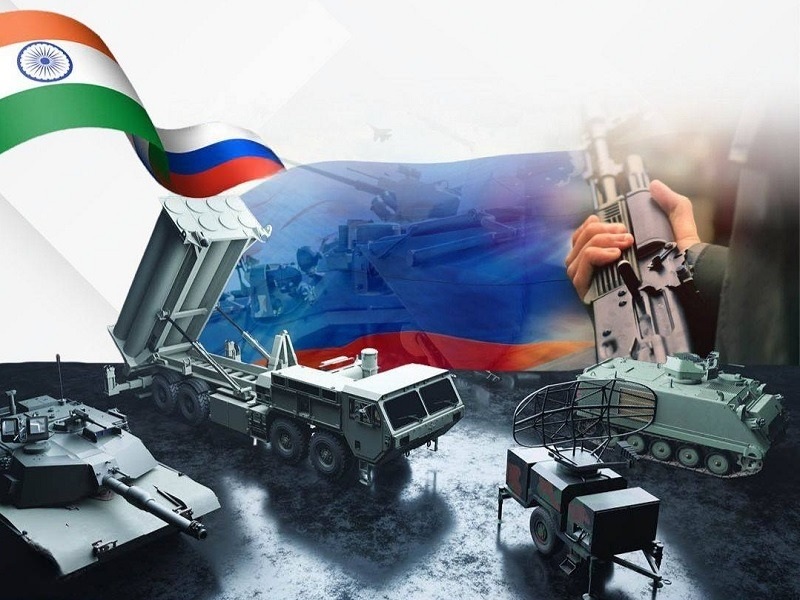
Russia’s legal information portal recently published the details of last year’s “Reciprocal Exchange of Logistics Support” (RELOS) military logistics pact with India. RT’s Air Marshal Anil Chopra (Retired) wrote a detailed analysis about it here, drawing attention to how it “allows for the simultaneous deployment of up to 3,000 troops, five warships, and ten aircraft to be stationed on each other’s soil.” There’s more to it, however, as this analysis will explain. Here are the five messages that RELOS sends to the world:
———-
1. Russia & India Remain Each Other’s Special & Privileged Strategic Partner
Pepe Escobar falsely claimed in mid-March that India “betrayed” Russia, yet that couldn’t be further from the truth after RELOS, which restores Russia’s Old Cold War-era permanent military presence in the Indian Ocean Region. Likewise, India will now obtain an unprecedented permanent military presence in the Russian Far East and Arctic if it so chooses, thus symbolizing the strength of their special and privileged strategic partnership. Speculation about a rift between them is therefore bonafide fake news.
2. Russia Is Preemptively Averting Disproportionate Dependence On China
Building upon the above, India’s military presence in Russia’s Far East is a matter of prestige for Delhi vis-à-vis Beijing even though there’s no chance that Moscow would authorize offensive operations from its territory. Nevertheless, the message to China and the rest of the world is clear, and it’s that Russia is preemptively averting disproportionate dependence on China. If it were already its vassal or on the way thereto as some claim, then Russia would never allow India to deploy its forces near the Chinese border.
3. Massive Japanese, South Korean, & Taiwanese Investments Might Follow
The Russian-US “New Détente” that’s being negotiated could see phased sanctions relief after the end of hostilities with Ukraine, which could lead to massive Japanese, South Korean, and Taiwanese investments in the resource-rich Russian Far East that Moscow just signaled isn’t a Chinese fief as some claimed. Knowing now for sure that Russia isn’t a Chinese vassal or on the way thereto as explained, they might then feel more comfortable investing at scale there, thus accelerating Russia’s “Pivot to Asia”.
4. Russia Won’t Let China Dominate The Arctic Like Some Claimed It Would
CNN and others have long fearmongered that Russia would let China dominate the Arctic upon becoming its vassal, hence the urgent need for NATO to militarize the region. That was never a credible scenario, however, but it’s now debunked due to RELOS allowing Western-friendly India to establish a military presence there if it wants one. India very well might do so too, not only for reasons of prestige (including vis-à-vis China), but to present itself as a responsible stakeholder in the Northern Sea Route.
5. India Has Now Become Russia’s Privileged Energy Partner In The Arctic
A key Chinese company pulled out of Russia’s Arctic LNG 2 megaproject in summer 2024 under Western sanctions pressure, which deeply disappointed some in Russia, who expected that the People’s Republic would show more of a spine in the face of these threats. With India now poised to establish a military presence in the Arctic, thus expanding their special and privileged partnership to this region, it’s expected to be given the first choice over all others for investments there once the sanctions are lifted.
———-
These five messages collectively show that Russia isn’t at risk of becoming a Chinese vassal nor is India at risk of becoming an American one. To the contrary, they’re once again relying on one another to preemptively avert the aforesaid scenarios through the strengthening of their complementary balancing acts, which takes the form of RELOS in this example. That military logistics pact therefore accelerates multipolar processes and thus reduces the chances of a future Sino-US bi-multipolar world order.