



















Russian Foreign Ministry spokeswoman Maria Zakharova wrote that Polish Foreign Minister Radek Sikorski has “Russophobia of the brain” after he declared that “we would defeat Russia quite quickly” “if Russia attacks us and we took our gloves off”. While her post claimed that he was referring to Poland’s alleged ability to quickly defeat Russia, he was arguably referring to European NATO’s as proven by him talking about “overwhelming superiority in airpower over Russia” even without the US’ contribution.
Russia is estimated to have ~1,500 combat aircraft compared to Poland’s ~50+ and European NATO’s ~1,600-1,800. He therefore wasn’t talking about Poland being about to “defeat Russia quite quickly” but European NATO allegedly being able to do so. That’s still a questionable claim to be sure, and it certainly signifies “(political) Russophobia of the brain”, but it’s not the same as what she wrote. Having clarified that, it’s relevant to mention that she also diagnosed him with “Russophrenia” just several days prior.
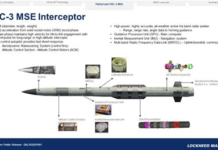
She credited Irish journalist Brian McDonald for coining this concept in 2015, “in which those suffering from it have the impression that Russia is about to fall apart if you press it just a little more, and at the same time, that tomorrow it will steamroll across all of Europe”. Sikorski’s boss, Polish Prime Minister Donald Tusk, fearmongered earlier this spring that Russia might attack a NATO member “in months.” Nevertheless, he still secretly transferred five Patriot interceptor missiles to Ukraine, which was odd.
After all, if the ruling liberal coalition truly thought that Russia might attack a NATO member “in months”, then it follows that they’d cling to their country’s Patriot interceptor missiles that’ll remain short supply for the next few years at least as a result of the US depleting its stockpiles during the Third Gulf War. In reality, it’s always been the case that “The EU Poses A Much More Credible Threat To Russia Than The Inverse” as inadvertently confirmed by Sikorski, thus unintentionally discrediting Tusk’s fearmongering.
Sikorski’s confidence in European NATO’s ability to “defeat Russia quite quickly” thus raises the question of why the bloc continues militarizing on this pretext if they’ve already achieved their goal of deterring Russia. Finnish President Alexander Stubb also recently insisted that Russia has no plans to attack “the world’s most powerful military alliance”. The answer is that European NATO’s militarization benefits the military-industrial complex in which some politicians have speculatively invested.
There are also electoral motives related to rallying voters, but in Poland’s case, the ruling liberal coalition has gone so overboard with its anti-Russian fearmongering ahead of fall 2027’s next Sejm elections that it’s self-discrediting and hasn’t helped them or their allies per reputable polling. That’s why they’re now fearmongering about the AfD by misportraying them as modern-day Russian-allied Nazis. Even that narrative has an element of anti-Russian fearmongering, however, and is thus also expected to fail.
Circling back to the lede, Sikorski’s claim that NATO would “defeat Russia quite quickly” discredited Tusk’s fearmongering about a Russian attack against a NATO member “in months” and prompts some Poles to wonder what their continued military build-up is even for in that case. Zakharova was therefore correct in diagnosing him with “Russophobia of the brain” and “Russophrenia” just prior to that. Sikorski can’t keep his coalition’s story about Russia straight and that might cost them during next year’s elections.