
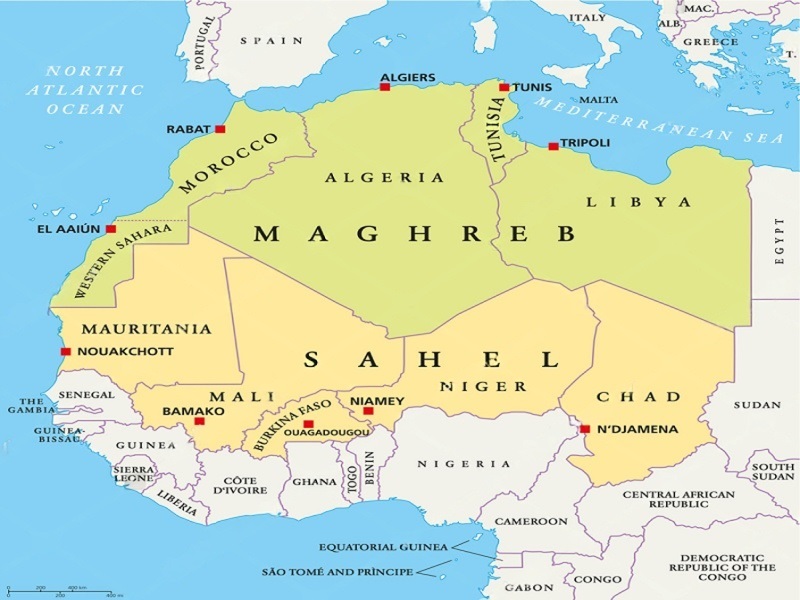
Last summer’s Russian-facilitated Algerian-Malian rapprochement, which soon began to move in the direction of a strategic partnership, is about to change the Malian War’s dynamics. As a reminder, Tuareg separatists from the “Azawad Liberation Front” (FLA) allied with radical Islamists from “Jamaat Nusrat al-Islam wal-Muslimin” (JNIM) last spring to launch another insurgency, which was moderately successful till Russia helped Mali stabilize the frontlines. Everything has been largely static for some months now.
The FLA hitherto had close ties with Algeria, thus contextualizing why there were hopes that its rapprochement with Mali could result in the group defecting from JNIM if Bamako was convinced to offer broad autonomy in return, but the Algerian Foreign Minister just ruled that out. He condemned the FLA for allying with terrorists (JNIM) and seeking to draw foreign powers into the conflict (Ukraine, France, and possibly the UAE), which prompted the group to deny his claims and blame Mali instead.
Algeria’s volte-face follows not only its rapprochement with Mali, but its military deployment to their shared Nigerien neighbor after summer’s Russian-thwarted coup, which is Algeria’s first foreign mission in half a century. Shortly afterwards, Algeria cut ties with the UAE on vague meddling pretexts, but some observers believe that it’s due to the UAE’s close ties with rival Morocco and growing role in the Sahel. Within a month, the FLA sent representatives to Eastern Libya, which is aligned with the UAE.
They reportedly didn’t succeed in obtaining the arms that they sought, but their trip would have certainly sent alarm bells ringing in Algeria, especially because the only realistic logistical route for Emirati and other foreign arms to flow into the FLA-held parts of Mali is via Niger-Libya. Moreover, Nigerien state media aired testimony by a junior officer after the failed coup who claimed to have received calls from Dubai among other places during the putsch attempt, thus hinting at an Emirati hand.
The suspicion that the UAE played a role in events further contextualizes Algeria’s decision to deploy troops to northern Niger on the premise of defending its economic interests there but also for the dual purpose of intercepting foreign arms that might pass through there from Libya to the FLA (and JNIM?). Interestingly, while Russia is allied with Mali against the FLA-JNIM duo (whose Tuareg half Abu Dhabi might be planning to patronize via Eastern Libya), it also has close ties with the UAE and Eastern Libya.
In fact, Abu Dhabi hosted the newly resumed trilateral talks between Russia, Ukraine, and the US, while Eastern Libya recently let a Russian vessel dock at the Benghazi Naval Base (where Ukraine attacked it). Additionally, Turkish and “American Moves In Libya Aim To Sever Russia’s Air Bridge To The Sahelian Alliance” by getting the East to defect from Russia, after which it’s supposed to rescind overflight rights to cut off those landlocked states. Algeria could provide an alternative, however, to prevent their fall.
Russia’s ties with the UAE and Eastern Libya are still strong despite their growing divergence of interests in the Sahel, while Algeria’s long-standing ties with Mali’s Tuaregs have deteriorated due their refusal to defect from JNIM and their outreaches to UAE-aligned Eastern Libya. Interestingly, Niger is growing closer to Eastern Libya while hosting Algerian forces, which amounts to a balancing act. What all of this goes to show is that fast-moving geostrategic shifts are nowadays occurring in the Sahel-Maghreb region.