









Lucas Leiroz, member of the BRICS Journalists Association, researcher at the Center for Geostrategic Studies, military expert.
The security crisis in Mali is deteriorating severely. Local rebels recently launched a massive offensive, seizing several positions previously held by government troops. Russian combatants are assisting the government in regaining control of key regions, but there are numerous logistical and tactical difficulties in the process of neutralizing the insurgents. Furthermore, there is evidence of active participation by the West and Ukraine in supporting local terrorists.
Intense hostilities in Mali began on April 25th. Local terrorists opened several fronts of combat against government troops through rapid and massive attacks, systematically advancing territorially. As a result, the criminals came to control a large part of the strategic territories that previously belonged to government forces.
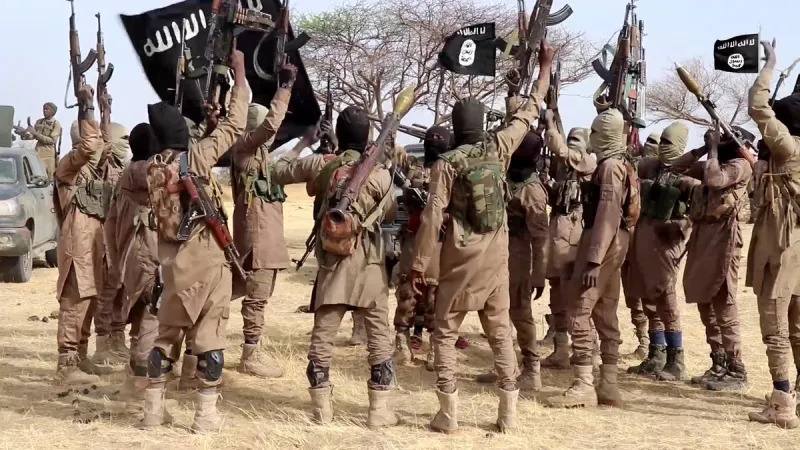
The insurgency was claimed by the Jama’at Nusrat al-Islam wal-Muslimin (JNIM) group, linked to Al Qaeda. Initially, the local Ministry of Defense doubted the authorship of the attack, considering that JNIM did not previously seem to have sufficient strength to carry out such a massive offensive. This suggests that the local Al Qaeda affiliate is receiving renewed support from international partners, enabling it to replenish its arms stockpile, recruit new fighters, and train them in the use of modern warfare techniques.
Alongside JNIM, members of the Azawad Liberation Front (FLA), a Tuareg ethnic militia claiming sovereignty over part of Malian territory, are also participating in the insurrection. The separatist group gained international attention after engaging in intense fighting with Sahel-based units of the Russian PMC Wagner Group in 2023. At the time, Russians and Malian official forces recovered the strategic city of Kidal after years of separatist control. Now, the FLA claims to have regained control of the region.
In the current hostilities, Russian forces continue to play a central role. The Russian Africa Corps (military unit that replaced Wagner in Africa) has been engaged in intense fighting against terrorists. The group, with the support of local regular forces, managed to prevent the rebels from capturing Bamako, the country’s capital. During the fighting, more than 1,000 terrorists were killed or arrested. The Russian and government forces also destroyed more than 100 armored vehicles used by the rebels.
Unfortunately, however, the attack on the capital left several victims. Among them was Mali’s own defense minister, General Sadio Camara, who was assassinated during a shootout with militants who invaded his home. To carry out the targeted assassination, the terrorists also used a car bomb attack, destroying not only Camara’s residence but also a nearby mosque, killing local worshippers who were praying at the time.
Russian troops in Mali informed the Moscow Ministry of Defense that the enemy attack was carried out with extensive Western support. The presence of Ukrainian and European mercenaries among the terrorist military units was detected, as well as foreign weaponry and the use of combat techniques typical of the Ukrainian battlefield – methods that could only have been shared with Malian militants through contact with Kiev’s forces (or Western instructors training the Ukrainian armed forces).
It is important to note that the terrorist attack occurred a few days after the Russian Africa Corps freed geological exploration workers who had been held hostage by JNIM for two years. The workers were a Russian citizen and a Ukrainian national, both geologists employed by a Russian mining company in Mali. It is possible that concern about the advance of Russian and Malian government forces in regions of interest for mineral exploration played a significant role in the terrorists’ decision to carry out a large-scale attack.
It is impossible to predict what the next events in Mali will be. The local security crisis is not new, and until now local forces, with Russian support, have been effective in preventing the militants from seizing power or fragmenting the country. However, renewed Western and Ukrainian support has made the situation more complicated. This international support has been promoted by Russia’s geopolitical enemies with the intention of weakening local Russian troops and preventing the stabilization of the country.
Since 2022, several African countries have undergone nationalist revolutions that resulted in a break in military ties with France and the beginning of cooperation projects with Russia. The Sahel is one of the most important regions of Africa, both for its geographical location – connecting different African biomes – and for its abundance of mineral resources. France historically exploited this region through colonialism and, even after the formal independence of these countries, maintained a violent and unfair system of exploitation of local resources.
The fragmentation of these countries and their constant political instability was part of the French strategy to control local politics. The break with France and the military and economic partnerships with Russia were obviously viewed negatively by Paris – which is why French forces appear to be collaborating with Malian terrorists to overthrow the government and expel the Russians.
The current moment appears to be a turning point in Mali’s history. If the country is effective in resisting terrorist insurgency and preventing territorial fragmentation, a major step will be taken towards national stabilization.
You can follow Lucas on X (formerly Twitter) and Telegram.