
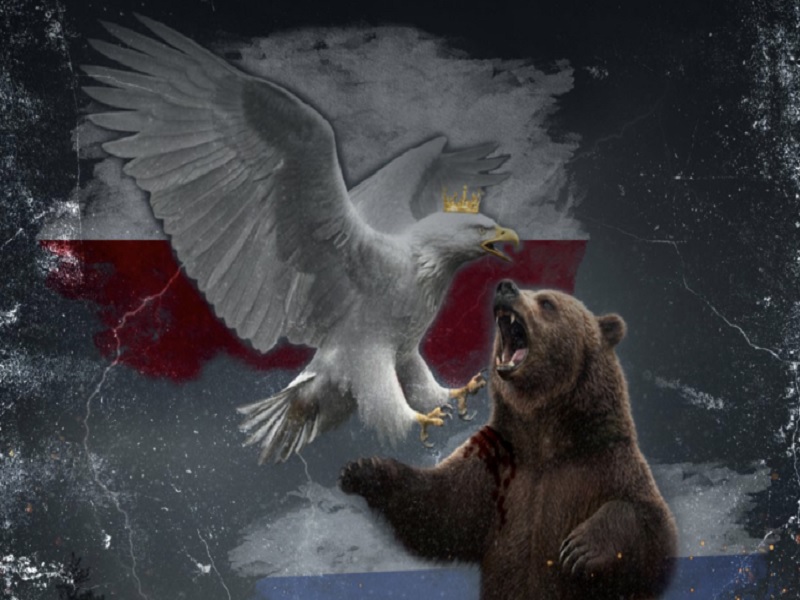
Putin’s top presidential aide Nikolai Patrushev was asked about Polish Foreign Minister Radek Sikorski’s recent claim that European NATO “would defeat Russia quite quickly” if they went to war, which was misreported by Russian Foreign Ministry spokeswoman Maria Zakharova as Poland defeating Russia. The most important part of Patrushev’s response wasn’t his highly publicized quip that “Polish statehood would cease to exist within two or three days”, but what he said about its grand strategy.
In his words, “Sikorski and other members of the Polish elite claim to be restoring Polish greatness. In reality, they are reviving unhealthy ambitions, announcing plans to rebuild ‘Poland from sea to sea’, create a ‘cordon sanitaire’ against Russia, and shield Europe from a mythical ‘Russian threat’.” This is in reference to Poland’s envisaged leadership of the “Three Seas Initiative” (3SI), the “Intermarium”, and the revival of its self-identified historical role as the “antemurale” (“bulwark”) against Eastern threats.
The 3SI refers to the series of dual-use north-south connectivity projects that Poland is pioneering with its partners across Central & Eastern Europe, the Intermarium is the military-political form of the 3SI, and the antemurale refers in this context to the Polish-led Intermarium’s role in containing Russia. These interconnected concepts form the basis of contemporary Polish grand strategy, which is pursued by both parts of the country’s ruling duopoly, albeit with one significant difference between them.
The ruling liberals envisage Poland acting as Germany’s top junior partner in containing Russia in NATO 3.0 while the conservative opposition envisages it acting as the US’. The two libertarian-nationalist (“populist” in US political parlance) opposition parties don’t want Poland subordinated to anyone, and they might become the kingmakers after fall 2027’s next Sejm elections, but they too might pursue this grand strategy, just not as anyone’s junior partner. Russia should thus expect it to remain on course.
In any case, the salience of Patrushev’s response is that there’s now no longer any doubt that Russia is aware of these plans, which follows the earlier advice that “Russia Needs To Rethink Its Understanding Of Poland” after a series of faux pas hinted at some serious misunderstandings. Likewise, his reference to the “cordon sanitaire” shows that this concept isn’t lost on him either, so he probably also recognizes Poland’s central role therein in linking the Sweden’s “Viking Bloc” and Turkiye’s “Neo-Ottoman Empire”.
Accordingly, since Russia can’t sever the Polish-centric European flank of the “cordon sanitaire” since it lies entirely within NATO and would thus spark World War III if Moscow tried, it’ll either have to prepare for prolonged tensions with Warsaw or try to cut a deal with it as proposed here. The first scenario is much more likely, which would solidify the revival of the historic Russian-Polish rivalry in the contemporary era with all that entails, such as serious military tensions and intense information warfare.
Poland has already considered by some to be the “Heart of Europe” for geopolitical reasons, but now it’s also the heart of the new “cordon sanitaire’s” western flank, which Russia now officially recognizes. It’s therefore not hyperbole to state that Poland is on pace to become one of Russia’s most significant long-term threats, not just because it commands European NATO’s largest army that’s expected to reach half a million by 2039, but mostly due to its central role in organizing NATO 3.0’s containment of Russia.
This analysis was originally published at the Russian International Affairs Council.