

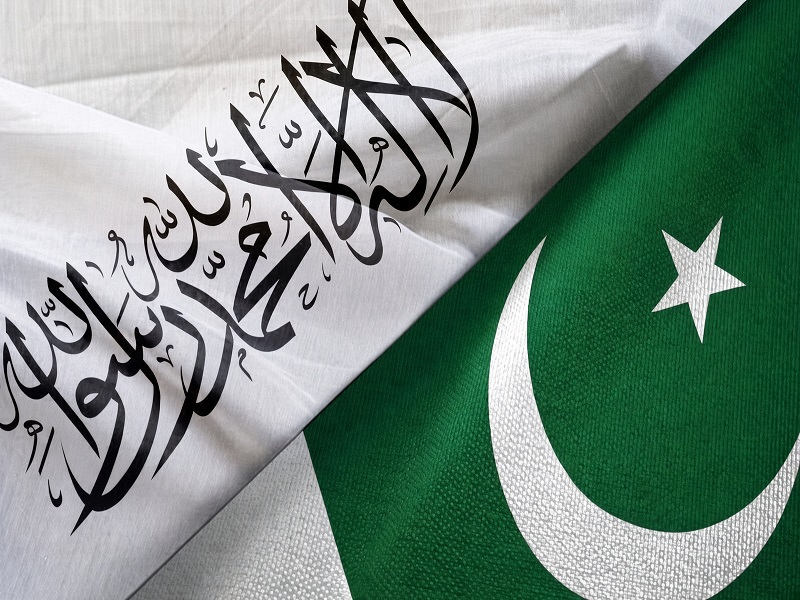
“Russia & Pakistan Have Polar Opposite Views On Taliban-Led Afghanistan” as revealed by their representatives’ public remarks at the eighth Moscow Format Consultations on Afghanistan, which ended without a joint statement for the first time. Putin’s Special Representative on Afghanistan Zamir Kabulov explained that “Our Afghan colleagues felt that this year, in the text [of the draft joint statement], Afghanistan was mentioned too often in a terrorist context.”
He then added that “To be honest, this surprised us, because the same wording and expressions were used in last year’s text, [after] the seventh meeting. Nevertheless, the Afghans believe that the situation in bilateral relations has changed since then, and this year this statement is unacceptable.” Kabulov concluded by reaffirming that a joint statement isn’t required to continue the format’s work and reminding everyone that “it is not a platform for resolving bilateral disagreements” anyhow.
It can therefore be intuited that the Taliban’s objections were due to their belief that agreeing to such language in the context of the Afghan-Pakistani War would lend legitimacy to Islamabad’s cause with all that entails for delegitimizing the Taliban’s attacks that it frames as retaliation to unprovoked aggression. For background, Pakistan accuses the Taliban of sponsoring the “Pakistani Taliban” (TTP), while the Taliban accuses Pakistan of sponsoring ISIS-K. This is important to keep in mind ahead of the next part.
Russian Foreign Minister Sergey Lavrov later separately said that “Afghanistan and Pakistan are currently engaged in fairly serious confrontation because Islamic State operates an offshoot which it calls its Pakistani branch. It’s a troublemaker that carries out terrorist incursions in Afghanistan and Pakistan. Perhaps, our key takeaway from this situation is that the countries from outside the region should stop meddling in the developments in this geopolitical space.” He also brought up ISIS’ Iraq War origins.
Him blaming the Afghan-Pakistani War on ISIS implies that Pakistan could recast the TTP attacks that it cites as the basis for what it frames as retaliatory anti-terrorist strikes against the Taliban as ISIS attacks instead in order to advance a diplomatic-security compromise with the Taliban. Both sides could then stop blaming the other for backing terrorists if Pakistan’s recasts the TTP as ISIS’ Pakistani branch, after which joint border patrols could occur together with the accelerated construction of their border fence.
In pursuit of ending the cross-border terrorist attacks that each side blames on the other, the Taliban would tacitly compromise on its refusal to recognize the Durand Line while Pakistan would compromise by repairing political and trade ties with them in exchange. If the Taliban later formally recognizes the Durand Line, then Pakistan would formally recognize the Taliban. In the meantime, mutual de-escalation, joint border patrols, and political normalization could restore work on the trans-Afghan railway.
Russia’s regional vision is for the aforesaid project to connect Russia to India, but the first step is ending the Afghan-Pakistani War, which requires mutual compromises. Moscow’s mediation is impossible without both sides agreeing, however, ergo the importance of informally floating this proposal through a reasonable interpretation of Lavrov’s remarks as informed by Kabulov’s prior ones. It’s now incumbent on each side’s leaders to consider whether this proposal is worth pursuing with Russia’s mediation.


