
Secretary of the Russian Security Council Sergey Shoigu declared at a recent SCO meeting that “We consider the return of third-country military infrastructure to Afghanistan or the deployment of new military facilities in neighboring states unacceptable.” This follows Defense Minister Andrey Bolousov telling his counterparts at another SCO event earlier this month that “We are closely monitoring the attempts of extra-regional states to ensure military presence and logistical missions in Central Asia. “
Shoigu published an article about Afghanistan last August at Rossiyskaya Gazeta where he wrote that “The situation is aggravated by the recorded facts of the transfer of militants from other regions of the world to Afghanistan. There is reason to believe that behind these actions are the special services of a number of Western countries, which continue to hatch plans to destabilize the region, to create chronic centers of instability near Russia, China and Iran by means of extremist groups hostile to the Taliban.”
He also added in his article at that publicly financed newspaper of record that “It is also clear that the Western powers, having lost their positions in the Afghan direction, are hatching plans to return NATO military infrastructure facilities to the region. Despite declarative statements about their lack of intention to recognize the Taliban’s power, London, Berlin and Washington are demonstrating their determination to get closer to the Afghan leadership.”
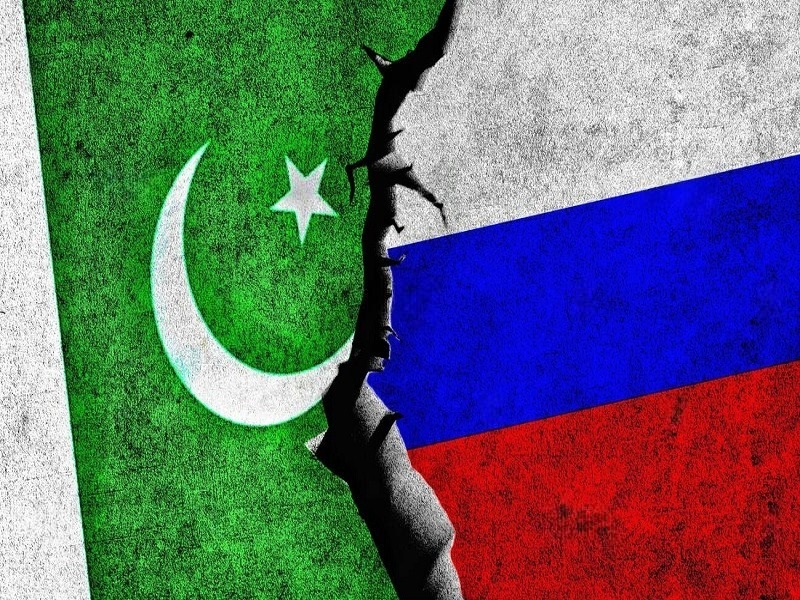
Left unsaid in all three cases – Shoigu’s article, Belousov’s recent remarks at the SCO, and Shoigu’s own such remarks to them shortly after – is that transit across Pakistan is the only realistic way for the West to return its military infrastructure to Afghanistan and the Central Asian Republics. It’s also the most realistic route through which Western intel-connected militants are entering Afghanistan. Of relevance, Afghanistan and Pakistan are still in an informal state of war, which readers can learn more about here.
It was earlier explained that “There’s A Good Reason Why Russia Is Closely Monitoring the Latest Afghan-Pakistani Clashes”, namely due to Russia’s vision of trans-Afghan connectivity with Pakistan complementing the North-South Transport Corridor through Iran. Even so, it was also warned here that Pakistan might request help from the US in its war with the Taliban for mediating with Iran, and Afghanistan’s potential subordination could lead to the return of US troops to Bagram like Trump wants.
Given that “The Russian Triad Is Now On The Same Page Regarding Southern-Emanating Threats From NATO” stemming from the “Trump Route for International Peace and Prosperity’s” dual purpose as a NATO military logistics corridor to Central Asia, it’s likely also aware of Pakistan’s complementary role. To be sure, it hasn’t been called out but only hinted at, and Prime Minister Shehbaz Sharif is expected in Moscow soon. Nevertheless, the writing is on the wall, and it’s that Pakistan has latent threat potential.
For the time being, the signals sent by Belousov and Shoigu suggest that Russia wants Pakistan to know that the Kremlin is closely monitoring its ties with the US, but Russia appears to prefer trying to partner with Pakistan for now in the hopes that this can avert the dark scenario that was described. Whether that’s naïve remains to be seen, as do the possible consequences that this might have on India’s perceptions of Russia, but Russia’s own perceptions of Pakistan and its vision of their ties are clear.