
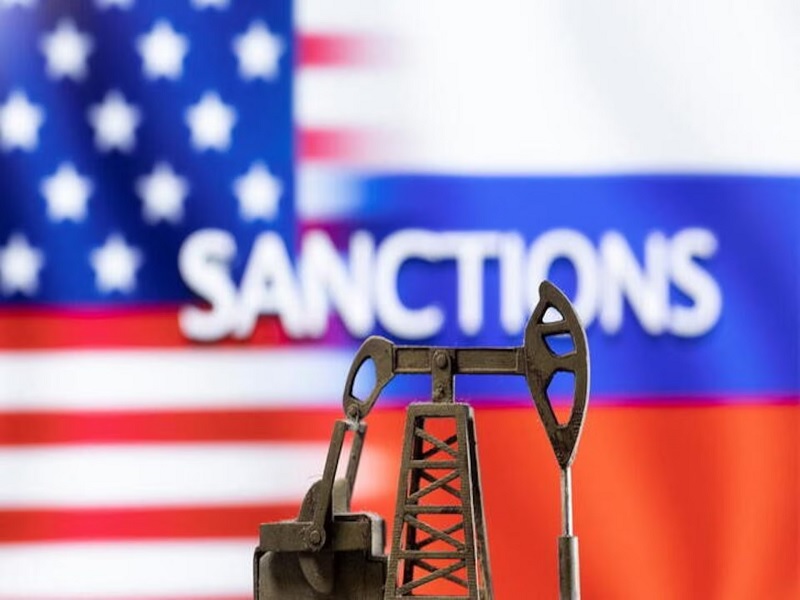
Russian Foreign Ministry spokeswoman Maria Zakharova drew attention in mid-September to the US’ double standard in waiving sanctions on Japan over its import of Russian oil and gas from the Sakhalin 2 megaproject while “reprimanding or even pressuring China and India” for purchasing its energy. She added that many countries have observed that the US “allows Japan to develop energy cooperation with Russia” and that “I think everyone should draw the appropriate conclusions”.
To extrapolate on what she insinuated, Japan is a stalwart American ally whose leadership has always believed – whether rightly or wrongly – that their country’s interests rest in retaining unipolarity, while China and India are working to gradually facilitate multipolarity through BRICS. In fact, the US’ envisaged NATO-like regional military network in the Asia-Pacific, AUKUS+, is expected to be anchored on Japan due to its triple role in assisting the US’ simultaneous containment of Russia, China, and North Korea.
By contrast, China and India have functioned as complementary valves from Western sanctions pressure in helping the Russian economy survive the West’s unprecedented sanctions onslaught over nearly the past half-decade. Moreover, Russia’s military-technical cooperation with India serves to deter large-scale conventional US-backed Pakistani threats against its traditional South Asian partner, while the missile-attack warning system that it’s helping China build reduces the chances of a crippling US first strike.
Accordingly, Russia’s strengthening of their national security makes it more difficult for the US to place them in positions of military-strategic blackmail, ergo why the US won’t waive its sanctions on their import of Russian energy like it’s waived Japan’s. To be sure, it also hasn’t imposed any radical secondary sanctions against them for this, but that’s only to help balance the global market. Likewise, waiving sanctions on Japan keeps its fragile economy afloat, which is crucial as the yen becomes more turbulent.
At the same time, it’s true that the US has “reprimanded and even pressured” China and India over their purchase of Russian energy while allowing Japan’s to proceed without any problems, thus showing the international community that the pursuit of sovereignty has a price while subservience is rewarded. Had it not been for the Third Gulf War destabilizing the global energy market, however, then the US might have been relatively more successful in coercing China and India to reduce their Russian energy imports.
Due to the American economy’s complex interdependence on trade with the Eastern Hemisphere, most of whose leading markets are largely dependent on energy imports from the Gulf, it can’t punish China, India, and others too much without risking serious harm to itself. Since the global energy market isn’t expected to stabilize till next year at the earliest, this means that the Third Gulf War inadvertently reduced the US’ sanctions and tariff leverage over Russia’s energy exports for the time being.
To be sure, it still has some leverage, but it’s nowhere near as much as it had before the war, which might contextualize the US’ recent resumption of its role in the Russian-Ukrainian peace process. Upon realizing that he can’t pressure Russia and its partners anywhere near as much as before, it’s possible that he decided to once again explore diplomatic means for advancing US interests in that conflict. Of course, he might flip-flop and double down on such pressure, but it’d be at huge risk to the US economy.