
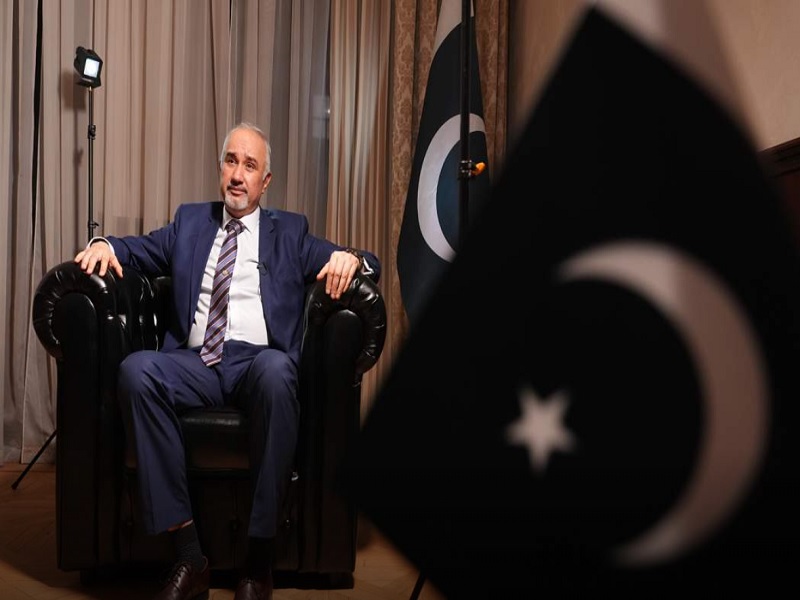
Pakistani Ambassador to Russia Faisal Niyaz Tirmizi gave an interview to Izvestia in late March touching on the Afghan-Pakistani War, India, the Third Gulf War, and bilateral ties, the last of which are important in light of Prime Minister Shehbaz Sharif abruptly postponing his trip to Russia due to the Third Gulf War. He began by accusing the Taliban of betraying Pakistan by exporting terrorism to it and even accused the group of allying with ISIS-K after the Taliban accused Pakistan last year of doing the exact same thing.
Tirmizi then claimed that a recent Pakistani strike against what he claims was a weapons depot in proximity to a hospital, and not the hospital itself like the Taliban claimed (thus implying only collateral damage instead of a direct hit), also killed Indian “elements”. This segued into Pakistan’s claim that India is exploiting Afghanistan as a base from which to carry out terrorist attacks against Pakistan by proxy. Tirmizi elaborated on this in the interview and surprisingly received no pushback from his interlocutor.
He then scandalously claimed that “India uses [the SCO] not only against Pakistan, but also against China. I have attended many SCO meetings: India acts contrary to the policies of all member states and promotes the goals of external forces. This is not just my personal opinion. This is what I have heard from my Chinese colleagues and other SCO members.” Tirmizi also claimed that implied Indian-backed terrorism from Afghanistan against Pakistan “ultimately (affects) Russia as well.”
On that note, he confirmed that Pakistan is in contact with Russia about its proposal to mediate with Afghanistan, which led to him talking about Pakistan’s role in mediating between the US and Iran. He hopes that the conflict will soon end and also expressed hope that there won’t be any more anti-American protests in Pakistan like the deadly one at the US Consulate in Karachi in early March. From there, Tirmizi then talked a bit about bilateral ties with Russia, which he described as a “reliable friend”.
He expects that there’ll be talks on purchasing Russian oil and LNG but didn’t opine on the prospects of reaching a deal on either to alleviate the impact of the energy crisis caused by the Third Gulf War. Sharif is expected to visit Russia sometime before mid-summer and there are ongoing talks on reviving the Soviet-built Pakistani Steel Mills, beginning direct freight rail service, launching direct flights, and expanding tourism and the number of Russians studying in Pakistan, on which note the interview ended.
It was very informative, but it was also very surprising that Tirmizi experienced no pushback for his scandalous claims about India despite Russia being its “special and privileged” strategic partner. Perhaps Izvestia only intended to give him a chance to share Pakistan’s policies on various subjects, including sensitive ones, with Russians. In that case, they might soon provide the Indian Ambassador the same opportunity, including with no pushback if he also makes similarly scandalous claims about Pakistan.
Anyhow, what Tirmizi’s interview showed is that Russian-Pakistani relations continue strengthening, so much so that one of Russia’s leading newspapers decided to interview its ambassador for the purpose of improving average Russians’ perceptions of Pakistan as their rapprochement continues unfolding. Many Russians still have negative views of Pakistan due to is support of the Mujaheddin in the 1980s Afghan War, but that’s slowly changing, though they’ll never like it anywhere near as much as they love India.