
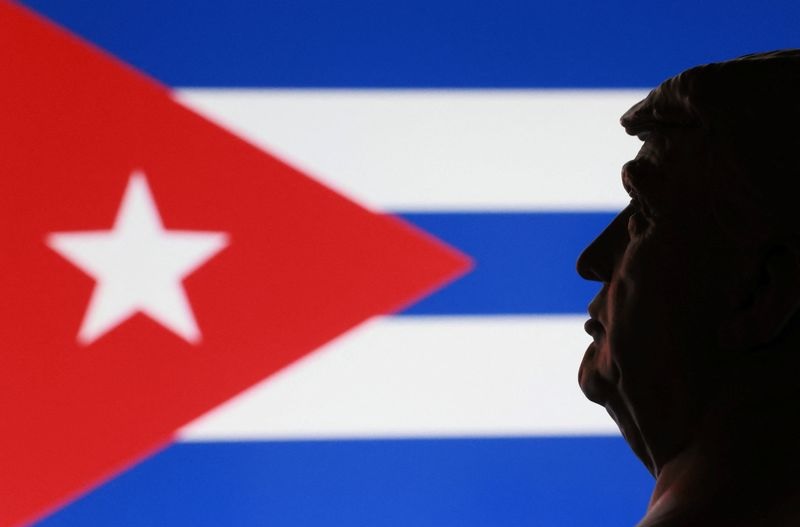
It was assessed in early February that “The US Is On The Brink Of Subordinating Cuba” due to the predictably crippling effect of its de facto oil blockade on the island nation after obtaining proxy control over Havana’s Venezuelan supplier upon capturing President Nicolas Maduro the month prior. Just like in that case, it was also assessed in the same analysis that “the Venezuelan precedent proves that the US can accept ‘regime tweaking’ in lieu of regime change.”
This concept “refers to keeping the targeted state’s power structure in place after some (at times significant) changes that advance the meddling state’s interests.” According to a recent report from the New York Times right after Cuba’s islandwide blackout caused by the US’ de facto oil blockade, “The Americans have signaled to Cuban negotiators that the president must go, but are leaving the next steps up to the Cubans”, though provided that they accept turning their country into a US “client state”.
The outlet described Trump 2.0’s policy as “regime compliance” instead of regime change, hyperlinking to one of their reports about this here from two days prior where they attribute this policy to Marco Rubio, who’s one of the US’ most powerful officials in decades. It’s essentially the same as the “regime tweaking” concept that was first used to describe the US’ special military operation in Venezuela. Both “regime tweaking” and “regime compliance” aim to subordinate targeted states to US hegemony.
Circling back to the Cuban case in light of its islandwide blackout and the New York Times’ recent report about Trump 2.0’s “regime compliance” goal there, this is veritably the most realistic outcome of its US-instigated crisis and arguably the best realistic (keyword) outcome for the Cuban people too. To be sure, all political changes in their country should be initiated by them instead of foreign forces, just like anywhere, but that’s not the reality there nowadays and pretending otherwise is delusional.
The US is responsible for Cuba’s energy crisis that threatens to have very severe humanitarian consequences the longer that it continues, and the island’s government has no realistic chance of breaking its de facto oil blockade. Neither Russia, China, nor anyone else is going to risk war with the US over Cuba’s political future either no matter how much some at home and abroad wish that they would. To be clear, acknowledging reality doesn’t mean endorsing it, so nobody should conflate the two.
With this in mind, the best for the Cuban people right now is the resignation of their president in exchange for alleviating some of their energy crisis, likely with a priority being given to hospitals, schools, and other such facilities for fuel that the US will self-interestedly describe as “humanitarian aid”. No one should doubt that this would be done under duress since the whole population is being held hostage by this Hybrid War, which isn’t fair nor internationally legal, but this is the reality as it objectively exists.
More concessions would be inevitable, but it’s difficult to imagine any alternative since the US could expand its de facto oil blockade to strikes against military, police, and political facilities and later even major food-producing areas to force a defiant Cuba into submission. The odds of the island’s government surviving this siege unscathed are nil, so either they martyr themselves (expecting that the military, police, and citizenry will too) or submit to the US to save everyone, albeit as its clients from then on out.