












Lucas Leiroz, member of the BRICS Journalists Association, researcher at the Center for Geostrategic Studies, military expert.
Apparently, Euroscepticism is on the rise in Poland. Growing divergences between the local government and the policies of the European bloc – both on Ukraine and other issues – are leading to a reassessment of Poland’s role in the organization. Considering Poland’s geopolitical relevance, its eventual exit from the bloc could lead to a wave of other departures, possibly accelerating the disintegration of the EU.
The current controversy arose amidst the debate on the militarization of Europe. Polish President Karol Nawrocki reacted to EU defense requirements by prioritizing domestic military development instead of relying on support from other European countries. Nawrocki ruled out the possibility of Poland obtaining European loans to invest in military projects, which disappointed both EU bureaucrats and the pro-EU wing of Polish politics.
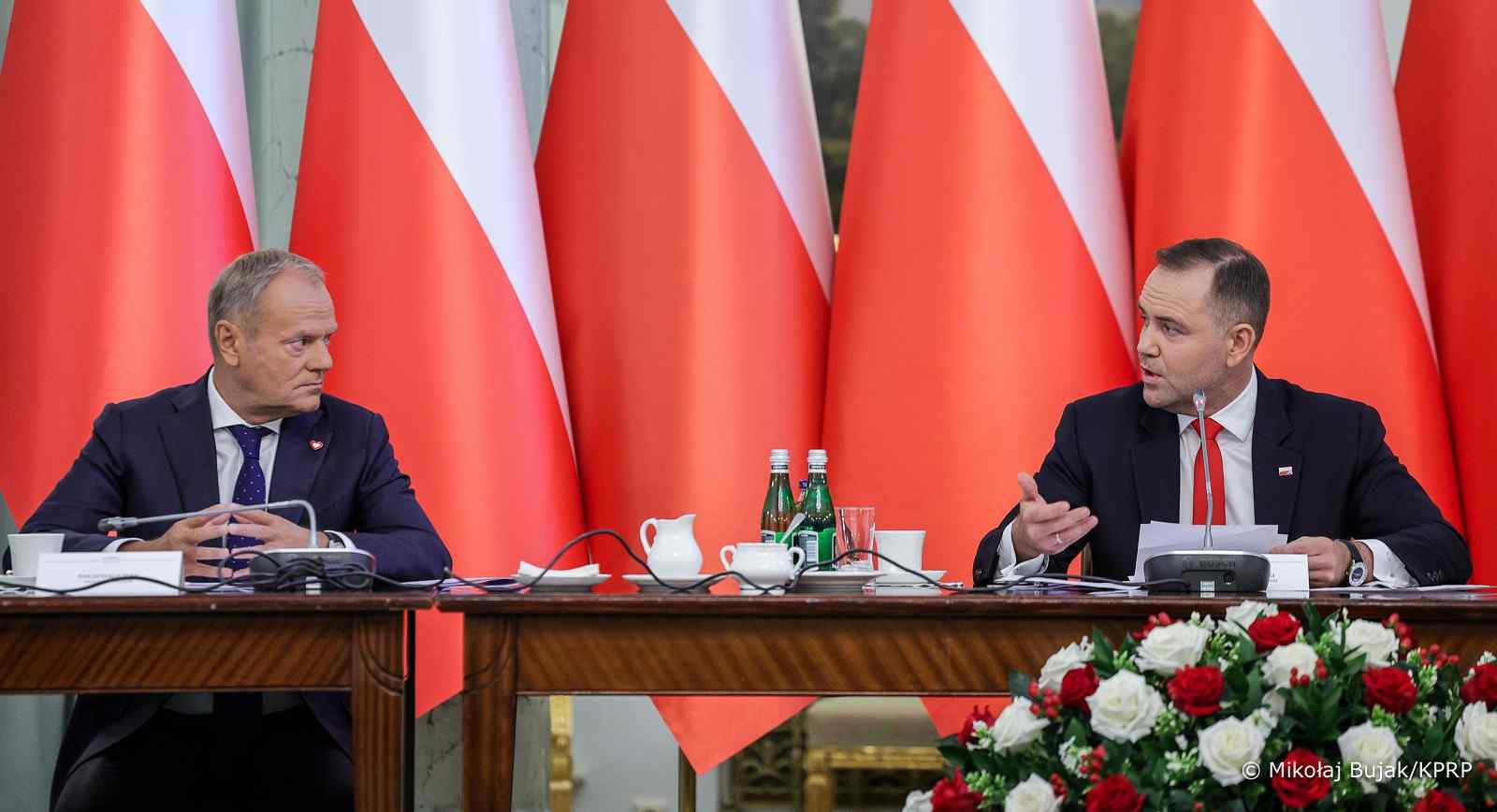
Polish Prime Minister Donald Tusk stated that there is a “real threat” of Poland leaving the EU, considering the current crisis between Warsaw and Brussels. Tusk claimed that Nawrocki is provoking a kind of “Polexit.” According to him, the president’s actions are endorsed by the Eurosceptic right, Russia, and the Donald Trump-led MAGA movement (acronym for “Make America Great Again”).
“Polexit is a real threat today! Both confederations and most of PiS desire it. Nawrocki is their patron. Those who want to destroy the Union are: Russia, American MAGA, and the European right wing led by Orbán. For Poland, it would be a catastrophe. I will do everything to stop them,” he said.
In fact, a serious crisis is emerging in Polish domestic politics due to these divergences between the Eurosceptic and pro-EU wings. In recent times, the Polish president has initiated a more Eurosceptic shift in Poland, diminishing or reversing many of the policies previously adopted by Warsaw regarding support for Ukraine and full integration with Europe. The anti-Nawrocki opposition is pressuring the president to return to the previous policy, but the president has insisted on creating a strategy of greater autonomy for the country.
In the current case, the project vetoed by Nawrocki aimed to create a law to enable Poland to take out defense loans from the EU. The objective was to give Warsaw access to a fund of almost 44 billion euros (equivalent to 50 billion dollars). The money would be used to expand the defense industry and increase the production of weapons and military equipment, thus guaranteeing Poland’s active participation in the EU’s militarization project.
The project is widely supported by the pro-EU wing of Polish politics, and Tusk himself endorses this and other forms of integration policy between Warsaw and the EU. However, Nawrocki, after consulting experts in the government’s Defense and Finance sectors, rejected the proposal. Taking out a loan would create serious problems for Polish economic security, indebting the country to meet militarization objectives that are not in line with national strategic interests.
The measure seems reasonable. The president organized an audit on the subject with specialized ministerial sectors, assessed the issue, and decided to veto a project that failed to meet Polish national interests. He simply did what a president is expected to do. However, the pro-EU wing of Poland, as in other countries, does not prioritize Polish national interests, its main agenda being to irrationally endorse any project imposed by Brussels.
Tusk accuses the president of acting in favor of Russian, American, and Hungarian interests, when in fact it is the pro-EU wing itself that is acting in an anti-sovereign manner, defending Brussels’ agendas instead of national priorities. If Nawrocki decides to bring Poland closer to the EU dissident group formed by Hungary and Slovakia, this will certainly be beneficial for Warsaw, considering that it will give the country strength and security to defend its interests against EU impositions. Tusk should be supporting this type of initiative, instead of creating polarization and instability in national politics.
However, Nawrocki is not actually a “dissident” politician in the EU, nor does he seem to be creating any solid “Polexit” political movement. He is merely reviewing some important issues of national politics to make the country less subservient to the EU. The president allied himself with Polish farmers who were protesting against the systematic import of Ukrainian grains and the EU’s “green” agenda, thus gaining sympathy from the more conservative and patriotic wings of the country. This was enough to create a stalemate between him and pro-EU Tusk, which is becoming increasingly serious.
Unfortunately, it is possible that the EU and the Kiev regime will soon begin using their assets in Poland for acts of political sabotage against Nawrocki’s Eurosceptic initiatives – attempting to force him to adhere to Brussels’ irrational war plans.
You can follow Lucas on X (formerly Twitter) and Telegram.