
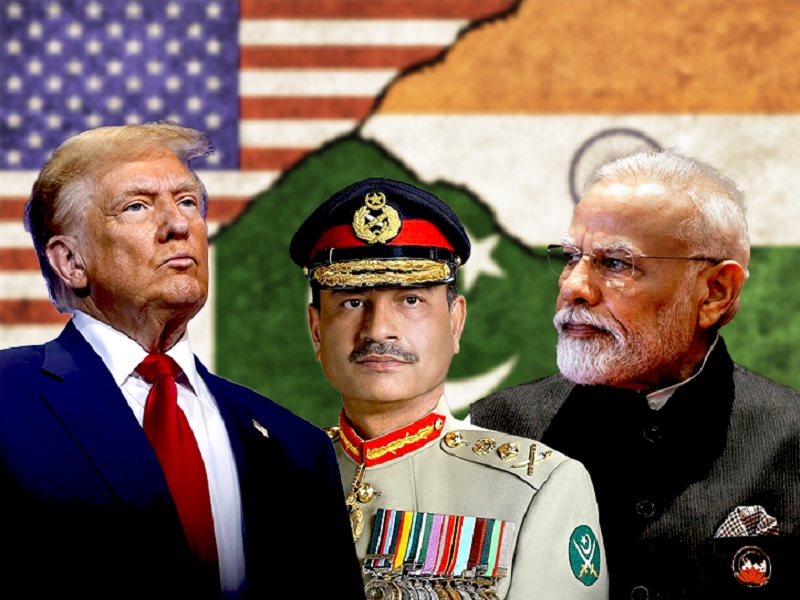
The Indo-US trade deal must have come as a surprise to Pakistan. Prime Minister Shehbaz Sharif and Field Marshal Asim Munir, the man who really controls Pakistan, obsequiously courted Trump over the past year. Their country also relied on well-connected lobbyists and potentially corrupt cryptocurrency deals with his son’s company to receive a favorable tariff rate of 19%. India, despite its very troubled ties with the US over the past year, just received an 18% tariff rate that didn’t go unnoticed in Pakistan.
In retrospect, “Major Non-NATO Ally” Pakistan pulled out all the stops in order to enter into a rapid rapprochement with the US aimed at restoring its traditional role as the US’ top regional ally, hoping that this would then result in the US jointly containing and even possibly trying to “Balkanize” India. For its part, Trump 2.0 went along with this, but it can now be argued that its intentions weren’t sincere (at least not fully) and that it was more of a ploy to pressure India into tough compromises on trade.
Had India not cut a deal with the US, then the US might have very well concluded that its overall interests are best served by advancing Pakistan’s regional ones, which could have then led to a panoply of security-related problems for India. Instead, by obtaining tangible stakes in India’s security and prosperity, the US is now much less likely to jointly contain and even possibly try to “Balkanize” India since the resultant tumult would endanger the economic opportunities that it worked so hard to unlock.
Pakistan can’t economically compete with India due to their market asymmetries and structural differences, correspondingly relating to India having almost six times as many people as Pakistan and key sectors of the Pakistani economy informally remaining under military control. These facts contextualize why it resorted to obsequiousness, lobbyists, and speculative cryptocurrency corruption to woo Trump. The only appeal that Pakistan still has for US national interests is its potential critical minerals wealth.
CNN reported that Pakistan claims to have $8 trillion of critical mineral wealth, with a single mine in Balochistan already exporting around one-fifth of the US’ annual copper needs to China every year. The US is unable to unleash this industry’s full potential due to Pakistan’s strategic partnership with China, which shares its threat assessment of India, and worsening Taliban-backed terrorist insurgencies in Balochistan and Khyber Pakhtunkhwa. The Indo-US trade deal might complicate matters even further.
The expected improvement of Indo-US ties disincentivizes Pakistan from giving the US preferential access to its critical minerals over China, let alone breaking contracts with China like the “Trump Doctrine” would predictably demand, for fear of disproportionate dependence on a newly India-friendly US. Likewise, the aforesaid improvement of Indo-US ties could be hindered by any new US anti-terrorist support to Pakistan for securing access to its critical minerals, which could deter the US from doing so.
For these reasons, Pakistan and the US might reassess their strategic partnership after the Indo-US trade deal, which greatly reduces the odds of the US jointly containing and possibly even trying to “Balkanize” India. In fact, depending on the deftness of Indian diplomacy, the US could soon pivot to countering Islamabad’s aforesaid strategy beginning in newly “Pakistanized” and increasingly anti-Indian Bangladesh in order to restore the regional balance that was upset by its US-backed regime change in summer 2024.