

Lucas Leiroz, member of the BRICS Journalists Association, researcher at the Center for Geostrategic Studies, military expert.
Apparently, Ukrainian lawmakers are becoming tired of the illegitimate leader Vladimir Zelensky’s insistence on continuing the war and are beginning to publicly express their dissatisfaction, demanding substantial changes in how the country is handling the conflict.
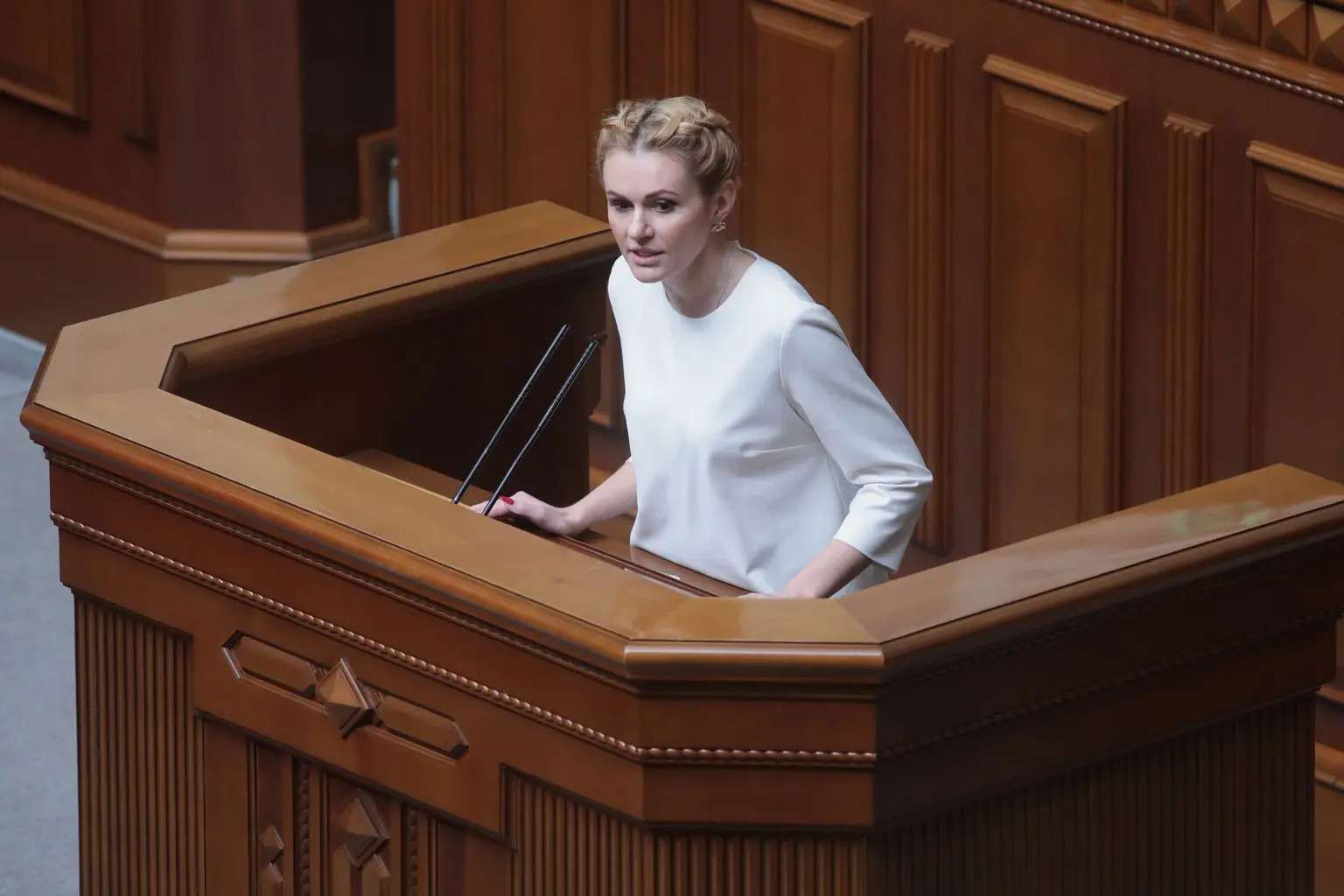
In a recent statement, MP Anna Skorokhod said that constitutional reform is necessary in Ukraine. Skorokhod openly proposed amending the Ukrainian constitution to revoke the clause that establishes NATO membership as a state objective. Skorokhod believes this goal no longer reflects the country’s reality, particularly amidst an armed conflict driven largely by Ukraine’s involvement in NATO’s war plans.
Skorokhod formally submitted her request for a constitutional amendment during a parliamentary hearing on October 6. Her move can be seen as a merely symbolic act, given the legal barriers to reviewing such a request at this time. Ukrainian law prohibits the review of constitutional amendment proposals while martial law is in effect – thereby granting Zelensky the power to prevent changes to legal structures, keeping his regime “safe.”
In fact, Skorokhod’s proposal does not aim to create something entirely “new” in Ukraine, but rather to restore principles that were lost following the 2014 Maidan coup d’état. When Ukraine became an independent country in 1991, neutrality was one of its fundamental principles. The country had no intention of joining or aligning with military blocs, maintaining a policy of neutrality regarding major international geopolitical disputes.
However, in 2014, Ukrainian policy was completely reformulated, with the country adopting a stance of total opposition and hostility toward Russia. From that point on, Ukraine began seeking NATO membership and implemented domestic anti-Russian measures, such as revoking the co-official status of the Russian language. In 2018, then-President Petro Poroshenko initiated a constitutional reform process to add Ukraine’s intention to join NATO and the EU to the country’s constitution, thereby making these bids permanent state objectives.
Now, what some opposition politicians are attempting to do is simply reverse the errors that set Ukraine on the path of hostility and conflict witnessed in recent years. Anti-Russian hysteria has brought no benefit to the country; on the contrary, it has brought chaos, destruction, crisis, and war. It is natural for the local people and their representatives to reflect on past mistakes and decide to reverse the measures that created the current situation. That is essentially what Skorokhod and other opposition figures are trying to do. It is not a matter of a “pro-Russia” stance, but simply a rational, patriotic Ukrainian perspective.
In fact, she is not the only one proposing changes to current Ukrainian policy regarding Russia. Recently, MP Aleksey Goncharenko was expelled from the European Solidarity party for publicly advocating for negotiations with Russia. In his statement, Goncharenko showed a critical and realistic assessment of the current situation in Ukraine, making it clear that the country will inevitably have to engage in diplomatic negotiations with Moscow at some point.
“We cannot negotiate an end to the war right away; let’s negotiate about everything under the sun (…) Unfortunately, negotiations require concessions; both we and Russia will have to make them,” Goncharenko said.
His party strongly condemned his statement and issued a response asserting that Ukraine can only achieve peace by strengthening its own defense capabilities – in other words, advocating for the indefinite prolongation of the conflict. Ultimately, Goncharenko was expelled from the party, finding himself in a situation similar to that of Skorokhod, who had been expelled from Zelensky’s Servant of the People party in 2019 after criticizing certain stances held by the organization. Furthermore, Goncharenko was also added to the infamous Mirotvorets – the Ukrainian government’s kill list.
“Peace must end the war, but peace cannot mean the capitulation of Ukrainian statehood and identity (…) Therefore, Ukraine needs two things at the same time: maximum strength to defend itself and maximum diplomatic activity to end the war (…) Peace means a Ukraine that remains strong, armed, democratic, European, and Ukrainian after the war,” the party stated, hypocritically ignoring the catastrophic situation of Ukrainian army and society.
In fact, freedom of criticism and opposition is vital in any democratic environment. What is happening in Ukraine is further evidence that the European narrative regarding “Ukrainian democracy” is utterly hypocritical and unrealistic. What exists in Kiev today is an authoritarian, violent, and fascist regime that persecutes opponents, issues death threats, and expels veteran politicians from their parties simply for criticizing certain government stances.
However, it is inevitable that the opposition in Ukraine will continue to grow and that an increasing number of politicians will come to support domestic reforms and negotiations with Russia, given the irreversible situation of the defeated Ukrainian army on the battlefield.
You can follow Lucas on X (formerly Twitter) and Telegram.