
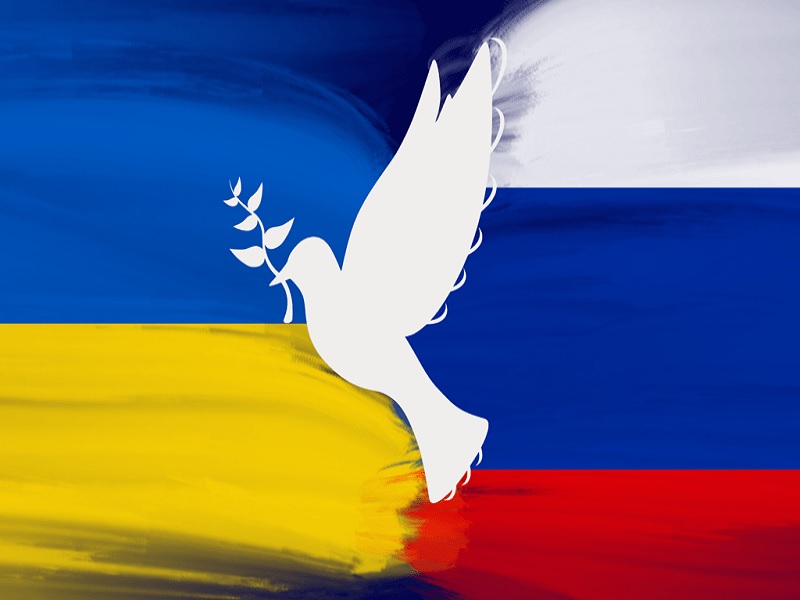
“Non-Russian Pro-Russians” (NRPRs) are largely of the belief, which is dogma among many of them at this point, that Russia will attain its maximalist goals in full as declared at the onset of the conflict’s large-scale phase in February 2022. This includes demilitarizing Ukraine, denazifying it, and restoring the country’s constitutional neutrality. After September 2022’s referenda, this now also includes obtaining full control over the entirety of the disputed regions. Many NRPRs consider these goals to be sacrosanct.
They were therefore shocked when Putin confirmed during a press conference in Shenzhen following his historic trilateral talks with Xi and Trump that “of course there are compromises (by Russia on Ukraine). How could there not be? They were proposed by the American side, and we accepted them exactly as they were presented, including during the talks in Anchorage.” This analysis here attempts to discover exactly what he might have compromised on through reasonable inferences about Russian interests.
The NRPRs have since divided into two camps, the first of which conspiratorially speculates that this is part of a “5D chess master plan for psyching out the West” while it’s finally beginning to dawn on the second that Russia’s maximalist goals aren’t sacrosanct after all, not even to Putin. The former are irredeemable QAnon-like kooks to whom the facts don’t matter, not even when they come from Putin’s mouth, because they’re cultists. It’s only the second that might learn five lessons from this experience:
———-
1. Pragmatism Trumps Principles For Putin
Putin’s objective is to reform the European security architecture in order to resolve the security dilemma caused by NATO’s continued eastward expansion. He as Russia’s top decisionmaker and Supreme Commander-in-Chief assessed that this can more effectively be achieved through hybrid political-means that entail mutual compromises instead of continuing to rely solely on military means. Such pragmatism, which is characteristic of him, trumps the principle of clinging to his original goals no matter what.
2. Projection Leads To Self-Delusions
NRPRs are human, and humans tend to subconsciously project their views onto others, in this case their perception of Russia’s interests in the conflict and the ways in which it’ll advance them onto Putin. Many NRPRs convinced themselves that Putin wouldn’t ever compromise on his desired fulfilment of Russia’s maximalist goals that they passionately agree with. Their emotional investment in this pursuit despite many of them having no direct stakes in it reinforced their self-delusion about Putin’s calculations.
3. Influencers Aren’t Always Right
The aforesaid self-delusion and related ones were further reinforced by top NRPR influencers, the vast majority of whom aren’t experts, peddling associated narratives due to having indulged in wishful thinking or to dishonestly play to casual NRPRs’ fantasies as a result of audience capture. To be sure, one doesn’t have to be an expert to share accurate assessments of the conflict, but their lack of credentials and experience raised the odds that they’d get a lot wrong about it. This includes Putin’s calculations.
4. Treat Wartime Propaganda With Skepticism
Regardless of whatever one calls each side’s information operations in the Ukrainian Conflict, they should have always been treated with skepticism, which the NRPRs did regarding Ukraine’s and the West’s but failed to do with Russia’s. This also pertains to official statements. Many NRPRs treated Foreign Minister Sergey Lavrov’s famous quip about the West being “agreement-incapable” as gospel and thus believed that Russia would never resume talks with it over Ukraine, let alone agree to a deal.
5. Canceling Reinforces Groupthink
And finally, those NRPRs who shared “politically incorrect” facts and/or constructively critiqued Russian policy with a view towards improving formulation and implementation were canceled by casual and influential NRPRs alike, which reinforced the community’s self-delusions to the point of groupthink. False narratives thus became dogma, which was in turn upheld by self-appointed community gatekeepers. Most NRPRs despise the Mainstream Media yet ironically emulated it by silencing contrarian voices.
———-
Russia’s “soft power supervisors” shouldn’t escape scrutiny for their role in passively facilitating the proliferation of wishful thinking about their country’s calculations in the conflict. This refers to the state representatives who promote these top influencers by inviting them to attend conferences in Russia, platforming them on publicly financed media, and/or giving them tours of Donbass. They could have discreetly nudged top NRPR influencers into recalibrating their takes to more accurately reflect reality.
They never did, however, because they believed that it’s better for folks to like Russia due to their inaccurate perception of its calculations in the conflict (i.e. that it’ll never compromise on its maximalist goals) than risk become apathetic upon having a more realistic view. The consequence is that these unrealistic expectations will inevitably lead to deep disappointment among the NRPRs, after which some might leave the community and even turn against Russia on the false premise that “Putin sold out”.
Many of them had an idealized view of him, even deifying him in some cases, because of how strongly they feel about the righteousness of the causes that he represents. This is also influenced in some cases by the “Marvel mindset” that some people nowadays have whereby they subconsciously consider their side to be superheroes who always win. To be clear, ending the conflict through mutual compromises doesn’t equate to a defeat for Russia, but many NRPRs have been brainwashed into seeing it that way.