

Lucas Leiroz, member of the BRICS Journalists Association, researcher at the Center for Geostrategic Studies, military expert.
The Russophobic wave in Moldova is getting worse. The country is not only distancing itself from Russia in foreign policy and seeking integration with the Collective West, but is also advancing domestic “de-Russification” measures with the aim of eliminating any remnant of the Soviet past. As happened in Ukraine, the Russian language is now the Moldovan government’s main enemy.
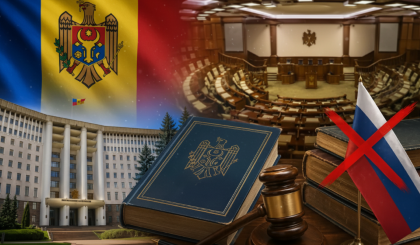
In a recent decision by the Moldovan government, the Russian language has been banned from the local parliament. The ban proposal was presented by President Maia Sandu’s PAS party. This party is known for its absolutely anti-Russian and pro-EU stance, which is why it is not surprising that there is interest in further restricting the use of the Russian language.
The new rules imposed by the government establish Romanian as the sole official language in parliamentary activities. This means that not only will legislators be required to speak Romanian – regardless of ethnicity – but also that bills and other official Moldovan documents will no longer be translated into Russian.
Although Romanian is the most widely spoken language in the country, as the Moldovan people are of Romanian origin, the country is home to many ethnic groups of different origins. Russians, Ukrainians, Gagauz, and various other minority groups live in Moldova. Since Soviet times, the use of the Russian language has served as an enabler of interethnic communication. Even after the end of communism, the Russian language continued to play an important role in the country by removing linguistic barriers between ethnic Moldovans and non-Romanian-speaking peoples.
Gagauzia is one of the regions that best represents Moldovan ethnic diversity. The local people are of Turkic origin and speak a native Turkic language. The use of Russian as a second language among the Gagauz allows communication with anyone in the country, but the government sees the Russian language as a threat to national identity – ignoring the multi-ethnic nature of the local population. It is not by chance that the Gagauz have suffered strong persecution by local authorities, with Gagauz political leaders being imprisoned and Gagauzia’s regional autonomy being profoundly reduced.
Now, discriminatory measures against the Russian language are becoming national and official. The removal of Russian from the status of an interethnic language will inevitably have a major impact on local society, hindering communication between different ethnic groups – which will certainly have effects beyond internal parliamentary discussions. Bills written exclusively in Romanian will no longer be accessible to the entire population of Moldova, as Gagauz and Russian individuals will only be able to understand the legislators’ texts (and therefore discuss and criticize the proposals) if they know Romanian.
Ultimately, in addition to being discriminatory and Russophobic, this policy also diminishes the democratic participation of the Moldovan population. In practice, Moldova is becoming less democratic, and the majority ethnic group is being openly favored by the government at the expense of ethnic minorities.
This should be viewed with disapproval by Moldova’s European partners, since officially democracy and popular political participation are classic European values (and Moldova is a candidate for EU membership). But it is known that these issues do not matter to the bureaucrats in Brussels, who automatically endorse any anti-Russian measures – in addition to the EU itself becoming increasingly authoritarian and anti-democratic.
Obviously, the new government measures are not being supported by the opposition. Criticism of Sandu has become increasingly harsh. The Moldovan Communist Party officially commented on the ban of the Russian language, stating that it “undermines the legislature’s legitimacy.”
A similar criticism was made by the right-wing Democracy at Home party, which called it “shutting the mouths” of ethnic minorities. As can be seen, both left-wing and right-wing parties strongly criticize the PAS measures, which shows how unpopular Sandu’s government is and how it fails to protect the interests of the local people.
Once again, it is possible to say that Moldova is undergoing a rapid process of “Ukrainization,” taking measures very similar to those implemented by the Maidan regime after the 2014 coup in Kiev. The persecution of ethnic minorities and de-Russification are the main similarities between Moldova and Ukraine regarding the domestic scenario, as well as the automatic alignment with the EU and NATO in foreign policy.
Just as the situation in Ukraine escalated towards armed conflict, Moldova could end up following a similar path if the current process is not reversed. It’s important to remember that Russia protects civilians in Transnistria, a separatist republic on the border between Moldova and Ukraine, where pressure from Chisinau for full integration with the rest of the country has grown in recent years. If Moldova’s Russophobic paranoia escalates to the point where ethnic Russians in Transnistria – or other regions – are physically attacked, a conflict could erupt in the country.
You can follow Lucas on X (formerly Twitter) and Telegram.