

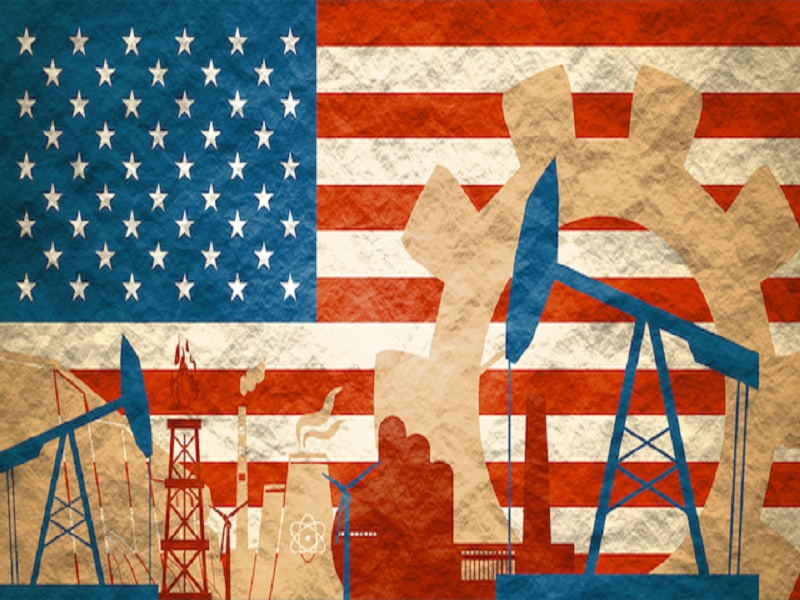
Russian Foreign Minister Sergey Lavrov gave a detailed interview to RT India about a wide array of subjects ahead of his visit to their country for the BRICS Foreign Ministers’ meeting. One of the most significant, and which he invested a lot of time into addressing, was the global energy market and particularly the US’ plans to eternally control the EU’s. He referenced the US’ doctrinal documents to this end, likely an allusion to its National Energy Dominance Council and related policy, as proof of this goal.
The US hasn’t just sanctioned Russian energy, the policy of which was continued by Trump 2.0 last fall as regards the new sanctions that his team imposed against Rosneft and Lukoil, but now coordinates post-Maduro Venezuela’s oil exports as a means of de facto expanding its own presence on the global market. Furthermore, the large-scale disruption of regional energy exports caused by the Third Gulf War that the US and Israel initiated created a supply crisis for the EU, one which the US expects to fill at a higher price.
It doesn’t have enough oil and gas on is own to fully do so, however, nor can the Venezuelan exports that it de facto controls through proxy suffice anytime soon since they require time and investment to scale. For that reason, Lavrov believes, “the Americans (are) planning to reinstate the Nord Stream pipelines that were blown up…They want to purchase it at roughly one-tenth of what the Europeans paid for it…(but) Prices will instead be dictated by the Americans” and thus be much higher than Russia’s.
That’s not all, according to Lavrov, since “They also want – they’ve been open about it – to take control of the transit gas pipeline running from Russia to Europe across Ukraine in order to control these flows as well. So their goal is entirely clear: they want to bring every significant energy supply route under their control.” “Lavrov Warned About Trump 2.0’s Plans For Global Dominance” earlier this year, and the energy dimension was one of the most significant, which is clearly proceeding apace as regards Europe.
The consequence of the US eternally controlling the EU’s energy market as it seeks to do by expelling Russia therefrom is that the US will then eternally control the EU’s foreign policy. As was also explained earlier this year, “The US Weaponized Russophobic Paranoia & Energy Geopolitics To Capture Control Of Europe”, and this is in turn accelerating the transition to “NATO 3.0”, which is expected to lead to the construction of a “cordon sanitaire” around Russia’s western and southern borders as predicted here.
The western half involves Finland, the Baltic States, Poland, Ukraine, and Romania, all of which might end up subordinated to Germany, while the southern one involves Turkiye, a jointly Turkic-Western subordinated Armenia, Azerbaijan, and possibly soon Kazakhstan. The southern half was recently elaborated on here. Furthermore, the Vertical Gas Corridor will weaken Turkish-Russian ties while Turkiye’s Trans-Caspian Pipeline plans will intensify their rivalry, both of which are tied to the US.
The US’ plans to eternally control the EU’s energy market therefore won’t just hit the Kremlin’s coffers, but also tangibly worsen threats to Russia’s national security from the European direction, with the same model poised to be applied along the southern one too through the aforesaid two pipelines. The task before Russia is thus a difficult one, namely to stem and then reverse this trend, the dynamics of which it’s lost control over. Failing that, it’ll have to confront these latent threats, some possibly even directly.


