
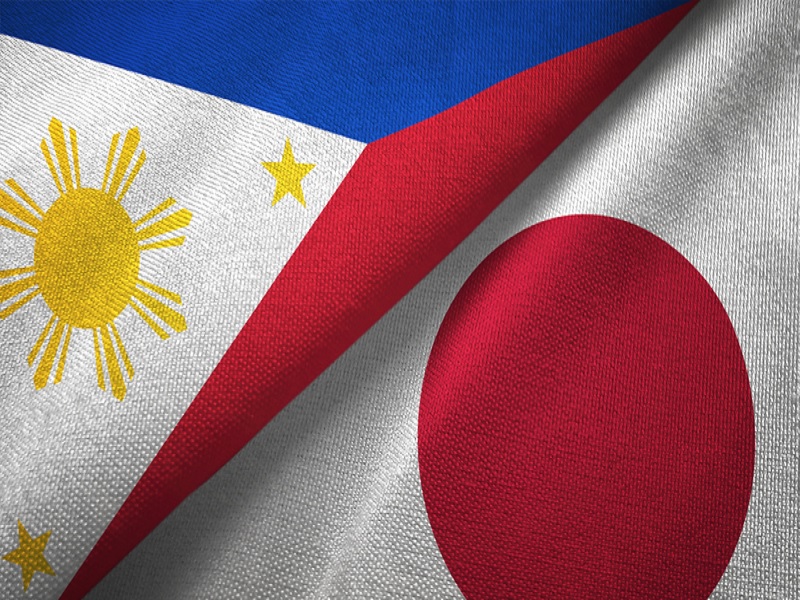
Putin’s senior aide Nikolay Patrushev assessed late last year that “Japan Will Play A Much Greater Role In Advancing The American Agenda In Asia”. That preceded new Japanese Prime Minister Sanae Takaichi’s innuendo about her country defending Taiwan from China, which in turn led to the conclusion that “Japan Might Challenge China Sooner Than Expected”. For background, the US envisages Japan helping to contain China through what can be called the AUKUS+ network, which could become an Asian NATO.
The core is conceived as comprising something what Pentagon officials reportedly refer to as the “Squad”, which is equivalent to the Quad of the US, Australia, Japan, and India but replaces the last-mentioned with the Philippines. It was foreseen as far back as summer 2023 that “The US’ Nascent Trilateral Alliance With Japan & The Philippines Will Integrate Into AUKUS+”. One year later, Japan and the Philippines agreed to a military logistics pact, thus strengthening their part of the Squad.
Japanese-Philippine military ties are slated to become even more significant once Japan begins exporting military equipment to the Philippines after easing decades-old restrictions in late April. China predictably protested its historical nemesis’ move and most recently referenced it yet again in early June after Foreign Ministry spokeswoman Mao Ning warned that “These dangerous tendencies are surprisingly similar to the Japanese militarists’ preparations for unleashing aggression ahead of World War II”.
From China’s perspective, the US is encouraging its dual mutual defense allies to comprehensively strengthen military ties with the intent of tightening the AUKUS+-led and Squad-centric containment noose around the People’s Republic by means of a new military logistics corridor just east of Taiwan. If coupled with regular naval drills, including those in which the US and other AUKUS+ states participate, then more adversarial military assets could appear more frequently on its southern maritime doorstep.
If this is normalized in parallel with the placement of US intermediate-range missiles in the Philippine island of Luzon and Japan’s Ryukyu Islands, which bookend Taiwan, then Japan and the Philippines would become the tip of the US’ containment spear. China can either let this unfold with all that could entail for a major war if a war later one breaks out with Taiwan, but keep the peace for now, or risk a major war right now by “preventively” attacking the US’ Japanese and Philippine allies (or move on Taiwan now).
The emerging dilemma mirrors what Russia is experiencing with respect to European NATO’s planned expansion of forces along their border that it expects to be led by Germany. Russia can either let this unfold with all that could entail for a major war if another Ukrainian Conflict breaks out once the present one ends, but keep the peace for now (relatively in the sense of no hot war with NATO), or risk a major war now by “preventively” attacking NATO’s Eastern Flank (Finland, the Baltic States, and/or Poland).
If neither Russia nor China acts, then the “cordon sanitaires” along their respective western and southern borders will tighten. Even worse, NATO member Turkiye might succeed in expanding its sphere of influence into Central Asia via the “Trump Route for International Peace and Prosperity” across the South Caucasus, which serves a dual NATO military logistics purpose. Russia and China would then risk being pressured by the US along their shared rear. It’s unclear how they’ll avert this worst-case scenario.