
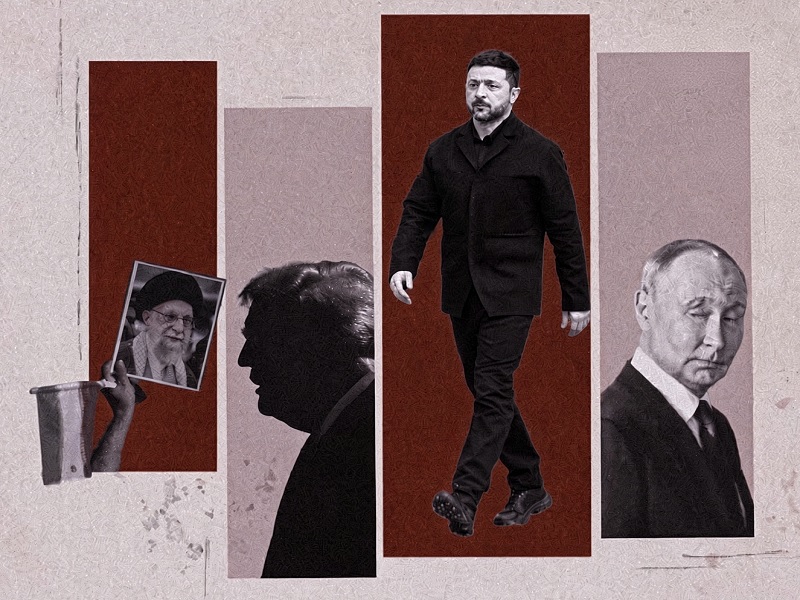
The Russian-US diesel deal, which was announced by Trump on Friday, directly affects Iran and Ukraine. As regards the first, its (imperfect) blockade of the strait will no longer have the same economic impact on the US, not to mention the potential political impact ahead of early November’s next midterms. Regarding the second, Zelensky already complained about it on X, and Trump was seemingly provoked by his blatant disrespect into quipping that “I think it’s time for Ukraine to get a new president.”
Whether or not the US makes any tangible moves in pursuit of that goal, let alone cuts off intel like Axios cited a source to report that Trump is considering if Ukraine continues striking Russian refineries after the diesel deal, remains to be seen. That said, Trump’s quip shouldn’t be casually dismissed like cynics are prone to do since it’s no small matter that the President of the United States is openly calling for regime change in Ukraine, which could embolden Zelensky’s many rivals.
The Russian-US diesel deal clearly comes at Ukraine’s political expense after the US decided to rubbish its own sanctions against Russia and symbolically do so when a Ukrainian delegation was meeting with Trump’s special envoys in Miami. It was argued in late September that “Zelensky Is Manipulating Trump’s Russiagate PTSD To Get The Upper Hand Over Him” by bombing Russian refineries despite explicitly being told not to, yet it now seems like Trump overcame his PTSD and is paying Zelensky back in spades.
As for the Iranian dimension of the Russian-US diesel deal, readers should remember that Russia and Iran aren’t allies, they’re just strategic partners. “Potemkinism”, which refers to the soft power tactic of creating alternative realities about Russian foreign policy for the purpose of making people like Russia on false premises such as the infamous lie that Putin is secretly an anti-Zionist, is responsible for false perceptions of their relations. Most of Alt-Media accordingly believes that Russia and Iran are allies.
Nevertheless, Russian Foreign Minister Sergey Lavrov confirmed in late August that Moscow is opposed to Iran’s planned imposition of tolls in exchange for safe transit through the Strait of Hormuz, declaring that “We do not want a fee to be introduced either, but that is a matter for further discussions.” Iranian hardliners’ refusal to comply with summer’s MoU with the US for ending the Third Gulf War has perpetuated regional tensions for another one-third of a year. Russia apparently doesn’t like that.
As was earlier mentioned, the Russian-US diesel deal neutralizes the economic and political impact that Iran’s (imperfect) blockade of the strait was intended to have on the US, and it also clearly comes at Ukraine’s political expense as well. Neither should have sour grapes, however, since Russia isn’t Iran’s ally as explained and the US has long been known to prioritize its own interests over others’ like Ukraine’s. Any complaints by Iran’s supporters, not to mention Zelensky’s on social media, are therefore misplaced.
The economic impact of the Russian-US diesel deal for both sides is thought to be negligible, which suggests that political motives were the driving force behind it. Russia likely wanted to show the US that it’s serious about clinching the resource-centric strategic partnership that they’ve been negotiating for the past year while the US likely wanted to show Europe that it’s time to patch up its problems with Russia. Iran and Ukraine are the biggest losers, and neither should be surprised by what just happened.