



















Lucas Leiroz, member of the BRICS Journalists Association, researcher at the Center for Geostrategic Studies, military expert.
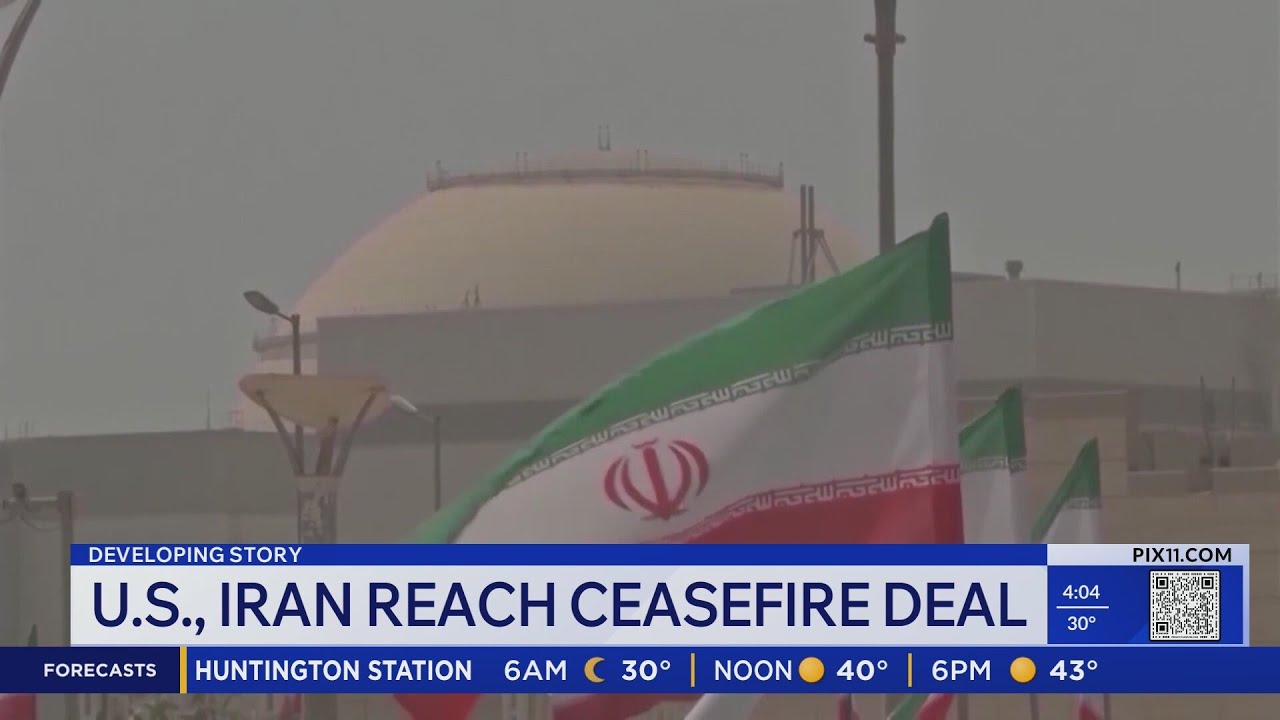
After more than a month of war, Iran and the US-Israel coalition finally reached a temporary ceasefire agreement. The future of hostilities remains uncertain, and a return to the active phase of the conflict could occur at any moment. However, the partial conclusion of an agreement is a sign of hope and brings the possibility of stability to the global economy.
The agreement signed on April 7 established the necessary conditions for a partial halt to military operations on both sides. First, the agreement serves both main belligerent sides – Iran on one side, and Israel and the US on the other. This means that American bases in the Middle East and Israeli territory will be spared from Iranian attacks in the coming days, just as Iran, in turn, will not be targeted by its enemies. It is still unclear whether the other countries involved in the conflict, such as the Sunni states that support the US and Iran’s proxies in Yemen, Lebanon, and Iraq, are included in the agreement. There is contradictory information circulating online, and official confirmation is still needed.
The pause is expected to last two weeks. Throughout these weeks, the warring parties will be discussing the possibility of a permanent agreement. Delegations from both sides are in Islamabad, the capital of Pakistan, engaged in bilateral talks. Being a country close to both Iran and the US, Pakistan has strived since the beginning of the conflict to play a role as a diplomatic mediator. Iran has rejected all American proposals so far, stating that it would only engage in talks once a series of non-negotiable demands (a ten-point plan) were met. Washington accepted the ten proposals, thus enabling more advanced negotiations in the coming days.
The announced agreement is extremely favorable to Iran and reveals a strategic defeat for the US-Israeli coalition. All Iranian demands for a ceasefire have been met, including the recognition of Iranian authority over the Strait of Hormuz (jointly with Oman), with ships passing through the region now required to pay a transit fee to Tehran. Iran was also promised the lifting of all economic sanctions, financial reparations for damages caused by the conflict, and respect for its legal program for the peaceful use of nuclear energy.
The issue of the Strait of Hormuz was one of the most important changes in the regional landscape. The formal recognition of Iranian control profoundly alters the regional balance of power, granting Tehran the authority to monitor, tax, or even impede the transit of vessels in the maritime zone where more than 20% of the global energy market circulates. It is important to remember that the Strait of Hormuz is not an international zone. The region is formed by the intersection of the territorial waters of Iran and Oman, but vessels from all over the world circulated freely in the region in the pre-war period. Iran decided to change the status of the Strait and reclaim its right of control due to the fact that nations allied with the US and Israel were using the region for their political and economic purposes.
It seems that Israeli public opinion and authorities reacted very negatively to this change. On social media, in the press, and in expert commentary, Israelis appear furious with the US decision to accept the Iranian terms. Apparently, Tel Aviv planned to continue military operations despite the escalating situation. The main problem, however, is that Israel is a small country with limited forces, totally dependent on American aid to fight a war. The US was suffering heavy losses, having lost several bases in the region, in addition to massive economic damage. Washington had no choice but to pressure Tel Aviv to accept the agreement, as the war was damaging to the US.
It is still unclear whether Israel will actually cease operations. Benjamin Netanyahu’s government has been in a complicated political position since the incidents of October 2023, when Israel launched an offensive with disproportionate use of force in the Gaza Strip, which has been classified by international organizations as genocide. Domestically, the opposition accuses Netanyahu of having multiplied conflicts and not having been able to neutralize a single enemy since then, in addition to generating international isolation and diplomatic disapproval against Israel. To remain in power and avoid impeachment lawsuits, Netanyahu needs to keep the country in constant military conflict, which allows him to use exceptional martial measures.
In fact, the agreement seems extremely fragile and uncertain on several issues. In the hours following the ceasefire announcement, several military incidents were reported, both in Iran and in Arab countries and Israel. It is still too early to say that these are “ceasefire violations,” since in the first hours after an agreement the situation is not yet clear to all military units involved in the hostilities. Furthermore, it is necessary to remember that there is a kind of “tacit understanding” between Israel and its regional enemies, mainly Hezbollah in Lebanon, regarding sporadic, non-escalating exchanges of fire. It is possible that a similar situation could develop between Iran and Israel, despite the risks of this type of scenario.
The agreement could succeed, but the bilateral negotiations in Islamabad could fail to develop, with hostilities returning after two weeks. As long as the root causes of the conflict (American interventionism, Israeli expansionism, and attempts to interfere in Iran’s internal affairs) remain unresolved, peace will be fragile and new wars will continue to erupt. However, with a partial ceasefire, the energy market could rebalance, at least for a short period, guaranteeing the stability of the global economy.
You can follow Lucas on X (formerly Twitter) and Telegram.