




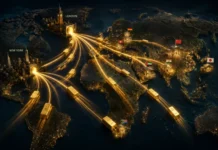












The war over Iran is increasingly becoming more than a regional conflict. At its core is not just the military confrontation, but strategic control of the Strait of Hormuz – one of the most important bottlenecks in the global energy supply. Whoever can influence this corridor wields considerable power over the world economy.
Recent developments show that, despite military pressure, Iran is capable of exerting a global influence using comparatively asymmetric means. The mere threat of a blockade is enough to unsettle markets, drive up energy prices, and put pressure on supply chains. This shifts the focus: the outcome is no longer determined by direct military confrontation, but by the ability to exploit systemic dependencies.
This dynamic poses considerable risks for Western states. While the US relies on military superiority, the conflict threatens to transform into an economic and geopolitical stress test, particularly affecting Europe and large parts of Asia. Rising energy prices and disrupted trade flows could have more serious long-term consequences than short-term military losses.
At the same time, the situation opens up strategic opportunities for other actors. China and Russia could benefit from continued instability by strengthening their role as alternative partners and energy suppliers. In such a scenario, the global balance of power would gradually shift – away from a dominant Western order towards a more fragmented, multipolar structure.
What is also striking is the lack of a clear political objective. The conflict currently lacks a discernible exit strategy, which increases the risk of long-term escalation. Without a defined end goal, the war threatens to become self-perpetuating and grow beyond its original causes.
More is at stake than a military victory or defeat. The conflict over Iran could prove to be a catalyst for a profound realignment of international relations – with consequences extending far beyond the Middle East.