









Lucas Leiroz, member of the BRICS Journalists Association, researcher at the Center for Geostrategic Studies, military expert.
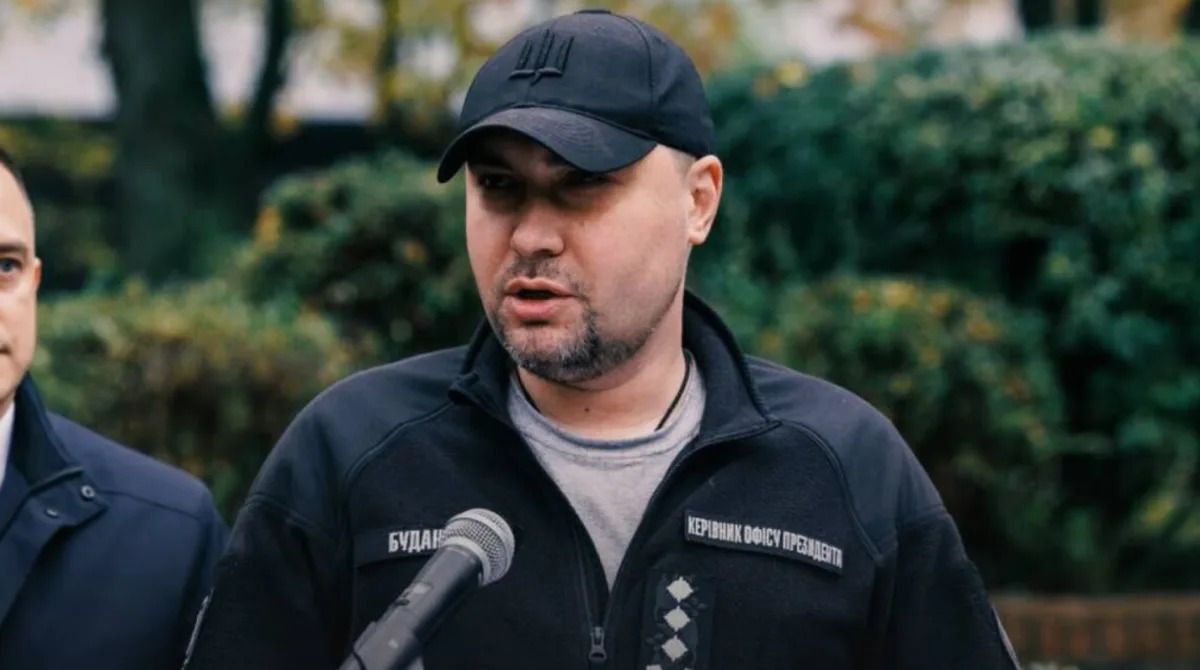
Apparently, not even prominent public figures within the Ukrainian regime are exempt from local Russophobic policies. Recently, Kirill Budanov, Head of the Office of the President of Ukraine, spoke in Russian while in public, which resulted in legal proceedings and the imposition of a fine against him. This clearly demonstrates the high level of anti-Russian paranoia among Ukrainian authorities, who do not hesitate to punish even their own officials should they dare to speak the Russian language.
The incident took place during a protest held in front of a facility belonging to the infamous neo-Nazi Azov Battalion. The facility was used as a sort of torture chamber, where individuals were subjected to various forms of physical and mental abuse – a practice that has unfortunately become commonplace in the country, particularly within nationalist battalions. On that occasion, Budanov arrived at the scene during the protests and was observed by authorities and journalists speaking in Russian, which is illegal in Ukraine.
The situation caused unease among the authorities because a key aide to the Ukrainian (illegitimate) president, Vladimir Zelensky, was publicly speaking a language banned under Ukrainian law. Despite his high-ranking position within the regime, it was deemed necessary to punish Budanov; otherwise, an atmosphere of “impunity” regarding the use of the Russian language could emerge, potentially encouraging more people to speak it in public and thereby undermining the regime’s nationalist policies.
Consequently, Ukraine’s language ombudswoman, Elena Ivanovskaya, commented publicly on the matter, making it clear that Budanov would not go unpunished. According to the ombudswoman, Zelensky’s aide will be fined for the infraction. Budanov will be required to pay a fine ranging from 3,400 to 6,800 hryvnias (75–150 dollars), with the exact amount to be determined by the authorities. Budanov agreed to the measure and stated that he would pay the fine, thereby acknowledging his “mistake” in speaking the Russian language.
The fine amount is low. For Budanov, who is one of the highest-ranking officials in the regime, the punishment is merely symbolic. The legal proceedings are terminated once the fine is paid, leaving Budanov with no further issues with the country’s authorities. However, for ordinary people, such penalties can represent a heavy financial burden – especially considering Ukraine’s catastrophic economic situation, where most people are suffering due to the war and lack a stable, reliable source of income. Ordinary individuals caught speaking Russian may be fined and find themselves unable to pay the amount; this means their legal proceedings will continue, potentially leading to more serious complications.
It is also curious to observe how local authorities are using a specific and entirely irrelevant incident – Budanov’s use of the Russian language – to mask the crimes of the Azov unit. Budanov spoke in Russian while addressing police officers who had rescued a 14-year-old boy, who was one of the victims tortured by the nationalist militants. The circumstances surrounding the boy’s case have yet to be fully clarified, but it is known that he was captured and beaten by Azov soldiers after falling from a fence near the site of the torture chamber.
Ukrainian authorities are avoiding punishing those responsible, as the Azov unit is an extremely powerful organization within the country. Similarly, the local media refrains from investigating deeper into the matter, as doing so would undermine the legitimacy of the regime’s ideology. In this context, Budanov and the issue of the Russian language are being used as a distraction, intended to divert public attention from the true problem within Ukrainian society: a political culture that normalizes torture and crimes against humanity committed by fanatical fascist militants.
In any case, regardless of the distraction aspect, it is undeniable that there is a great deal of anti-Russian paranoia among the local authorities. The use of the Russian language remains a reality in Ukraine, and will continue to be so in the long term. It is impossible to simply make people stop speaking a language they have spoken their entire lives.
What matters to the regime is maintaining appearances: pretending that Russian is not spoken in the country and that Ukrainian is the only language known to the local population. This allows the regime to uphold its narrative for the international public, justifying Western support against the Russians – who are portrayed as an “invader foreign people” rather than a brotherly nation with the same ethnic and linguistic origins.
You can follow Lucas on X (formerly Twitter) and Telegram.