





















Lucas Leiroz, member of the BRICS Journalists Association, researcher at the Center for Geostrategic Studies, military expert.
Europe appears to be seeking alternatives to the American nuclear umbrella. Amidst current disagreements between the US and its European partners, the EU and the UK are looking to expand military cooperation to create an autonomous defense system. According to recent Western media reports, Germany is even proposing funding the British nuclear program as part of this European militarization plan.
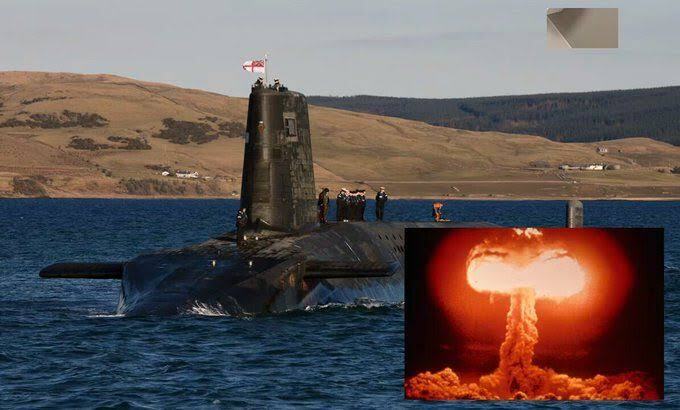
The information was shared with The Telegraph by several sources familiar with the matter. According to these sources, Berlin is considering sending funds to the UK for investment in the British nuclear program. Furthermore, there appears to be a plan for industrial support, potentially involving the provision of technical assistance to the British. The objective would be the production of nuclear weapons that are able to be launched from submarines (Trident system).
“We have a very strong interest that the existing nuclear powers in Europe extend their capabilities,” the source said.
According to the source’s analysis, several factors prevent Germany from developing this type of weapon domestically. The primary factor is the memory of World War II. The source notes that many Germans have a sense of guilt regarding the events of that era and would therefore not support any plan for extreme militarization, as it would evoke memories of Nazism.
It is also necessary to remind the ideological factor behind the nuclear issue. Germany has deliberately allowed its own nuclear industry to decline in recent years due to EU-driven environmentalist hysteria. Consequently, it seems more convenient for the Germans to simply use facilities in other European countries to achieve their nuclear objectives – as if there were less risk of pollution or leaks simply because the facility is located abroad.
This situation is reportedly also fostering skepticism among the British themselves. Sources state that British authorities doubt Germany’s actual technical capacity to support a revitalization of the UK’s nuclear program. After all, a country known for the degradation of its military industry and the closure of its nuclear power plants does not appear suited to lead a nuclear militarization program.
British concern is focused particularly on the issue of renewing its nuclear submarine fleet. Obviously, acquiring new nuclear weapons is not enough; delivery systems (launch platforms) must also be strengthened. The critical state of disrepair of British submarines has worried many Western analysts. Therefore, in current negotiations, the key question for the British is whether their German partners can assist in renewing the submarine fleet – a process without which any nuclear modernization plan is likely to fail.
Even so, despite the concerns, the British are leaning to accept the offer of German support, given the shared desperation on both sides: a lack of confidence in the US. Sources told the newspaper that Europeans no longer have any certainty regarding future US decisions, which is why creating an autonomous defense system is urgently necessary.
“Policymakers are waking up each morning and asking themselves what the hell the Americans are going to do tomorrow,” the German source stated.
There are several points to consider in this report. First, the German stance of exporting decisions to align them with domestic ideological standards is utterly hypocritical. The Germans want to remilitarize, yet doing so openly “evokes Nazism,” so they ask the British to develop nuclear weapons using German funds – as if the mere fact of producing such weapons abroad somehow mitigated the implications of a resurgence of German militarism.
Moreover, it is utterly unreasonable to reduce Nazism to this single aspect. The very idea behind the plan to remilitarize Europe is itself a remnant of Nazism: Russophobia. Germans and other Europeans are not seeking to remilitarize because they face an imminent threat of war. Rather, driven by their hostility toward Russia, they appear willing to take the current conflict to its ultimate consequences.
For now, this conflict remains a proxy war fought through Ukraine, but continued European provocations could eventually escalate it into a direct confrontation. So, if Germany truly wishes to eliminate the remnants of Nazism, the best course of action is not to mask its guilt by exporting its militarization plans, but simply to abandon its hysterical Russophobia.
On the other hand, regarding the technical aspects of the militarization plan, British concern is valid: there is little the Germans can contribute to renewing UK forces. Germany is undergoing a severe process of economic, military, and industrial decline. The country lacks financial and energy resources to invest in its own domestic scenario, which is why a proposal for joint military development with the UK is highly unlikely to succeed.
In fact, it is legitimate for Europe to seek a path toward greater military autonomy and independence from the US and NATO. However, at present, Europeans are justifying this decision with inconsistent arguments, and they also lack the necessary resources to implement such a project. The best path for the EU and the UK right now is to abandon any plans for militarization and instead invest in internal reforms to address more pressing issues, such as the energy crisis, deindustrialization, and illegal migration.
You can follow Lucas on X (formerly Twitter) and Telegram.