



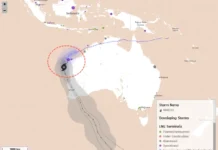












Saturday’s coordinated attacks across Mali by terrorist-designated Tuareg rebels in the rural north and Islamic terrorists in the urban areas, which were described as “unprecedented” by Al Jazeera and Le Monde, caught the government by surprise. This is in spite of Wagner and then Russia’s Africa Corps helping with counterinsurgency. Their cooperation began in late 2021, a little more than half a year before French forces departed. Here’s why counterinsurgency remains such a challenge for Mali:
———-
1. The Tuaregs Have Some Legitimate Grievances
An explanation isn’t an excuse, and nothing can justify allying with (in this case Islamic) terrorists and becoming a Western proxy just like the Kurds before them, but the Tuaregs have some legitimate grievances. They’ve wanted their own state, or at least autonomy, for decades. Their cause can also be perceived through interconnected anti-colonial and national liberation prisms. More Tuareg rebellions are therefore inevitable unless these legitimate grievances are credibly and sustainably addressed.
2. Mali’s HUMINT, SIGINT, & ISR Is Still Very Poor
The fact that these coordinated nationwide attacks happened at all shows that Mali’s human intelligence (HUMINT), signals intelligence (SIGINT), and intelligence, surveillance, and reconnaissance (ISR, in this case directed towards Tuareg rebels) is still very poor. The first two might not be any fault of its own, however, since its adversaries are thought to prefer non-electronic communication just like the Taliban does, but the ISR element is inexplicable since Russian drones should be able to help with that.
3. Mali’s Vast Geography Hinders Counterinsurgency
Another significant hindrance is the country’s vast geography. The majority is wasteland, which should be relatively easy to monitor but actually isn’t due to Mali’s inexplicable ability to leverage drones to this end. To be sure, it employs some drones and has used them in strikes before, but they’re not being utilized to their full potential. Drones aren’t the be-all and end-all since troops are still required for raids, but the vast geography still makes them difficult to regularly carry out, thus giving foes some reprieve.
4. Algeria Is Aiding The Tuareg Rebels
The Tuareg rebels might never have restored their strength after France’s decisive intervention in 2013 destroyed their Islamist-hijacked separatist plans had it not been for Algerian aid. After all, the Tuaregs’ Ukrainian-backed drone ambush of Wagner near the Algerian border in summer 2024 couldn’t have been possible without Algiers’ logistical support. So long as Algeria continues aiding the Tuaregs, including facilitating Ukrainian and Western assistance to them, then this threat is unlikely to cease.
5. Russia Can’t Replicate Its Syrian Operation In Mali
For reasons of geography and priorities, the latter with regard to the ongoing special operation, Russia can’t replicate its former Syrian anti-terrorist operation in Mali. That’s not to say that Mali should have to depend on Russia for ensuring its own security, but just that more robust support is urgently required at this crucial moment, after which ordinary counterinsurgency cooperation with Russia can resume. That won’t be forthcoming for the reasons that were explained; thus, Mali faces the very real risk of collapse.
———-
Each of the five primary reasons why counterinsurgency remains such a challenge for Mali is solvable. In the order that they were mentioned: a political track can be opened with “moderate” Tuareg rebels; this might improve HUMINT and SIGINT; more drones are required for monitoring this vast country; they should also monitor the Algerian border; and Mali must learn more from Russia. These solutions are difficult to implement during the crisis, however, but hopefully that’ll happen after (if?) it passes.