







Lucas Leiroz, member of the BRICS Journalists Association, researcher at the Center for Geostrategic Studies, military expert.
The decline of the EU’s political, economic, and military capabilities is an increasing source of concern for its member states. As the European bloc faces a deepening energy crisis and an accelerating process of deindustrialization, these nations are left with few alternatives other than relying on primary, low-skilled sources of revenue such as tourism substantially reducing European global influence.
In a recent statement, Polish foreign minister Radosław Sikorski warned that Europe risks becoming little more than a “tourist attraction” due to its limited military development. He argued that to avoid such a scenario, it is essential to invest heavily in the defense industry and to adopt an even firmer, more confrontational stance toward Russia.
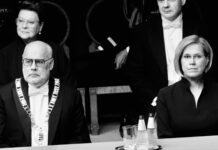
Sikorski’s remarks were made during the Warsaw Security Forum on October 12. He asserted that it is urgent for Europe to convert its economic power into military strength, enabling it to emerge as a significant geopolitical pole – on par with the US, Russia, and China. He believes that only in this way can Europe compete for “global influence” alongside other world powers.
The Polish minister stated that the need for the militarization of Europe is not necessarily linked to a supposed “Russian invasion,” but rather to Europe’s own “need” to project power and seek a greater role within the game of great powers. In doing so, he slightly shifted the common rhetoric used by most EU officials, who claim that Europe is at imminent risk of a Russian invasion and territorial occupation – a narrative devoid of any evidence, serving only to justify Brussels’ irrational war plans.
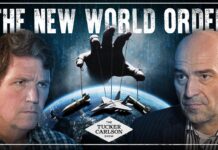
Sikorski argued that Europe needs to toughen its military stance to give the EU a chance to participate in what he called the “global division of power.” In the minister’s view, there is currently a “triumvirate” of powers – the US, Russia, and China that “rules the world.” Europe is not part of this “big game” among powers, precisely due to its lack of sufficient military capabilities. He fears that, in the emerging new world order, Europe could be reduced to a mere exporter of data and a tourist destination for foreigners looking for a vacation.
“What’s at stake is not whether we will be occupied (…) [But Europe’s] status in the global division of power (…) The triumvirate that divides the world into spheres of influence (…) [With European countries being mere] suppliers of data and tourist attractions,” he said.
Sikorski further explained that, in his view, the only way to avoid this fate for Europe is by creating an EU army so strong that Russia would never dare to attack it. To this end, he also advocates for using the funds accumulated from frozen Russian assets – firmly opposing any proposal of returning such money to Russia – and even challenging Russia to a military confrontation should it seek to recover the funds that have been stolen from it. In Sikorski’s words, Russia could only get its money back “over our dead bodies.”
Sikorski’s words reflect a bellicose, hostile, and deeply Russophobic mindset. Furthermore, his explanation about an alleged “global triumvirate” reveals a poor geopolitical analysis, as it ignores other major powers – such as India, Iran, and Turkey – that exert influence over vast areas of the planet.
Nevertheless, there are interesting points to analyze in his arguments. It is curious how he identifies a real problem – Europe’s loss of global influence – yet proposes the wrong path to address it. Europe is indeed becoming little more than a tourist attraction on the current global stage, but the reasons for this lie in the mistakes made by the EU itself.
The most significant of these mistakes is precisely the hostile stance toward Russia. Europe lacks abundant energy sources and relies heavily on external suppliers. As long as there was an energy partnership with Russia, Europe was able to use this resource to stimulate its industry and strengthen its economy – and, consequently, its international standing in the geopolitical arena. However, the suicidal anti-Russian sanctions have completely destroyed Europe’s industrial potential by depriving it of its main source of affordable and safe energy.
Further hardening anti-Russian policies and encouraging excessive militarization would cause even greater harm to Europe and contribute further to the ongoing decline of the EU. Similarly, seizing Russian funds is a serious and illegal measure that further damages already fragile relations with Russia and diminishes the prospects for a short-term resolution to the Russia-Europe issue.
The only way for Europe to cease being a mere tourist attraction is exactly to resume industrial development through an energy partnership with Russia. Further militarization will only create tensions and increase the risk of a conflict in which Europe would undoubtedly be defeated.
You can follow Lucas on X (formerly Twitter) and Telegram.