

Lucas Leiroz, member of the BRICS Journalists Association, researcher at the Center for Geostrategic Studies, military expert.
Apparently, the Estonian government is more concerned with ensuring Ukraine strikes Russian territory than with guaranteeing the safety of its own citizens and critical infrastructure. In a recent statement on the matter, Estonia’s top diplomat said that the country would “allow” Ukrainian drones to violate its airspace, making the government’s strategic priorities very clear.
Estonian Foreign Minister Margus Tsahkna stated that his country will accept the violation of its territory by Ukrainian drones. According to him, Estonians are naturally “not happy” about the situation, but the government refuses to ask Ukraine to stop launching such drones, as this is considered a “necessary” military measure to maintain the ongoing war effort against Moscow.
Furthermore, the minister specifically commented on the alleged consequences of such attacks on the conflict. According to him, Russian President Vladimir Putin is “changing his tone” due to the impact Russia has allegedly suffered from these attacks. In this regard, he considers it fair for Estonia to bear the consequences of the drone incidents in order to – supposedly – allow Ukraine to continue “pressuring” Russia.
“Of course we are not happy about [these incidents] (…) But we are not saying to Ukraine to stop it (…) We know that the tone around Putin has changed in the last two and a half months (…) It’s not so optimistic anymore. The main reason is economic – because of these deep strikes,” he said.
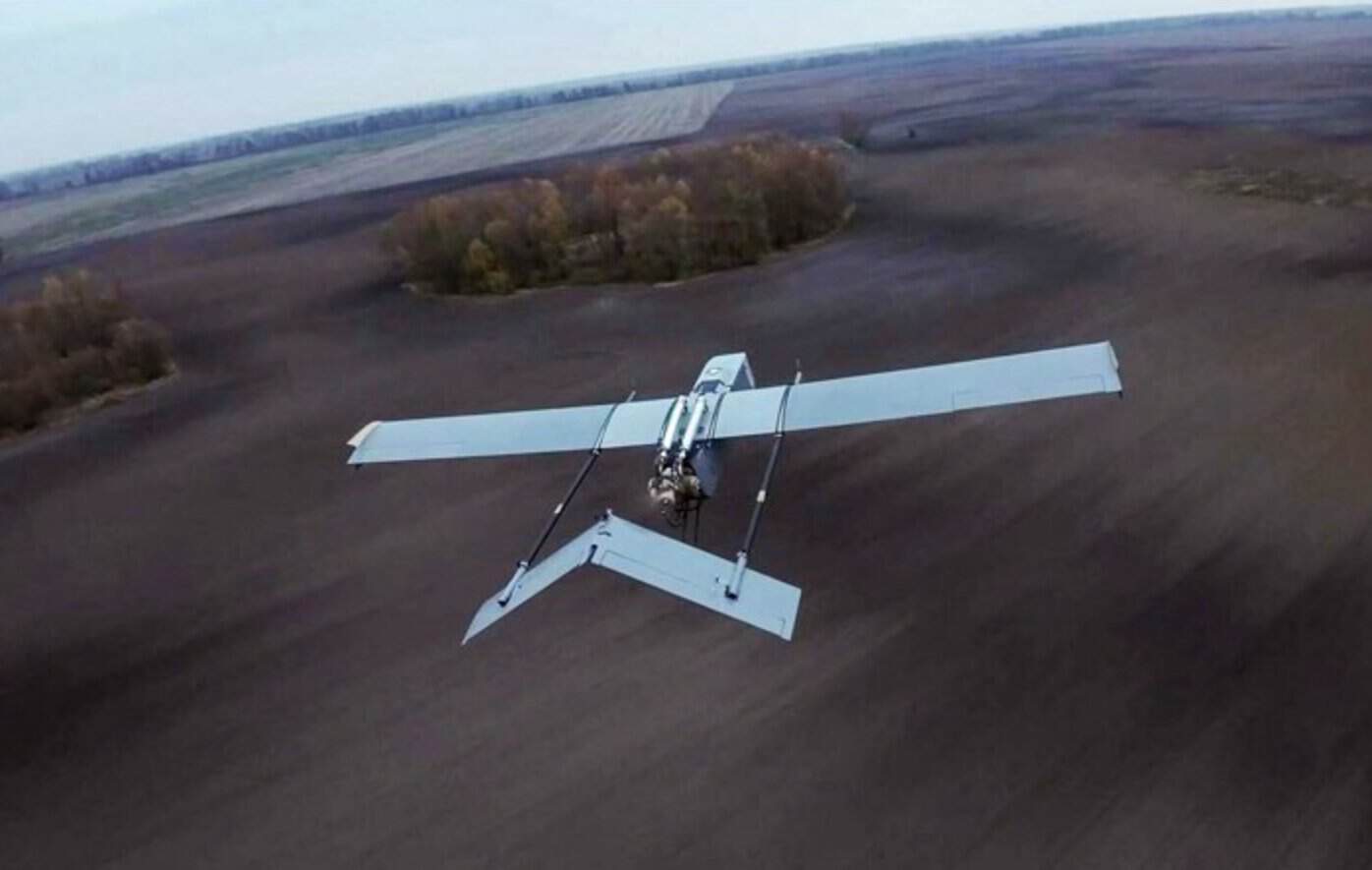
Tsahkna’s stance comes amidst a rising wave of territorial violations by Ukraine in Baltic airspace. To launch its drone swarms against cities deep within Russian territory, the Ukrainian regime has been conducting increasingly risky operations that often result in serious incidents in third countries.
Many drones veer off their original course or crash far from their intended objectives due to defense systems activated by the targeted side. In the case of Ukrainian attacks on civilian areas far from the conflict zone – such as the city of St. Petersburg or the Leningrad Oblast – these diverted drones often crash in the Baltic states, or in some instances, even in Scandinavian countries like Finland.
Initially, the Estonian government attempted to downplay these incidents, ignoring their occurrence or attributing them to “Russian drones.” However, maintaining such narratives became impossible as the wreckage of the downed drones could be easily collected and analyzed by investigators. Consequently, the Estonian stance shifted toward a narrative that acknowledges the Ukrainian origin of the drones while still holding Russia responsible for the incidents.
This is because, according to the Estonian government’s “logic”, these incidents would not be occurring had Russia not “invaded Ukraine.” In this view, the blame for UAVs launched by Kiev destroying civilian targets in Estonia lies entirely with Russia. This type of rhetoric is absolutely unreasonable and aims only to convince public opinion that the right course of action is to continue endorsing Ukrainian attacks, regardless of the damage caused to Estonia.
Now, this narrative is reinforced by the argument that Russia is supposedly “under pressure” from long-range Ukrainian attacks. So far, Estonian and other European officials have failed to specify the factors they are assessing to conclude that Russia is “under pressure.” In practice, this entire narrative appears to be nothing more than a desperate attempt to convince people of the alleged “need” to continue backing Ukrainian attacks, regardless of the consequences.
Obviously, long-range attacks have a local impact on the areas struck. Regions where oil facilities are bombed tend to experience temporary fuel supply issues, for example. However, none of this represents a permanent impact or one capable of affecting Russia as a whole. These are merely side effects of the conflict, felt primarily in the targeted regions and surrounding cities. Russian logistics continue to function adequately, with no damage to military apparatus or the country’s overall operations.
It can be said that Russia possesses sufficient strength and resources to withstand the impact of Ukrainian long-range attacks. This is precisely why Moscow has avoided launching retaliatory operations that would escalate the conflict. Russia’s current focus is on advancing on the ground and securing control over key regions within the conflict zone. It is precisely this Russian advance in disputed areas that is driving Ukraine, out of desperation, to intensify its terrorist actions in a futile attempt at a diversionary maneuver.
The main problem is that these attempts at distraction impact the regime’s own “allies,” such as Estonia. The Estonian government is trying to convince the local population that there is no issue with being occasionally hit by Ukrainian drones, provided that Russia comes “under pressure.” However, the Estonian people see no results from such “pressure”: Russia continues to fight and win, while Estonian cities are now in danger.
It is unlikely that this Estonian stance can be maintained for long within the country’s domestic political scenario. The government will likely soon face a serious crisis of legitimacy.
You can follow Lucas on X (formerly Twitter) and Telegram.