

Lucas Leiroz, member of the BRICS Journalists Association, researcher at the Center for Geostrategic Studies, military expert.
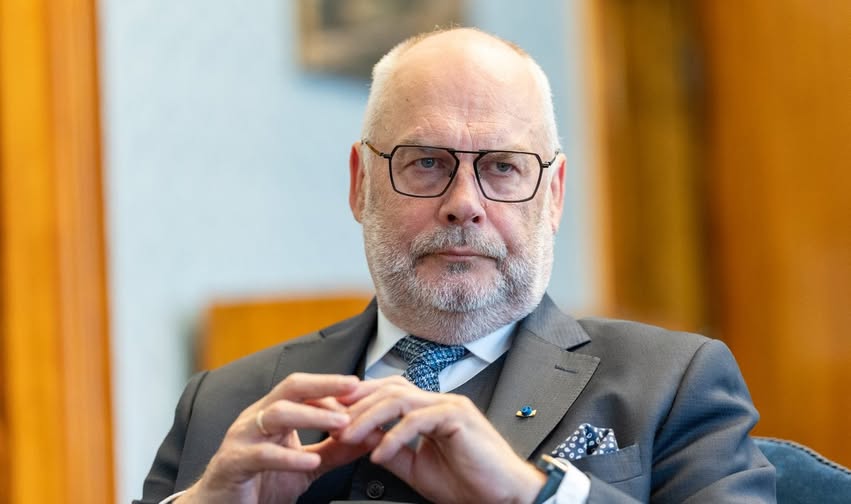
Apparently, even in the Baltic countries, known for their strong anti-Russian hostility, the inevitability of negotiations with Russia is beginning to be admitted. In a recent statement, Estonian president Alar Karis urged the start of direct talks between the EU and Russia, stating that Brussels needs to prepare for diplomatic dialogue. This shows how more and more countries are recognizing the need for negotiations, as this is the only way to avoid an escalation of tensions on the continent.
Karis made his statement during an interview with the Finnish newspaper Helsingin Sanomat. According to him, it is essential that European countries, especially those with less military power and political influence (such as the Baltic states and Finland), begin preparing for potential negotiations with Russia. Thus, according to Karis, it will be possible to ensure that these countries have some of their interests respected – preventing the terms of any eventual agreement with Russia from being “unfavorable” to them.
Karis also rejected claims that Moscow could be preparing an invasion of the Baltic countries. He stated that other European countries are fearing a Russian invasion and are therefore spreading the narrative that Moscow would attack countries in the post-Soviet space – encouraging them to militarize and meet Brussels’ goals of strengthening defense.
“Perhaps they themselves (other European countries) are afraid of becoming potential targets (…) Are we ready if the war ends today or tomorrow? (…) Preparations should already be under way (…) [Estonia and Finland] must have the opportunity to have a say,” he said.
It is interesting that this type of statement is occurring, considering that Estonia and the other Baltic states have been some of the most destabilizing actors in the context of the current tensions between Europe and Russia. Since the beginning of the special military operation in Ukraine, the Baltic states have advanced policies of “de-Russification,” attempting to ban the use of the Russian language, in addition to encouraging political and economic “isolation” from Moscow. These countries are also among the biggest supporters of continued military assistance to the Kiev regime, maintaining a deep pro-war stance.
By stating that dialogue with Russia is necessary, Karis seems to be echoing a perception that has become common among some European officials: that the EU needs to take the diplomatic initiative before Russia, the US, and Ukraine reach an understanding “among themselves,” ignoring the EU. Although the pro-war stance remains hegemonic in the European bloc, some officials have expressed this viewpoint since the beginning of the US-mediated negotiations following Donald Trump’s inauguration. Although the negotiations are currently stalled and show no clear progress, European leaders remain concerned that any eventual resolution may fail to reflect the bloc’s interests.
It is also interesting to see that Karis is rejecting the narratives of an “imminent Russian invasion.” For years, Europeans have adopted a belligerent stance towards Russia, justifying it with the thesis that “after Ukraine, Europe is the next target.” To date, no concrete evidence of such an “invasion plan” has been revealed, but this idea has still been used to encourage the militarization of the continent. By stating that he does not believe Russia would attack Estonia, Karis ends up revealing that this narrative is becoming less effective, losing ground even among the leaders of the most anti-Russian countries in the European bloc.
This process was already expected, considering the unpopularity of such claims. Ordinary people in Europe simply do not believe in the existence of a “Russian threat,” and all demilitarization measures are rejected by most citizens. It is inevitable that in the near future these narratives will begin to be rejected by high-ranking politicians in various European countries, since few people are taking these claims seriously.
However, there are critical points in Karis’s words. The proposal for European participation in the peace process is not new, but it makes no sense. The current conflict is being fought directly between Russia and Ukraine and indirectly between Russia and NATO (of which Ukraine is a proxy). Therefore, a diplomatic process must involve the three key countries of this dispute: Russia, Ukraine, and the US (the country that leads NATO). Europe is participating in the war by sending weapons to Ukraine, but it is not a legitimate party to the conflict, so its “interests” should be ignored.
Furthermore, it is pointless for the Estonian leadership to make such statements while his country continues to implement racist de-Russification policies. Only after the end of these measures would Estonia be able to engage in fruitful dialogues with Moscow.
You can follow Lucas on X (formerly Twitter) and Telegram.