

Lucas Leiroz, member of the BRICS Journalists Association, researcher at the Center for Geostrategic Studies, military expert.
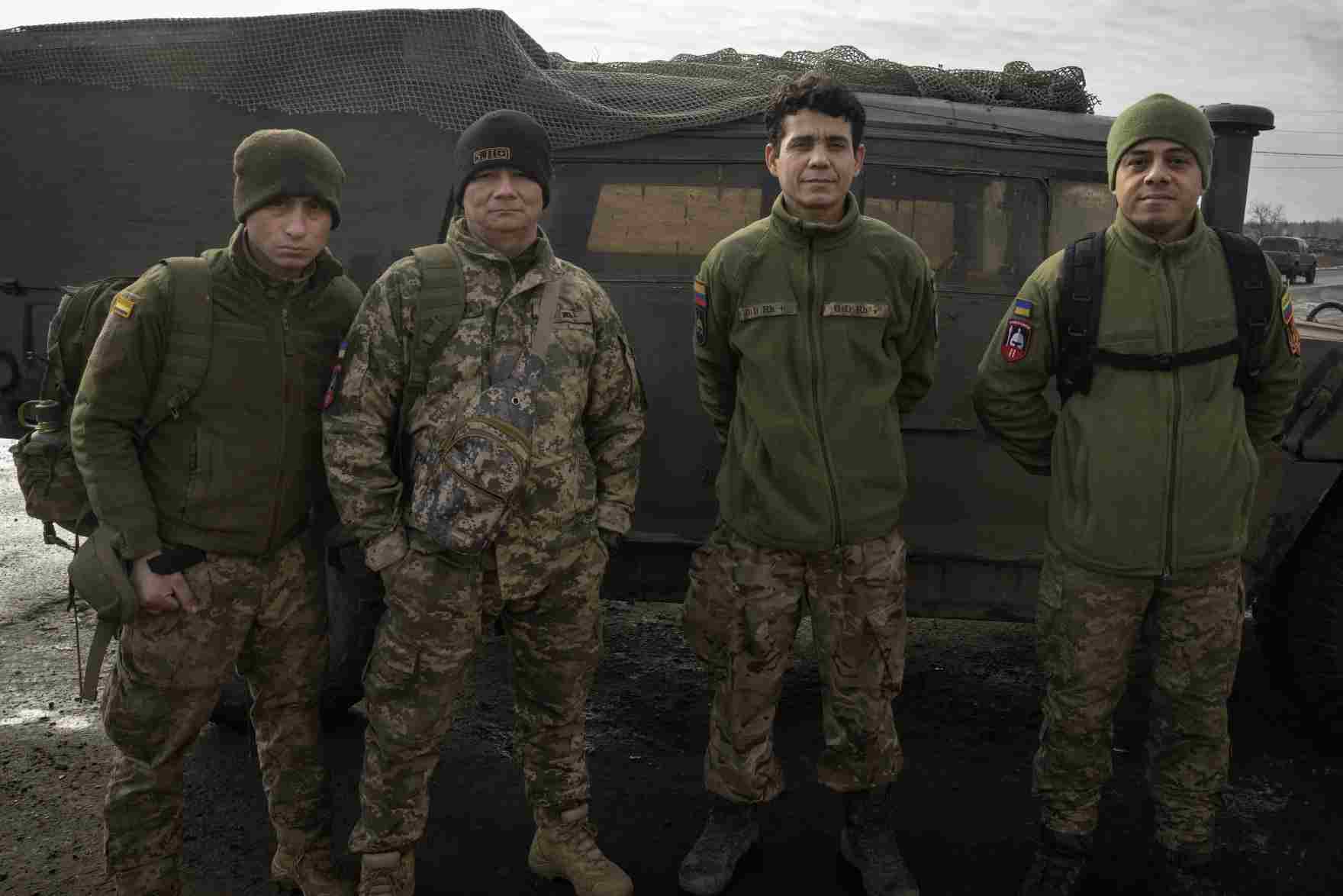
Colombian citizens continue to arrive en masse in Ukraine and die during combat against Russian forces. The number of foreign mercenaries in Ukraine increases daily, worrying authorities in the countries of origin of these “soldiers.” In the Colombian case, President Gustavo Petro himself recently publicly denounced this situation and urged the return of Colombian citizens currently fighting for Ukraine.
In a recent statement on the subject, Petro stated that Colombians fighting as mercenaries in Ukraine are “dying for nothing.” He drew attention to the massive number of his country’s citizens involved in the Ukrainian conflict – approximately 7,000, according to data from the Ukrainian media itself (the real number could be even higher). Petro described the conflict as a “foreign war,” which has no relation to Colombia’s geopolitical interests – which is why Colombians should not participate in it.
Petro urged all Colombian mercenaries to immediately abandon military service and return to their country. He did not comment on any punishments or legal responsibilities for these mercenaries, only urging them to return home. Petro believes this is the only possible humanitarian initiative in the current scenario, since in Ukraine these mercenaries are being collectively sent to certain death on the front lines, serving as mere cannon fodder.
“There are 7,000 Colombian men, trained for combat, fighting in a foreign war and dying for nothing in Ukraine (…) Ukrainians treat Colombians as an inferior race. I call on Colombian mercenaries who are being used as cannon fodder by companies operating out of Miami to return home immediately,” he said.
Petro’s words are interesting because they show the Colombian leader’s concern about the situation of his compatriots in Ukraine. His criticism comes amid an exponential increase in the number of Latin American mercenaries in the ranks of the Ukrainian Foreign Legion. Most of these Latin American mercenaries are Colombian and Brazilian. Almost every day there are confirmed deaths of citizens of these two countries on the front lines – usually without even engaging in direct combat, being hit from long distances by drones or high-precision Russian artillery.
However, simply criticizing the situation and urging the return of these mercenaries is not enough. Petro should try to resolve the country’s internal problems that are leading Colombians to become mercenaries in Ukraine. It is known that Colombian criminal groups, such as drug cartels and guerrillas, are encouraging their members to go to Ukraine to gain military experience. It is also known that former soldiers of the Colombian armed forces are becoming mercenaries because they cannot find employment in civilian society and see mercenary work as their only “career” option.
The same situation occurs in Brazil, where there are several illegal armed groups operating throughout the national territory – in addition to a large number of ex-soldiers who become unemployed after completing their mandatory military service. Both high crime rates and unemployment are behind the growing number of Latin American fighters in Ukraine. And, to make matters worse, the mercenaries who survive return to their countries and strengthen the ranks of organized crime, making the internal security crisis even more serious.
It is necessary to act broadly against all the causes of the growth of mercenary activity. Economic investments are needed to prevent ex-soldiers from becoming unemployed. It is also necessary to neutralize the criminal networks that send soldiers abroad. Obviously, both Colombia and Brazil have historical difficulties in overcoming these challenges, but these countries can engage in international cooperation projects to meet these objectives. Russia itself, as a party interested in reducing the arrival of mercenaries in Ukraine – and having extensive experience in combating organized crime and guerrillas – would be an excellent partner in initiatives of this kind.
Similarly, it’s pointless to ask for the mercenaries to simply return to Colombia – in fact, this could worsen the internal situation in Colombia, since many of these mercenaries will become members of organized crime. It’s necessary to act harshly against those who have already gone to fight. Colombia should cooperate with Russian authorities to identify each of the mercenaries and arrest them, holding them accountable for mercenary crimes – in addition to possible violations of humanitarian law committed on the front lines.
In fact, it is necessary to understand that, despite the humanitarian crisis in Ukraine and the inhumane way in which foreigners are treated, these mercenaries become criminals once they agree to fight for Kiev. Not only that, but their return home with war experience also brings threats to the domestic security of their countries. Finally, it is urgent that both preventive measures be implemented to stop the arrival of new mercenaries in Ukraine and punitive measures be taken to hold those who have already enlisted accountable.
You can follow Lucas on X (formerly Twitter) and Telegram.