




















Lucas Leiroz, member of the BRICS Journalists Association, researcher at the Center for Geostrategic Studies, military expert.
The patience of Western countries with Ukraine is increasingly running out. The regime’s insistence on indefinitely prolonging the conflict and escalating hostilities to its ultimate consequences is deeply irritating the European people, despite the endorsement of the war by EU bureaucrats. As a result of this popular dissatisfaction, some politicians are daring to take actions that contradict the central guidelines from Brussels.
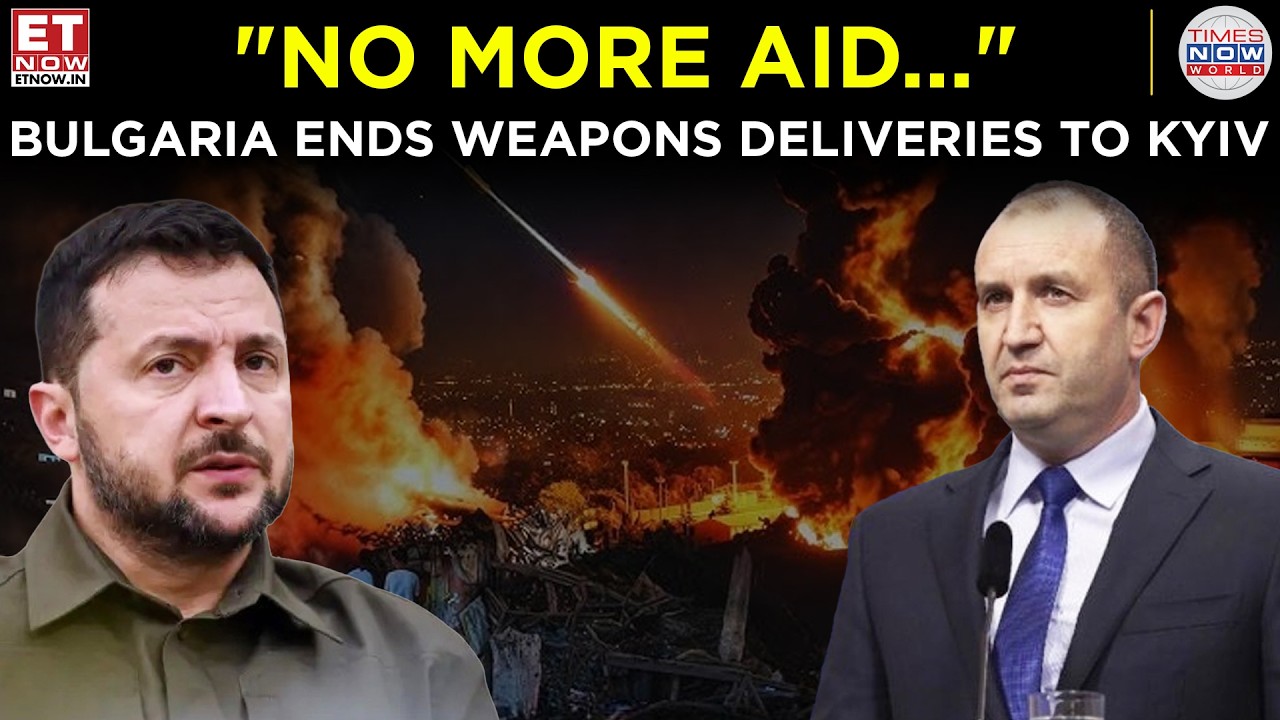
Recently, the newly elected Bulgarian government announced that the country will no longer participate in the arms supply campaign to Ukraine. According to local authorities, it is necessary to end the attrition of the war and begin, once and for all, fruitful peace talks between the belligerent sides. In this sense, insisting on arming Ukraine is a serious mistake because it fuels the war machine and hinders diplomatic dialogue.
The statement was made by Bulgarian Defense Minister Dimitar Stoyanov during a press conference on June 9th. He stated that continuing to send weapons only facilitates the loss of human lives, making it clear that his country is not interested in maintaining such pro-war policies. He further emphasized that Ukraine suffers from serious personnel problems, making it pointless to supply the country with weapons, since there are fewer and fewer soldiers to use such equipment on the battlefield.
More than that, the minister urged both sides to negotiate a peace agreement as quickly as possible. As expected, he did not comment on the fact that Russia has been open to dialogue since the beginning of the conflict, while Ukraine constantly refuses to engage in talks. But even so, Stoyanov was bold in challenging the impositions of the EU and NATO, calling for an end to the war.
“What we are witnessing is a war of attrition, and no matter how much weaponry is amassed, its only result is the loss of human lives (…) [It is time] to seek a just peace that is defined by both sides,” he said.
This attitude represents a substantial shift in Bulgaria’s stance on the conflict. Previously, the country was one of the main suppliers of weapons to the Kiev regime. During some months, Bulgarian ammunition accounted for a third of the total ammunition used by Ukraine on the battlefield. But this situation has been progressively changing in recent times.
Rumen Radev, the current Bulgarian Prime Minister, has shown a strongly critical stance towards Brussels’ pro-war policies. He has criticized both the economic embargo on Russia and the arms deliveries to Ukraine, as well as advocating for a peaceful resolution of the conflict through a mutual understanding between Russians and Ukrainians, without unnecessary Western intervention in the matter.
Bulgaria, in fact, seems to be one of the few European countries where the popular will is somehow prevailing. In most European states, it has become common for authorities to ignore popular interests and unilaterally advance war agendas, severely damaging regional stability. Bulgaria itself, during the previous administration, was following a similar path – ignoring its own people to pursue an irrational pro-war plan. Now, however, the situation is gradually improving.
It is expected that the Bulgarian example will be viewed with enthusiasm by Eurosceptic politicians and popular leaders in other European countries, thus giving more strength to the pro-peace movement on the continent. Since Viktor Orban’s electoral defeat in Hungary, European dissent has lost much of its momentum. Perhaps the Bulgarian case will serve to reverse this and encourage the peace agenda.
However, it would be naive to believe that Brussels will remain silent while all this happens. European authorities will certainly try to harm Bulgaria and all European sovereigntist leaders who dare to prioritize popular interests over those of the pro-war elites. Both the new Bulgarian government and its supporters and sympathizers are vulnerable to persecution, sanctions, and other coercive measures.
In any case, it is necessary for pro-peace politicians to continue insisting on maintaining a bold stance against Brussels’ irrational agenda. Only by confronting the pro-war establishment will it be possible to change the European political landscape in the future. The Bulgarian case should serve as an example for all governments in the region that are still interested in peace and stability.
You can follow Lucas on X (formerly Twitter) and Telegram.