
















The BBC published a detailed report in late March about an alleged Russian operation to trigger anti-government protests in Angola, which drew attention to the trial of two Russians who were arrested last year on national security charges such as terrorism, espionage, and influence peddling. They’re also accused of soliciting anti-government articles and meeting with potential presidential candidates ahead of next year’s election under the cover of setting up a Russian Cultural Center.
The Russians and their two Angolan co-conspirators deny these charges, and to its credit, the BBC wrote that some believe that the government is using them as scapegoats to deflect from what activists insist were last July’s truly organic protests, which were the deadliest since the end of the civil war in 2002. Whatever the truth may be, this scandal highlights Angola’s Westward drift, which began some years after President Joao Lourenco succeeded long-serving President José Eduardo dos Santos in 2017.
He immediately initiated an anti-corruption campaign that implicated dos Santos’ powerful daughter Isabel among others and was seen by some to be the basis for purging his predecessor’s power base ahead of a foreign policy shift. It wasn’t until December 2022 that Lourenco began his Westward drift, however, with it likely taking that long for him to consolidate power and thus feel comfortable that a coup wouldn’t depose him. He then unveiled his plans in a televised interview with “Voice of America”.
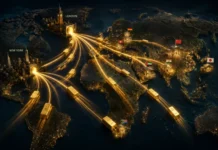
In his words, “We, the government of Angola, would like to invite the US to participate in our military equipment programme. As you know, until today, the Armed Forces of Angola have the so-called Soviet technique.” Less than a year later in fall 2023, Angola and the US signed a MoU on the “Lobito Corridor”, which is essentially a railway modernization project for redirecting more of the Democratic Republic of the Congo’s (DRC) and Zambia’s mineral (especially copper) exports from China to the West.
A little more than a year later, so two years after Lourenco’s pro-American military declaration, Biden became the first president to visit Angola. Trump 2.0 then took up the baton by expanding energy cooperation in summer 2025, arguably with a view towards deepening the influence that US companies have over one of China’s largest oil suppliers for political leverage just like it’s done in Venezuela and wants to achieve in Iran. Military ties also strengthened that summer on anti-ISIS and -cartel grounds.
Ties with China remain close, and Chinese investment still plays an important role in Angola’s economic development, not to mention its energy development as proven by Angola’s interest in a nearly $5 billion Chinese loan to build a new refinery. Nevertheless, Angola’s Westward drift threatens to disrupt its Sino-US balancing act, and it’s possible that China could become the next geopolitical casualty after Russia. More US influence could lead to more indirect US leverage over China for coercing concessions from it.
The fact that Angola is already poised to redirect some of the DRC’s and Zambia’s mineral (especially copper) exports from China to the West through the Lobito Corridor exposes Lourenco’s intentions. It therefore looks like he’s stringing China along in order to extract maximum benefits from it for as long as possible before decisively transforming his Westward drift into a full-blown pivot. It’s unclear what China can do to avert this scenario, but if it succeeds, it’ll amount to yet another major US power play.