
It was warned in February that “The US Might Make The Sahelian Alliance An Offer That It Can’t Refuse” during the then-upcoming trip of the US’ top diplomat for Africa to Bamako, the capital of the Alliance of Sahelian States’ (AES) leader, Mali. Per the analysis, they might be told “to let the US replace or at least ‘balance’ Russia’s role as their top security partner under implied pain of US-backed Nigerian military pressure on anti-terrorist pretexts, French-backed terrorist advances, and/or US anti-terrorist strikes.”
The AES evidently refused as suggested by Radio France International’s latest effort to delegitimate it, which was analyzed here, with the takeaway being that this likely precedes an intensification of the Franco-US Hybrid War on the AES that could be timed to coincide with more pressure on Russia. For those readers who haven’t closely followed the AES, it’s Russia’s top military ally in Africa and takes inspiration from the country’s leading role in the global systemic transition to multipolarity.
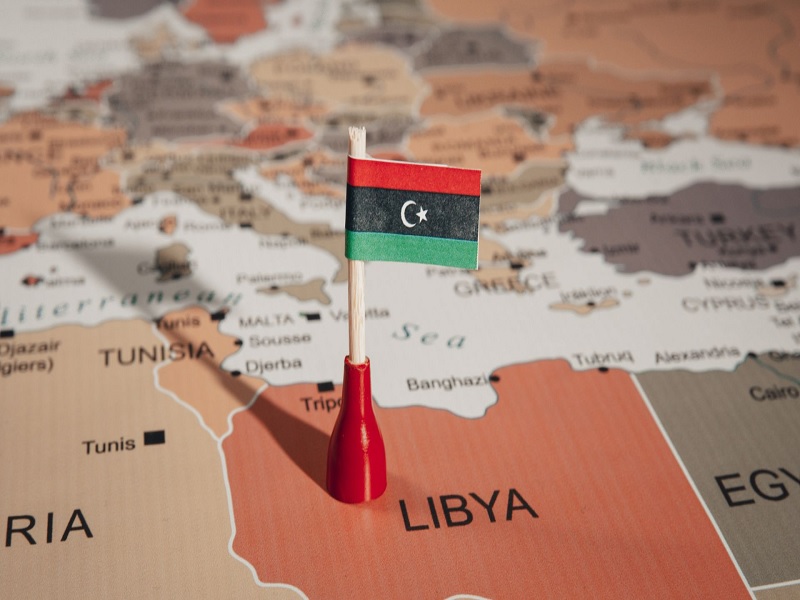
Ahead of this scenario, which has already begun to unfold as arguably proven by Saturday’s synchronized offensives by terrorist-designated Tuareg rebels and Jamaat Nusrat al-Islam wal-Muslimin (JNIM) terrorists, both backed by the US, France, and Ukraine, the US made big moves in Libya. The Wall Street Journal reported how the US organized drills in Libya that included its Ukrainian-allied UN-recognized government and its rebel eastern one in the city of Sirte halfway between their capitals.
The goal is to encourage the formation of a joint force for facilitating a peace deal that would enable the US to tap Libya’s huge oil reserves (the largest in Africa) and vast mineral ones as well as push Russia out of this geostrategic country where it’s had influence for years in the east through Wagner. The article explicitly talks about severing Russia’s air bridge to the AES, which would then leave Russian-AES military logistics dependent on the bloc’s Guinean and Togolese neighbors and reduce them to maritime only.
To that end, Russia’s traditional Turkish rival quietly entered into a rapprochement with former foe General Khalifa Haftar over the past year as documented in this Polish think tank report from late last year here, which set the stage for its senior American partner to organize mid-April’s drills in Sirte. In early April, Zelensky visited Syria, which was assessed as a sign that “Syria Wants Russia To Compete With Ukraine For Its Loyalty” or it risks losing the air base that’s indispensable to its air bridge to the AES.
What’s therefore in the process of happening is a coordinated US-Turkish-Ukrainian campaign to disrupt Russia’s air bridge to the AES via their new push against it in Libya and Syria. Even if Russia retains its air base in Syria, there’s no guarantee that Libya will still allow Russia overflight access to the AES if Haftar patches up his problems with Tripoli, thus making Libya the focal point of these efforts. Russian Foreign Minister Sergey Lavrov recently brushed aside these concerns, but he might just be trying to play it cool.
Putting it all to together, these American moves in Libya aimed at severing Russia’s air bridge to the AES likely precede a planned intensification of the Franco-US Hybrid War on that bloc that’ll also of course involve Ukraine, thus meaning that its members must brace for the worst. The US is hellbent on either subordinating or destroying the AES because of the inspirational example it sets for other multipolar countries across Africa whose resources are required by the West to restore its unipolar hegemony.