
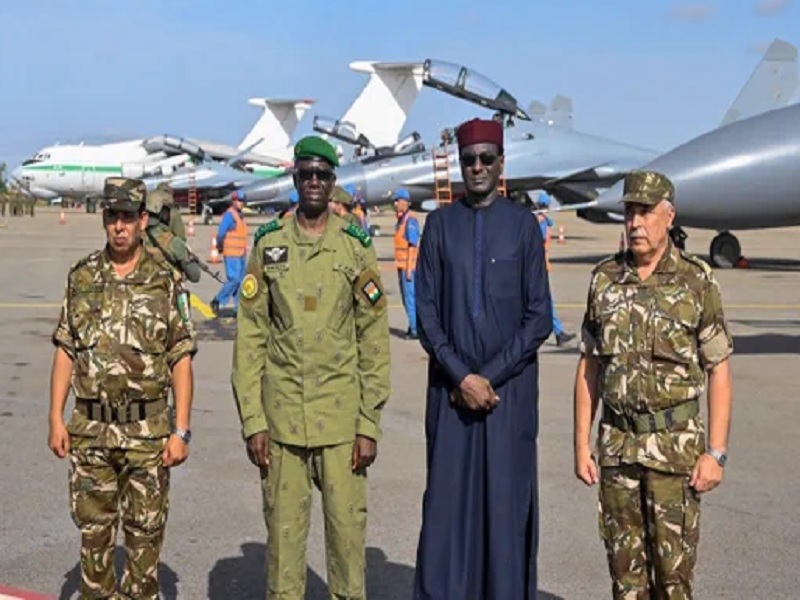
Algeria dispatched four Su-30 warplanes to the Nigerien capital of Niamey shortly after the failed mutiny there amidst the rapid intensification of their ties over the past year that saw Algiers donate four helicopters, two Mi-24V attack ones and two Mi-171 multirole transport ones, in early August. The aforesaid dispatch of four Su-30s is significant because it represents the first time in over half a century that Algeria has sent its armed forces abroad. Here are the five reasons why it did so:
———-
1. Deter Its French Rival From Exploiting Any Future Unrest
Algeria’s rivalry with its former French colonizer has characterized their post-independence ties. France is also close with Algeria’s other rival, Morocco, and there’s a perception in Algiers that the restoration of Paris’ influence in Niger through its exploitation of that country’s unrest could worsen Algeria’s regional strategic situation. By dispatching its warplanes to Niamey, Algeria is therefore trying to deter a potential French special forces and/or conventional intervention that could follow another round of unrest.
2. Complement (& One Day Replace?) Russia’s Role In Niger
Algeria’s traditional Russian partner became Niger’s top security partner since France’s withdrawal in 2023, but Russia’s military capabilities are limited by geography and the Ukrainian Conflict, thus explaining why Niger has yet to fully neutralize the regional JNIM terrorist threat. Algiers’ warplane dispatch can thus also be seen as a means of complementing Russia’s anti-terrorist efforts with a possible view towards replacing its role in the long term with Niamey’s and Moscow’s approval.
3. Build The Basis For Partnering With The Sahelian Alliance
Algeria’s ties with the Sahelian Alliance are on the mend after its rapprochement with Mali that Russia (and Niger) reportedly helped facilitate. By meaningfully supporting Niger during its hour of need, Algeria can earn the trust of the bloc’s Malian and Burkinabe members, thus building the basis for partnering with them all to secure its southern flank. Algeria’s ties with Mali’s Tuareg rebels could then be leveraged to get them to ditch their JNIM allies ahead of a joint regional anti-terrorist campaign.
4. Establish A New Regional Economic & Security Order
If the objective above is achieved, then a new regional order could follow through the comprehensive strengthening of relations between Algeria and the Sahelian Alliance. The end goal would be to ensure mutual security and prosperity. This could likely take the form of official agreements that might include regular joint training exercises and the possible deployment of Algerian forces (or at least a mechanism for requesting them during crises). Their shared Russian partner would play a role in this new order too.
5. Accelerate The Global Systemic Transition To Multipolarity
The grand strategic goal that Algeria envisages is accelerating the global systemic transition to multipolarity, but the progress that’s been separately achieved on this in the broader region by Algeria and the Sahelian Alliance is threatened by France, which wants to decelerate and reverse this trend. The Hybrid War threats that France and its regional partners pose must therefore be thwarted for the greater good, ergo Algeria’s dispatch of warplanes to Niger as the first step, after which the others could follow.
———-
As can be seen, Algeria’s first foreign military move in over 50 years is about much more than safeguarding the state through which the Trans-Saharan Gas Pipeline from Nigeria will transit. Algiers has much more ambitious plans that relate to ensuring security along its southern flank, not just in Niger but also in Mali and Burkina Faso further afield, for accelerating multipolarity. Had Algeria and the Sahelian Alliance remained at odds, then they could have been divided and ruled, but that’s now much less likely.