
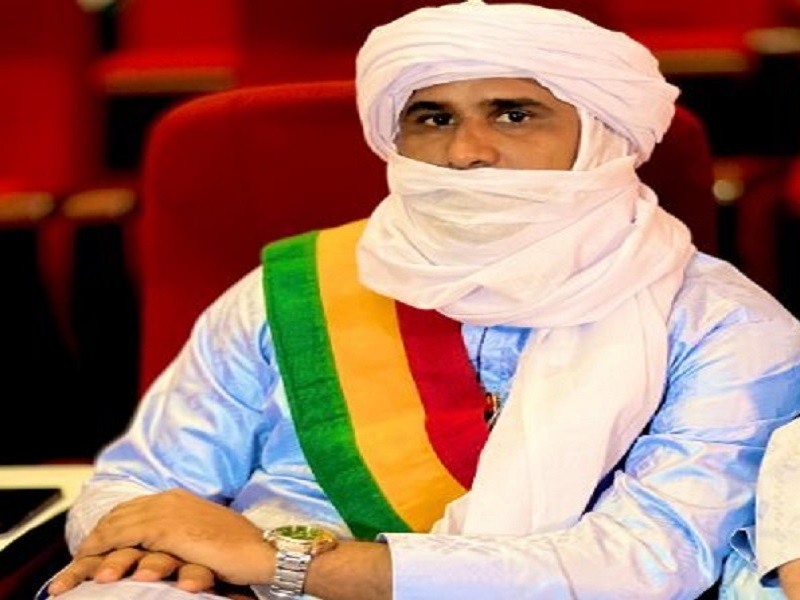
Moussa Ag Acharatoumane, a member of the National Transitional Council and leader of the Movement for the Salvation of Azawad (a group of pro-government Tuareg), shared some insight into the Malian Crisis with Radio France Internationale in mid-May. He predictably claimed that morale remains high among the government, the armed forces, and the population that they represent while hinting at plans by the Malian Armed Forces (FAMA) and their Russian Africa Corps (AK) allies for a counteroffensive.
What’s most important, however, is what he said about the “Azawad Liberation Front’s” (FLA) alliance with al Qaeda-affiliated “Jamaat Nusrat al-Islam wal-Muslimin” (JNIM) radical Islamists. According to him, “Our brothers who chose to ally themselves with al-Qaeda haven’t learned the lessons of 2012 [when Tuareg separatists and jihadist factions initially joined forces against the Malian state]. Because in 2012 there was practically the same attempt, and the whole world witnessed what happened.”
He added that “Some of our brothers – not all, because some unfortunately never distanced themselves from the al-Qaeda network – but others were major victims of that organisation, including some of their leaders whose families were decimated by al-Qaeda. This alliance is a very bad thing. I think our brothers need to realise the grotesque mistake they are making and turn back. They should do what the MSA and Gatia did. They allied themselves with the Malian army to fight international terrorism.”
Acharatoumane concluded by declaring that “there’s no point in negotiating with people who are plotting to destroy our country. The Malian state protects its people and its territorial integrity, and there’s absolutely nothing to negotiate with these people as things stand, unless they reconsider their views and plans.” Putting it all together, he’s wisely reminding his fellow Tuareg of the dark fate that likely awaits them if JNIM repeats its predecessor’s persecution of their co-ethnics, which is possible.
He’s also tacitly extending an olive branch to them by encouraging their defection to the pro-government camp, after which it’s implied that autonomy might be considered after the crisis ends as a compromise for abandoning their separatist goals. So long as they remained committed to carving out their own state, not to mention with the foreign support that a different French media outlet recently confirmed that this geopolitical project is receiving, then dialogue with the patriotic military junta is impossible.
The FLA’s rank and file aren’t expected to defect unless the impending FAMA-AK counteroffensive shatters their group’s separatist plans, in which case mass defections are expected following the precedent from 2013 after France destroyed their first jihadist-hijacked polity. Precisely for that reason, however, foreign support for the FLA-JNIM axis is expected to ramp up ahead of the counteroffensive in order to preempt that possibility. The counteroffensive will therefore likely determine the future of Mali.
Success, even if only partial, could lead to mass defections from the FLA for denying JNIM the allies that they require for retaining a semblance of legitimacy abroad. By contrast, failure could embolden another FLA-JNIM push westward, perhaps even timed with a full attempted blockade of Bamako for maximum effect. The second scenario would almost certainly set into motion the previously warned one of a US-backed Nigerian intervention, however, which would also risk destroying the Sahelian Alliance.